Well Drilling Permits in Gresham, OR: Setbacks, Inspections, and County Rules Explained
If you own property around Gresham and need a new water well, or your old well just quit and someone mentioned paperwork, you have probably run into the question of well drilling permit requirements in Gresham and who handles them. The short version: wells in Oregon are regulated at the state level, not by the city, and a legitimate well drilling company handles most of the paperwork for you. This FAQ walks through the permit questions homeowners actually ask, including which jobs need a permit, what setbacks mean, how inspections work, and how to use permits as a vetting tool when choosing a driller.
Who issues well drilling permits in the Gresham area?
Water wells in the Gresham area fall under the Oregon Water Resources Department, not the City of Gresham building department. The city handles building permits for structures; the state regulates well construction, and licensed drillers file a start card with the state before work begins. County health departments can also get involved when a well sits near a septic system.
This confuses a lot of people, because searching for well permits in Gresham brings up city building permit pages that have nothing to do with wells. If your property sits on the rural edge of Multnomah or Clackamas County, in places like Boring, Damascus, Sandy, Corbett, or Estacada, the state rules still apply. The county's role is mostly about land use and septic setbacks, not the drilling itself.
For context on how closely the state watches groundwater, the Oregon Water Resources Department maintains more than 400 state observation wells and measures more than 1,200 additional observation wells across the state to track aquifer conditions.
What requirements apply to drilling a well permit in Oregon?
Yes, a new water well in Oregon requires state paperwork before drilling starts, and your driller files it. The homeowner does not walk into an office and pull a well permit the way you would for a deck or a garage. The driller submits a start card to the Oregon Water Resources Department, pays the fee, and later files a well log documenting what was drilled.
In addition, most rural residential wells for household use fall under Oregon's exempt groundwater uses, meaning you usually do not need a separate water right for ordinary domestic use. Your driller or the state can confirm whether your intended use qualifies. If you plan to irrigate serious acreage or supply a commercial operation, that is a different conversation.
Does well pump repair or replacement require a permit?
Most well pump repair and well pump replacement work does not require the same permitting as drilling a new well. Swapping a failed submersible pump, replacing a pressure tank, or fixing wiring is service work on an existing water well, not new construction. That matters if you are the homeowner with dry taps this morning; paperwork is not what stands between you and running water.
However, some work on the well itself, such as deepening a well, altering the casing, or abandoning an old well, does trigger state drilling permit requirements and must be done by a licensed contractor. If a company tells you a simple pump swap needs weeks of permitting, or that major well alterations need no paperwork at all, both answers are red flags.
What setbacks apply to a well near Gresham?
Setbacks are minimum distances between your well and potential contamination sources, and Oregon sets them by rule. The big ones are distance from septic tanks and drainfields, property lines, livestock areas, and surface water. These rules exist to keep groundwater clean, since your well pulls drinking water from the same aquifer your neighbors use.
On the smaller rural lots common around Damascus, Boring, and Corbett, setbacks can genuinely limit where a new well can go. A good driller evaluates the site before committing to a location, weighing the septic layout, the slope, and where the drilling rig can physically reach. Drilling equipment needs a clear, stable path to the well site, so access is part of the placement decision, not an afterthought.
How do inspections work for a new well?
Well construction inspections in Oregon focus on how the well is sealed, not on a long series of scheduled visits. The state cares most about the well seal, the grout placed around the casing that keeps surface water from running down into the aquifer. Inspectors sometimes check grouting with a drive-by look at the site rather than a formal on-site meeting.
Because of that, experienced crews plan grouting carefully. If the borehole reaches a stopping point, grouting can often be scheduled and finished the same day rather than left open, which keeps the job compliant and the hole protected. As a general practice noted by the New Hampshire Department of Environmental Services, drillers also plan to drill at least about 10 feet into bedrock to get past dirty surface water and create a proper socket for the casing.
After drilling, two more steps close out the job. According to the San Diego County Department of Environmental Health, the driller disinfects the well and pump components with bleach or chlorine, and the well should be run hard afterward to flush the residue. Then, per the CDC, it is standard practice to take a water sample for testing once the disinfectant has cleared, so the sample reflects your normal well water.
What do well drilling permit requirements and drilling cost in 2026?
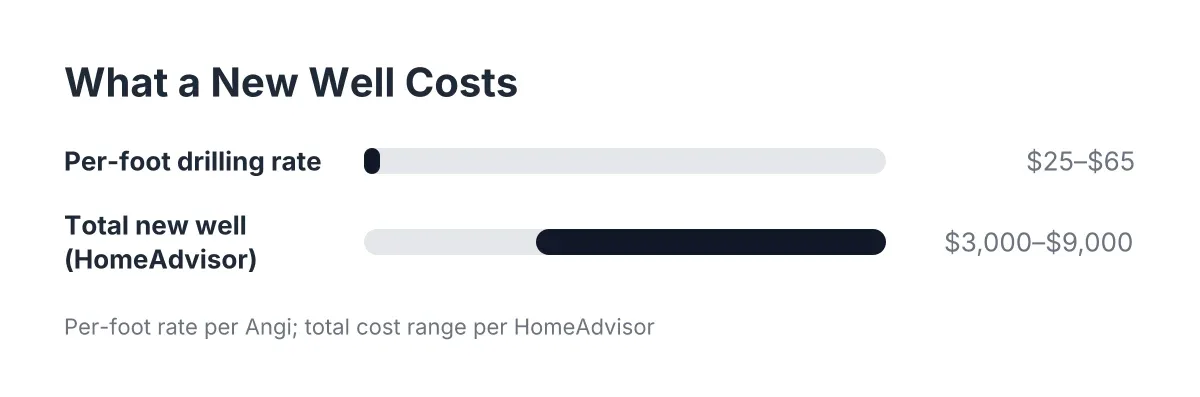
Permit fees are a small slice of the total; the drilling itself is the real cost. According to HomeAdvisor, homeowners spend an average of $3,000 to $9,000 to drill a well, with an average price around $5,500. Angi puts the average cost to drill at $25 to $65 per foot, with $25 to $35 per foot typical for most residential projects.
Depth drives everything, and depth depends on the aquifer under your specific site, which nobody can promise in advance. For example, suppose a homeowner outside Sandy needs a replacement well. A typical crew of about four workers with a standard drilling rig might finish the drilling in days, but the final bill depends on how deep they go before hitting reliable water. If the rig reaches its practical limit without enough flow, an honest driller measures the flow rate and lets you decide whether to stop or keep going.
One more cost reality: wells are not forever. HomeAdvisor notes most owners need to drill or re-drill every 10 to 20 years, and in Oregon, about 1,220 domestic wells went dry or fell below pumping capacity between June 2021 and December 2023, according to the U.S. Geological Survey. The true number is likely higher since reporting is not mandatory.
How do permits help me vet a well drilling company near me?
Permit knowledge is one of the fastest ways to separate a real local operator from a thin directory listing. Anyone can buy a "well driller near me" ad; only a working contractor can explain the start card process, Oregon setback rules, and county septic coordination off the top of their head. When you are hiring a well driller, ask these three questions before you sign anything:
- Who files the start card and well log with the Oregon Water Resources Department, and will I get a copy of the well log when the job is done?
- Are you licensed to construct wells in Oregon, and is the person doing pump work licensed for that too?
- What setbacks on my property will affect where the well can go, and have you looked at my septic location?
A fair quote spells out the per-foot drilling rate, what casing and sealing are included, what the pump and pressure tank portion covers, and what changes if the well must go deeper than expected. Vague lump sums with no depth language are how emergency homeowners get burned. This vetting works whether you live in the house or manage a rental from a distance; landlords especially benefit from a contractor who documents permits and well logs in writing.
What if I have no water right now, is this a permit problem?
A sudden loss of well water is almost always an equipment problem, not a permit problem. If your well stopped producing water overnight, the likely suspects are the pump, the pressure switch, the pressure tank, or the wiring, especially after a storm or power outage. Most residential systems use a submersible pump paired with a pressure tank, which may sit in the well, the house, or a crawl space, according to the Indiana Department of Health.
Therefore, the right first call is for well pump repair, not a new drilling permit. A proper diagnosis checks power to the pump, the pressure switch, and the tank before anyone talks about drilling. Only if the well itself has gone dry or collapsed does new drilling, and its permitting, enter the picture. Be cautious of anyone who jumps straight to a full well replacement without testing the pump and well system first; that is the inflated-emergency-pricing move homeowners worry about for good reason.
There are limits to what an article can settle. Setback distances, exempt-use rules, and county requirements vary by parcel and can change, so confirm the specifics for your property with a licensed Oregon well contractor or the Oregon Water Resources Department before you commit.
Where to go from here
If you need a new well drilled, a well inspection, or emergency well pump repair anywhere around Gresham, Sandy, Boring, Damascus, Estacada, Corbett, or Oregon City, reach out for a straightforward estimate. A local water well specialist can look at your site, explain how well drilling permit requirements in the Gresham area apply to your parcel, and tell you honestly whether you need a repair or a rig. That one conversation usually answers more than an afternoon of searching for water well service near me.
If you need well drilling, Clackamas Well Drilling can help.
Prefer to talk it through? Call (503) 782-5215 — a quick call is usually the fastest way to get a straight answer for your situation.