Hiring a Well Driller Terms Explained: A Plain-English Glossary
If you own property around Gresham, Sandy, Boring, or anywhere on the rural edge of the east Portland metro, you will run into well jargon the moment you start calling drillers. This hiring a well driller glossary translates the words you will see on quotes, permits, and inspection reports into plain English. Use it to read an estimate line by line, ask sharper questions on the phone, and spot when a bid leaves something out. No sales pitch here, just the terms explained the way a local tradesperson would explain them.
- Aquifer: the underground layer your water comes from
- Static Water Level: how high water sits in the well at rest
- Drawdown: how far the water drops while pumping
- Well Yield: how much water the well produces
- Well Casing: the pipe that keeps the hole open
- Well Cap: the lid that seals the top
- Grout Seal: the barrier that keeps surface water out
- Well Screen: the filter at the bottom of the casing
- Submersible Pump: the pump that sits down in the well
- Pressure Tank: the tank that stores water under pressure
- Pressure Switch: the part that tells the pump when to run
- Pitless Adapter: the below-ground connection to your house
- Test Pump (Flow Test): measuring what the well can deliver
- Well Log: the driller's official record of your well
- Drilling Permit: the state paperwork before drilling starts
- Per-Foot Pricing: how most drilling quotes are built
- Well Inspection: a checkup before you buy or repair
- Water Testing: lab checks on what is in your well water
The Ground and the Water
These terms describe what is happening below your feet. They drive both the design of a new well and the price on your quote.
Understanding Aquifer Concepts When Hiring a Well Driller
An aquifer is an underground layer of rock, sand, or gravel that holds groundwater your well can draw from. When a driller talks about "hitting the aquifer," they mean reaching a layer that gives up enough water to supply your home. Around the Clackamas and Multnomah County rural edge, aquifer depth varies from property to property, which is why honest drillers quote ranges instead of flat prices. An aquifer and well depth assessment before drilling helps set realistic expectations for both depth and cost.
Static Water Level
The static water level is the height water settles to inside a well when the pump has been off for a while. It tells you where the water table sits on your property, and it is one of the first numbers recorded on a well log. A deep static water level can mean a stronger pump and more wire and pipe, which affects the cost of pump and well repair or a new well pump installation. If a quote mentions it, the driller is sizing the system to your actual conditions, which is a good sign.
Drawdown
Drawdown is how far the water level in a well drops while the pump is running. Every well draws down some; the question is how fast and how far. Heavy drawdown means the pump is pulling water out faster than the aquifer refills the well, which can starve the pump and shorten its life. A driller who checks drawdown before recommending well pump replacement is matching the pump to what your well can handle.
Well Yield
Well yield is the amount of water a well can produce over time, usually described in gallons per minute. Yield decides whether your well can keep up with showers, laundry, and irrigation running at once. Low yield does not always mean a bad well; it may just mean the system needs a storage tank or a different pump setup. Ask any well drilling company near you how they measure yield, because a number without a test behind it is a guess.
The Parts of a Well
Your quote will name hardware you have never seen, because most of it is buried. Here is what each piece does.
Well Casing: Key Information for Hiring Drillers and Understanding Well Glossary
Well casing is the steel or plastic pipe installed in the drilled hole to keep it from collapsing and to keep dirt out of your water. Casing runs from above the ground surface down into stable material, and it is a major line item on any new well installation quote because it is priced by the foot. More depth means more casing. If two bids differ a lot, compare how much casing each one includes.
Well Cap
A well cap is the sealed lid on top of the casing that keeps insects, debris, and surface water out of your well. It sounds minor, but a cracked or loose cap is a common finding during a well inspection and an easy path for contamination. Replacing a bad cap is one of the cheapest fixes in well work. If an inspector flags yours, fix it before worrying about bigger problems.
Grout Seal
A grout seal is a layer of cement or special clay pumped around the outside of the casing to block surface water from leaking down along the pipe. Without a proper seal, rainwater and runoff can slide down the casing and reach your drinking water. Oregon requires sealing on new wells, so a driller who explains their grouting process is showing you the work you cannot see. It is buried forever once the job is done, which is exactly why it is worth asking about up front.
Well Screen
A well screen is a slotted section at the bottom of the casing that lets water in while holding sand and gravel back. The right screen keeps sediment out of your pump and your faucets. In some rock formations a screen is not needed; in loose sand and gravel it is essential. If your water has turned sandy, a failing screen is one of the things a well and pump service call should check.
Submersible Pump
A submersible pump is a sealed electric pump that hangs on a pipe down inside the well, below the water, and pushes water up to the house. Most modern residential wells use one. Because the pump sits far underground, well pump repair means pulling the whole assembly up, which is why labor is part of the cost even for a small part failure. When a driller quotes water well pump repair, ask whether the price covers pulling and resetting the pump.
Pressure Tank
A pressure tank is a storage tank, usually in your garage or pump house, that holds water under air pressure so the pump does not start every time you open a tap. A healthy tank means fewer pump starts and a longer pump life. Additionally, a waterlogged or failed tank makes the pump short-cycle, which is a frequent cause of early well pump replacement. Many "pump problems" turn out to be tank problems, so a good technician checks both.
Pressure Switch
A pressure switch is the small control that turns the pump on when water pressure drops and off when it recovers. It is one of the cheapest parts in the whole system and one of the most common failure points. If your water quits suddenly, the switch is often the first thing checked on a well repair visit. A provider who starts with the simple parts before quoting a new pump is working in your interest.
Pitless Adapter
A pitless adapter is a fitting on the side of the casing, below the frost line, that routes water from the well to the buried pipe running to your house. "Pitless" refers to the old practice of digging a pit around the wellhead, which this fitting replaced. It keeps the connection frost-free and sanitary. Leaks at the pitless adapter can mimic pump trouble, so it is a standard checkpoint in pump and well repair.
Testing, Paperwork, and Pricing
Before you sign anything, this part of the hiring a well driller glossary covers the documents and numbers that protect you. Most of the surprises in well work hide in these terms, and understanding them is half the battle when you are hiring a well driller for the first time. For how these pieces add up on a real estimate, see our guide to the cost of hiring a well driller.
Test Pump (Flow Test)
A flow test, sometimes called test pumping, means running a pump in the well for a set period to measure how much water it reliably delivers. It is the honest way to prove yield instead of guessing. Lenders often require a flow test before approving a loan on a home with a well. If you are buying rural property around Gresham or Estacada, ask for a flow test as part of the well inspection.
Well Log
A well log is the official record a driller files with the state describing your well: its depth, casing, seal, the materials drilled through, and the water found. Oregon drillers file these with the state water agency, and logs for existing wells are public. The log is the single best document for understanding a well you did not drill yourself. Before any major well repair, find the log; it saves guesswork and sometimes saves money.
Drilling Permit
A drilling permit is the state authorization required before a new water well can be drilled. In Oregon, the driller typically handles this paperwork and the fee as part of the job. A quote that mentions the permit and start-card fee is a quote from someone doing it by the book. If a bid says nothing about permits, ask why.
Per-Foot Pricing
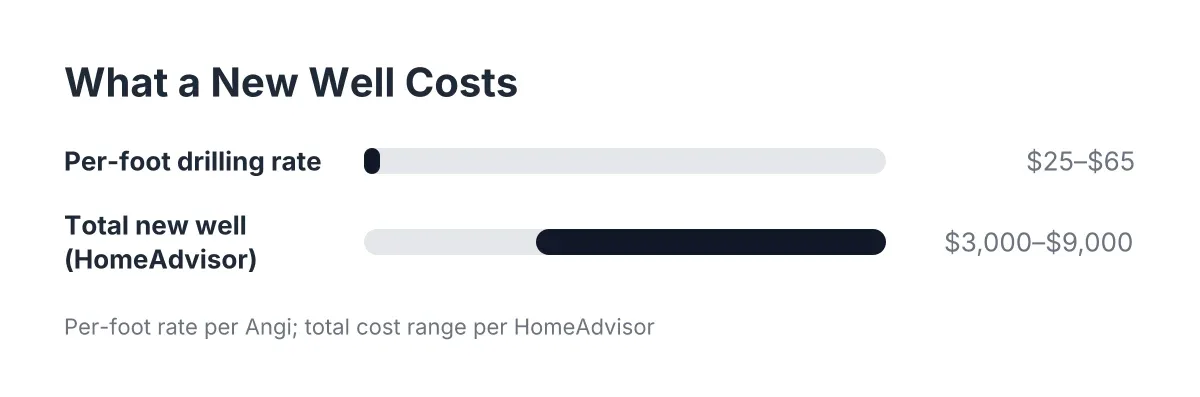
Per-foot pricing means the drilling portion of your quote is billed by each foot drilled, since nobody knows the exact depth until the work is done. This is standard across the trade, not a trick. The honest version pairs a per-foot rate with an estimated depth range based on nearby well logs, so you can see a realistic low and high total. Our cost guide for hiring a well driller walks through how to compare per-foot bids fairly.
Well Inspection
A well inspection is a checkup of the whole system: the wellhead, cap, pump performance, pressure tank, and often a water sample. Buyers order inspections before closing on a home with a well, and owners order them when something seems off. An inspection report gives you a written baseline, which makes future repair quotes easier to judge. It is the well-world equivalent of a home inspection, and skipping it on a purchase is a gamble.
Water Testing
Water testing means sending a sample of your well water to a lab to check for bacteria, nitrates, and other contaminants. Private wells are not monitored by anyone but you, so periodic well water testing is how you know the water is safe. Oregon requires certain tests when a property with a well is sold. If a driller offers testing alongside drilling or repair, that is normal scope, not an upsell.
Using These Terms
With this hiring a well driller glossary in hand, you can read a quote line by line and know what the casing, the seal, and the per-foot rate each pay for. You can ask a driller about static water level, drawdown, and yield and understand the answers. That is usually all it takes to tell a careful local well drilling company from a bid that is hiding the hard parts.
If you need well drilling, Clackamas Well Drilling can help.
Prefer to talk it through? Call (503) 782-5215 — a quick call is usually the fastest way to get a straight answer for your situation.