Well Inspection Frequency: How Often Should Gresham Homeowners Test Their Wells?
If you own a well around Gresham, Sandy, Boring, Damascus, or Estacada, the question of well inspection frequency often comes up at two moments: when a home is changing hands, and when the water suddenly stops or starts tasting off. This FAQ answers both. It covers how often to inspect and test a private well, what a documented inspection report includes, and how the process fits real estate deadlines, so buyers, agents, and landlords get proof on paper instead of a sales pitch for a new well.
How Often Should a Private Well Be Inspected?
A private well should get a professional well inspection once a year, plus a full documented inspection any time the property changes hands. Annual checks catch casing cracks, failing pump parts, and water quality changes before they become a no-water emergency. If your well has never been inspected, the next ownership transfer or tenant turnover is the natural time to start.
Between those annual visits, pay attention to warning signs. Sputtering faucets, a pump that cycles on and off constantly, cloudy water after rain, or a sudden pressure drop all justify an inspection right away, no matter when the last one happened.
How Often Should Well Water Be Tested?
Test well water at least once a year for bacteria and nitrates, and more often if anything changes. Test immediately after any repair work, after flooding near the wellhead, if the water changes in taste, smell, or color, or before a new tenant moves in. For landlords, a test at every turnover is cheap insurance against renting a unit with a water problem.
A well water test kit from a hardware store can give you a quick screen for obvious issues. However, a lab test arranged through a well and pump professional carries far more weight in a real estate file or a tenant dispute, because the sampling is done correctly and the results come from an accredited lab.
Here in Oregon, the question of well inspection frequency often gets an extra push from conditions on the ground. According to the U.S. Geological Survey, about 1,220 domestic wells in Oregon went dry or fell below pumping capacity between June 2021 and December 2023, and the true number is likely higher since reporting is not mandatory. Aquifer conditions shift, and a yearly check is how you see it coming instead of finding out at the tap.
Do I need a well inspection before buying a house?
Yes. A well inspection before buying a house is the only way to know what you are actually purchasing, because a general home inspector typically does not open the well cap, pull records, or run a flow test. The well is its own system with its own lifespan, and problems hide underground where a walkthrough will never find them.
The inspection answers the questions every buyer and agent asks: how old is this well, does it produce enough water for the household, is the pump near the end of its life, and is the water safe to drink. A neutral, documented report gives you leverage in negotiation or peace of mind at closing. Either way, you get proof, not pressure.
What does a well inspection cover?
A professional well inspection covers the physical well, the pump system, the water itself, and the paperwork. A thorough report built for a real estate deadline typically documents:
- The well cap, casing, and seal, checked for cracks, rust, or gaps that could let surface water and contaminants in
- Static water level and total well depth, measured by sounding the well with a weighted tape
- A flow and recovery test, running the pump while watching how far the water level drops and how fast it comes back
- The pump, pressure tank, pressure switch, and wiring, with notes on age and condition
- A water sample sent to a lab for bacteria, nitrates, and other common concerns
- A records check against the state well log, which tells you when the well was drilled and how deep it goes
Residential systems around Gresham typically use a submersible pump paired with a pressure tank, which may sit in the well, the house, or a crawl space, a layout the Indiana Department of Health describes as standard for private wells. The inspection checks all of it, not just the hole in the ground.
How much does a well inspection cost?
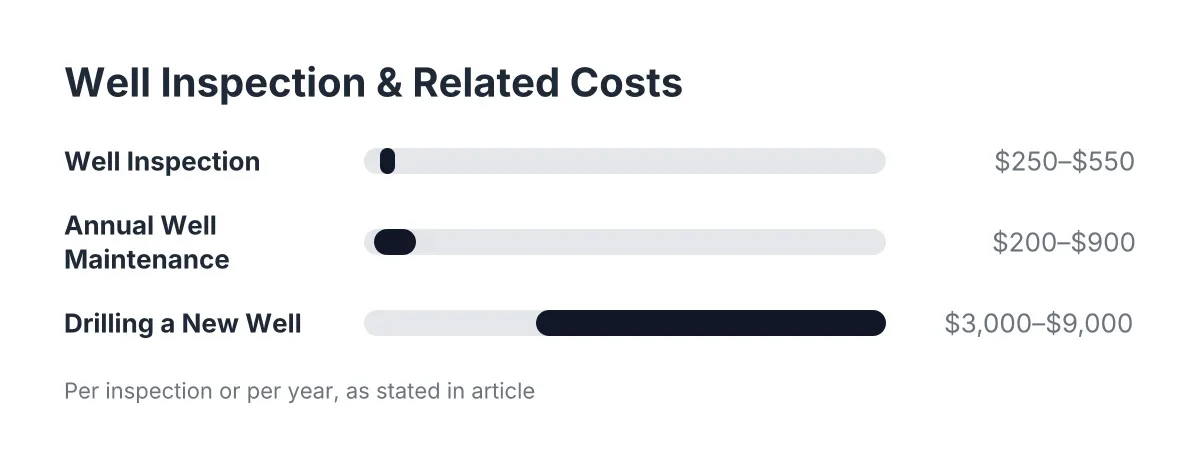
A typical professional well inspection costs $250 to $550, and overall well maintenance runs homeowners $200 to $900 per year, according to Angi. The price varies with what is included; a records review and visual check costs less than a full flow test with lab water testing.
Compare that against the alternative. HomeAdvisor reports homeowners spend an average of $3,000 to $9,000 to drill a well, with an average price of $5,500. An inspection that flags a failing well before you buy, or catches a pump problem before it strands a tenant without water, pays for itself many times over.
Can a well inspection fit a real estate closing timeline?
Yes, a well inspection fits inside a standard inspection contingency window when it is scheduled early in escrow. The on-site work, including the flow test and water sampling, is usually done in a single visit. The main timing variable is the lab; bacteria and nitrate results take a few days to come back.
Therefore, book the inspection as soon as the offer is accepted, not the week before closing. For example, suppose a buyer in Corbett is in a 10-day inspection period. Scheduling the well visit on day two leaves room for lab results, a follow-up question or two, and a written report the agent can attach to the negotiation before the deadline.
Inspection Frequency Recommendations for Landlord Wells
Landlords with multiple well-served rentals should inspect each well annually and test the water at every tenant turnover. Say you own four rentals between Boring and Oregon City, each on its own water well. Putting all four on the same yearly inspection schedule means one vendor, one set of comparable reports, and no scrambling when a tenant calls about low pressure on a Friday.
In addition, consistent documentation protects you. A file showing yearly inspections and clean water tests is your answer if a tenant ever raises a water quality complaint. It also tells you which pump is likely to fail next, so you can plan a well pump replacement during a vacancy instead of paying for emergency well pump repair with a tenant in the house.
Does a new well need an inspection too?
A newly drilled well still needs water testing before it goes into regular service, even though the construction itself was just inspected. After drilling, the well and pump components are disinfected with chlorine, and the system should be run heavily to flush the disinfectant out before sampling, according to the San Diego County Department of Environmental Health. The CDC notes it is standard practice to take a water sample afterward so the test reflects normal water quality, not leftover chlorine.
From there, the new well joins the same schedule as any other: water testing every year, and a documented inspection at least that often, or more if your situation calls for it. Questions about well inspection frequency come up often with new construction, and the honest answer is that a new well buys you confidence, not a pass on maintenance.
When should I call a professional instead of relying on a test kit?
Call a well professional any time the problem goes beyond a simple water screen, including no water at the tap, grinding or rapid cycling from the pump, visible damage to the casing or cap, or a failed bacteria test. A well water test kit can tell you something is wrong; it cannot tell you whether the fault is the pump, the pressure tank, the wiring, or the aquifer itself.
One honest limitation: an inspection is a snapshot, not a guarantee of future performance. Groundwater levels shift with seasons and drought, which is exactly why Oregon's Water Resources Department tracks aquifer conditions through more than 400 state observation wells, plus over 1,200 additional wells it measures across the state. Regular inspections are how a private well owner does the same thing on a smaller scale: watching the trend, year over year, so the first warning is a line in a report instead of a dry tap on a Saturday morning.
If you need well drilling, Clackamas Well Drilling can help.
Prefer to talk it through? Call (503) 782-5215 — a quick call is usually the fastest way to get a straight answer for your situation.