DIY Well Pump Replacement vs. Hiring a Pro: When to Call Local Help
If your well pump is failing, the first question is usually whether to fix it yourself or hire someone. A DIY well pump replacement can save real money on a shallow well with easy access. On a deep submersible well, it can cost you more than it saves. This guide walks through the decision step by step, so you can figure out which side of that line your well sits on before you spend a dollar. It applies whether you own an older well outside Gresham or just bought acreage in Sandy, Boring, or Estacada with a well of unknown condition.
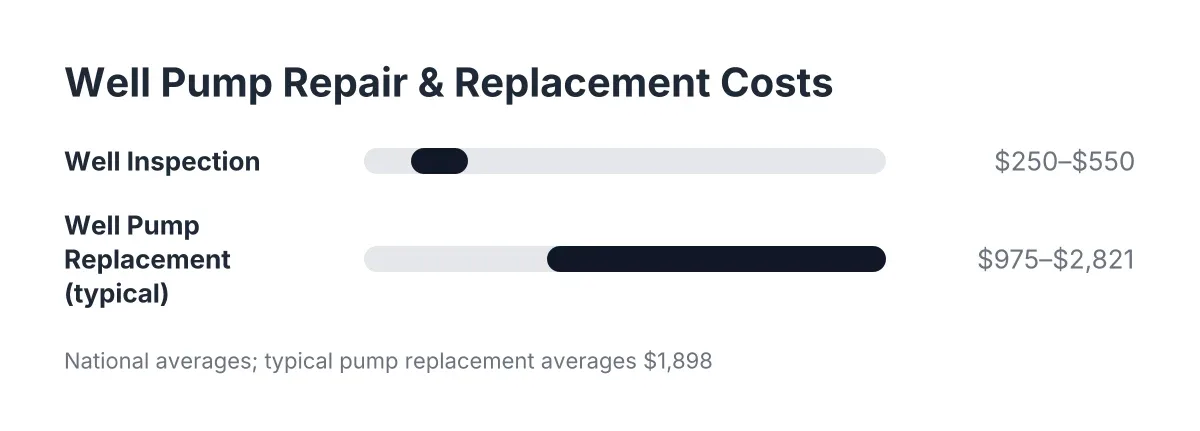
For context on budget, the national average well pump replacement cost is $1,898 based on 1,339 verified projects, with most homeowners paying between $975 and $2,821, according to Angi. Labor is a meaningful slice of that. That is exactly why people search for DIY options, and exactly why it is worth thinking through carefully.
Step 1: Confirm the Pump Is Actually the Problem
Before you replace anything, verify the pump itself has failed. Many "dead pump" calls turn out to be a tripped breaker, a bad pressure switch, or a waterlogged pressure tank. Those are repairs measured in tens or hundreds of dollars, not a full well pump replacement.
Start at the electrical panel. Shut off power to the pump circuit first; never work on a pressure switch or pump wiring live. Then check the basics in order:
- Reset the breaker once. If it trips again immediately, stop and note it; that points to a short in the pump or wiring.
- Look at the pressure switch contacts for burning or pitting. A bad switch mimics a dead pump.
- Tap the pressure gauge and check the tank. A failed bladder makes the pump short-cycle and can feel like low pressure.
- Use a voltage meter to confirm power is reaching the pump wiring when the switch calls for it.
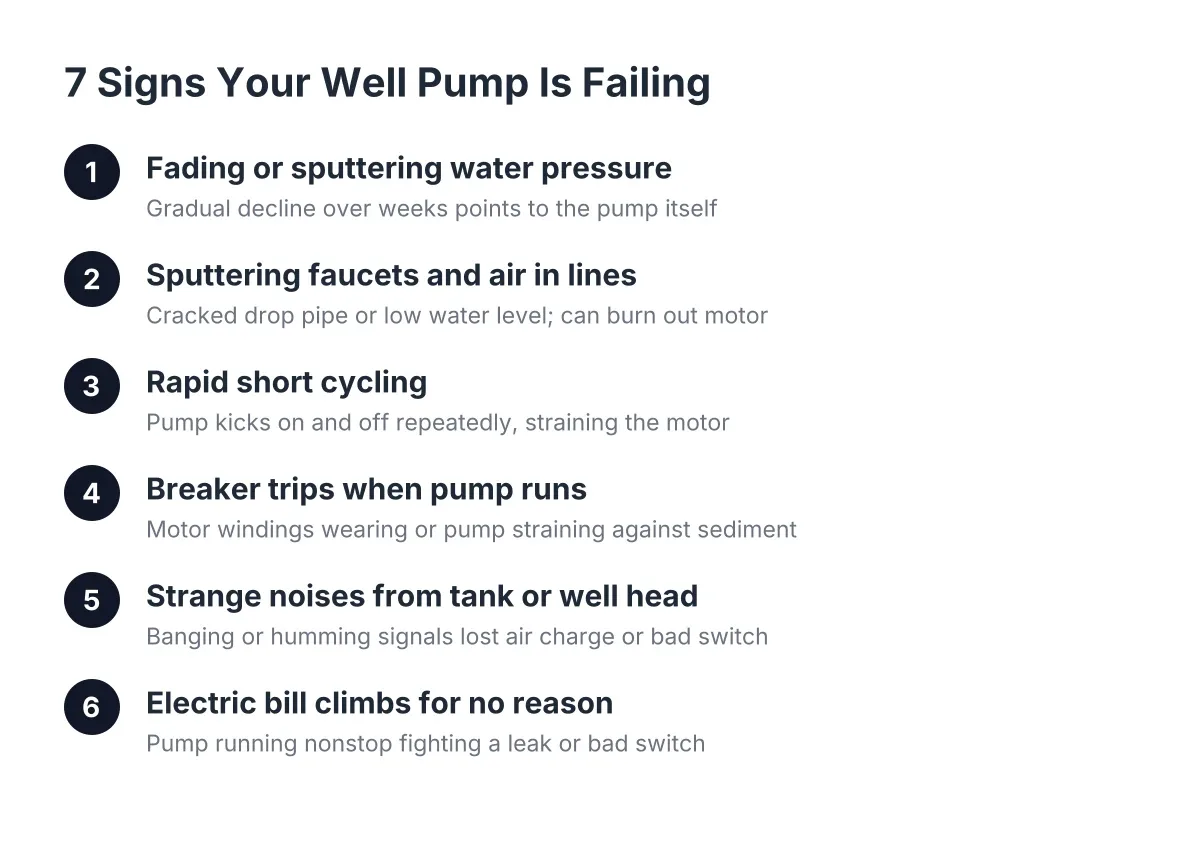
Decreased water pressure, inconsistent supply, or a total loss of pressure are the classic signs of a failing well pump. However, the same symptoms can come from a leaking drop pipe or a clogged intake. If the pump is 15 to 20 years old and showing these signs, replacement starts to make more sense than another repair. If it is under 10 years old, a repair or a component swap may buy you years. A professional well inspection typically runs $250 to $550, according to Angi, and it is a cheap way to avoid replacing a pump that only needed a switch.
Step 2: Identify Your Pump Type and Well Depth
You cannot decide DIY versus pro until you know what is down the well. Residential well systems typically use a submersible pump paired with a pressure tank, which may sit in the well, in the house, or in a crawl space, according to the Indiana Department of Health. Older or shallower wells sometimes use a jet pump mounted above ground instead.
This matters because the two are different jobs entirely:
- A shallow well jet pump sits at the surface. Replacing it is plumbing and wiring work you can reach with your hands.
- A submersible pump hangs on drop pipe deep inside the casing. Replacing it means pulling the entire pipe string, the wiring, and the pump up out of the well.
Check your well log if you have one. In Oregon, well logs are filed with the state and searchable by property, which helps you learn depth, casing size, and construction date. If you bought land near Damascus or Corbett and the well came with no paperwork, an aquifer and well depth assessment or a camera inspection can tell you what you are working with before you commit to a plan.
Step 3: Decide If DIY Well Pump Replacement Fits Your Situation
DIY well pump replacement makes sense when the pump is shallow, accessible, and above ground; it makes much less sense when a submersible pump hangs on a long drop pipe. The deeper the pump, the heavier the pull, the higher the stakes, and the more expensive a mistake becomes. Be honest about which job you have.
When DIY Shallow Well Pump Replacement Is Reasonable
A shallow well jet pump replacement is within reach for a capable homeowner. The tool list is short: PVC solvent glue, a crescent wrench, a voltage meter to confirm power is off, pipe dope or thread tape, wire cutters, a pipe cutter, and pipe wrenches. The work is cutting pipe, priming the new pump, and matching the wiring to the old unit.
A few pitfalls to know going in. Lower-cost imported pumps sometimes arrive with poorly sealed factory fittings, so a brand-new unit can leak at the priming port until you retape and reseal it. In addition, tighten the well seal firmly on shallow installations; a shallow-set pump vibrates more and can break its plumbing connections if the seal is loose.
When a Deep Submersible Job Should Go to a Pro
A submersible replacement on a deep well is a different animal. Pulling long runs of drop pipe by hand risks dropping the pump, the pipe, or the wiring down the well. A dropped pump can mean a fishing job or, in a bad case, a lost well. Where overhead clearance is limited, the drop pipe and wiring must come up in short cut sections, over and over, which is slow and punishing without a pump hoist.
Sizing is the other trap. A common DIY mistake is buying a pump rated for far less depth than the well requires, oversizing on depth while undersizing on horsepower and flow. The result is weak pressure and a pump that burns out early. A local well and pump service matches the pump to your actual well depth, static water level, and household demand, which is the part of the job you cannot see from the hardware store aisle.
Step 4: Compare the Real Costs, Not Just the Labor Savings
Run the numbers both ways before deciding. Suppose a homeowner outside Estacada has a submersible pump set deep in an older steel-cased well. The pump itself might cost several hundred to over a thousand dollars depending on horsepower and quality, as a rough estimate. DIY saves the labor, but add a rented pump puller or several strong helpers, new drop pipe if the old poly is brittle, new wire and splice kits, a torque arrestor, and a weekend or two of work.
In that scenario, the labor savings shrink fast, and one dropped pipe string can erase them entirely. Contrast that with a shallow jet pump swap, where the parts list is short and the downside of a mistake is a leak you can see and fix. Therefore, the honest comparison is not "pump price versus contractor quote." It is pump price plus tools, materials, risk, and your time versus a quote that includes correct sizing and a working system when the truck leaves.
Keep the bigger picture in mind too. Homeowners spend an average of $3,000 to $9,000 to drill a well, according to HomeAdvisor. A botched pump job that damages the casing or loses equipment downhole puts you into well repair territory, or worse, new well drilling territory. Protecting the well itself is worth more than the labor line on a pump job.
Step 5: If You Hire, Choose a Local Well and Pump Service
Search results for well repair near me around Gresham are full of bare homepages that tell you nothing. When you call around, ask questions that separate a water well specialist from a general plumber:
- Do you pull and set submersible pumps yourself, with your own hoist or rig?
- Will you size the pump from my well log or measure the well before quoting?
- Do you handle the whole system, including the pressure tank, switch, and wiring?
- Can you test the well water after the work is done?
A well and pump service near me search should turn up someone who works your specific ground. Wells on the Clackamas and Multnomah County rural edge, in places like Boring, Damascus, and Oregon City, vary in depth and construction, and a crew that pulls pumps in that area weekly will spot problems a generalist misses. A water well pump service near me that also handles well inspection and water testing can check the whole system in one visit instead of just swapping the loudest part.
Step 6: Finish the Job Right, DIY or Not
Whichever route you take, the last steps matter. Disinfect the well after opening it; standard practice is to treat the well and pump components with chlorine, then run the well heavily to flush the residue before regular use, according to the San Diego County Department of Environmental Health. It is also standard to take a water sample for testing afterward, and the CDC notes the well should run long enough first that the sample reflects normal water quality rather than lingering disinfectant.
One honest caveat: this guide covers typical residential systems, and your well may not be typical. Old wells with unknown construction, wells that have never been logged, or wells feeding new construction where a lender or the county wants proof of water are situations where a professional assessment is worth the fee before anyone touches the pump.
The Bottom Line on Replacing Your Own Well Pump
A DIY well pump replacement is a fair weekend project on a shallow, above-ground jet pump if you confirm the diagnosis first and take the electrical safety seriously. A deep submersible replacement is where local help earns its cost: correct sizing, the equipment to pull pipe safely, and no risk of losing gear down the only water source your property has. Groundwater is the whole value of a rural parcel around Gresham. Treat the well like the asset it is, and match the job to the hands doing it.
If you need well drilling, Clackamas Well Drilling can help.
Prefer to talk it through? Call (503) 782-5215 — a quick call is usually the fastest way to get a straight answer for your situation.