Well Pump Replacement Terms Explained: A Plain-English Glossary
If you own a home on a private water well around Gresham, Sandy, Boring, or Estacada, the first pump quote you read can feel like another language. This well pump replacement glossary translates the words you will hear from a well drilling company into plain English. Use it to read a quote line by line, ask sharper questions on the phone, and spot the difference between a small fix and a full pump swap. No sales talk, just the terms and what they mean for your water and your wallet.
- Submersible Pump: the pump that sits down in the well
- Jet Pump: an above-ground pump for shallower wells
- Pressure Tank: the tank that stores water under pressure
- Pressure Switch: the on/off brain of the system
- Pitless Adapter: the below-ground connection out of the well casing
- Well Casing: the pipe that lines the well hole
- Check Valve: keeps water from draining back down the well
- Drop Pipe: the pipe the pump hangs from
- Pump Pull: lifting the pump out of the well
- Static Water Level: how high water sits in the well at rest
- Drawdown: how far the water level falls while pumping
- Well Yield: how much water the well can give
- Short Cycling: pump turning on and off too often
- Dry Well: a well that can no longer keep up
- Well Inspection: a checkup of the whole well and pump system
- Water Testing: lab checks on what is in your well water
- Horsepower (HP): the pump's motor size
- Head (Total Dynamic Head): the total lift the pump must overcome
Equipment: The Parts on Your Well Pump Replacement Glossary Quote
Most of the hardware terms in this well pump replacement glossary show up as line items on a quote. Here is what each part does.
Submersible Pump and Well Replacement Equipment
A submersible pump is an electric pump that sits underwater near the bottom of your well and pushes water up to the house. Most modern homes on deeper drilled wells use one, so when someone talks about well pump replacement, this is usually the part being swapped. Because it lives down the well, replacing it means pulling everything up first, which is part of why the labor matters as much as the pump itself.
Jet Pump
A jet pump is a pump mounted above ground, often in a well house or basement, that pulls water up from a shallower well. Jet pumps are common on older or shallower wells and are easier to reach than submersibles, which can make repairs simpler. If your quote mentions converting from a jet pump to a submersible, that is a bigger job than a straight swap, so ask why the change is recommended.
Pressure Tank
A pressure tank is a steel tank, usually near where the water line enters your home, that stores water under air pressure so the pump does not run every time you open a tap. A worn or waterlogged tank makes the pump start and stop constantly, which wears the pump out early. Many pump replacements include a new tank for exactly that reason, so do not be surprised to see one on the quote.
Pressure Switch
A pressure switch is the small control that turns the pump on when pressure drops and off when the tank refills. It is the on/off brain of the whole system, and it is one of the cheapest parts to fail. If a provider suspects the switch instead of the pump, that is good news for your budget; ask them to test it before agreeing to a full pump replacement.
Pitless Adapter
A pitless adapter is a fitting on the well casing, below the frost line, where the water line turns from the well toward your house. It lets the water line exit the well underground so it will not freeze in an Oregon cold snap. A leaking pitless adapter can look like a failing pump, so a careful diagnosis here can save you from replacing a pump that still works.
Well Casing
Well casing is the steel or plastic pipe that lines the drilled hole and keeps soil, rocks, and surface water out of your well. The visible pipe sticking up in your yard is the top of the casing. Casing condition matters during pump work because a damaged casing can let dirty groundwater in, and it can complicate pulling or setting a pump.
Check Valve
A check valve is a one-way valve that keeps water from draining back down the well when the pump shuts off. When a check valve fails, the pump has to refill the pipe every cycle, pressure drops overnight, and the pump works harder than it should. New check valves are standard practice during pump and well repair, so expect to see one included.
Drop Pipe
Drop pipe is the length of pipe the submersible pump hangs from inside the well, carrying water up to the pitless adapter. The deeper the pump sits, the more drop pipe the job needs, which is one of the honest reasons two neighbors can get different prices for the same pump. Old or brittle drop pipe often gets replaced while the pump is out, since the crew is already there.
The Work: What Happens During the Job
Pump Pull
A pump pull means lifting the pump, drop pipe, and wiring up and out of the well so the crew can inspect or replace them. On a deep well this takes equipment, not just muscle, and depth is a major driver of labor time. If you want the full picture of how depth and parts add up, our guide on the cost of well pump replacement walks through it in plain terms.
Static Water Level
Static water level is how high the water sits in your well when nothing is pumping. It tells a well and pump technician how much water your well holds in reserve and helps them decide how deep to set the new pump. A provider who measures it before quoting is doing the job right, not padding the bill.
Drawdown
Drawdown is how far the water level in the well falls while the pump is running. Heavy drawdown means the pump is pulling water faster than the aquifer, the underground layer that feeds your well, can refill it. Knowing your drawdown helps size the pump correctly, because an oversized pump can suck a well down and run dry.
Well Yield
Well yield is the amount of water a well can steadily produce, usually described in gallons per minute. Yield is set by the aquifer and the well itself, not by the pump, so a bigger pump cannot fix a low-yield well. If a provider talks about yield before recommending a pump size, they are matching the equipment to your well instead of guessing.
Well Inspection
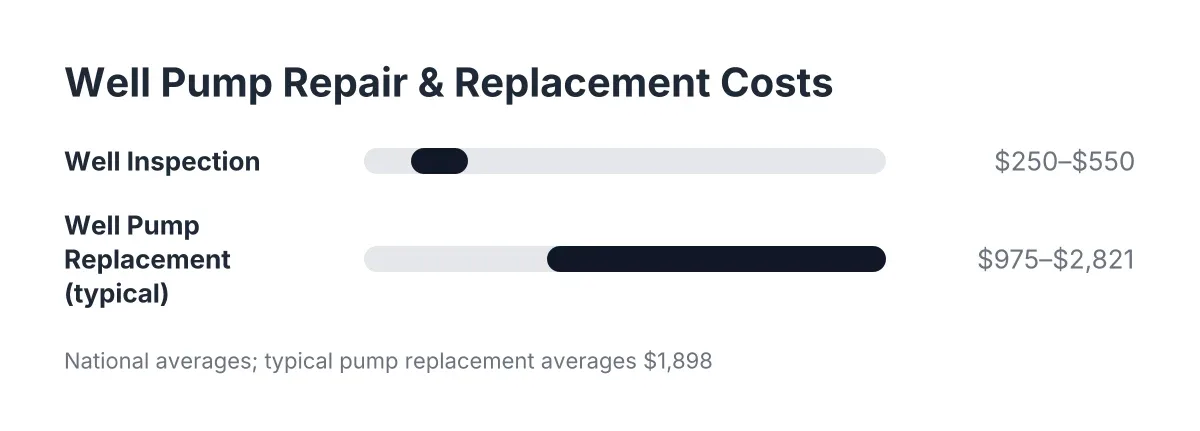
A well inspection is a full checkup of the casing, pump, pressure tank, controls, and water quality of a well system. Buyers often order one before closing on a rural property, and owners order one when something seems off but the cause is unclear. An inspection can tell you whether you need a small repair, a new pump, or in the worst case a conversation about well drilling.
Water Testing
Water testing means sending a sample of your well water to a lab to check for bacteria, nitrates, and other contaminants. Unlike city water, well water is your responsibility to monitor, and testing after any pump work is smart because opening a well can stir things up. Many providers include a basic test with pump replacement; ask whether yours does.
Symptoms and Sizing: Words That Signal Cost
Short Cycling
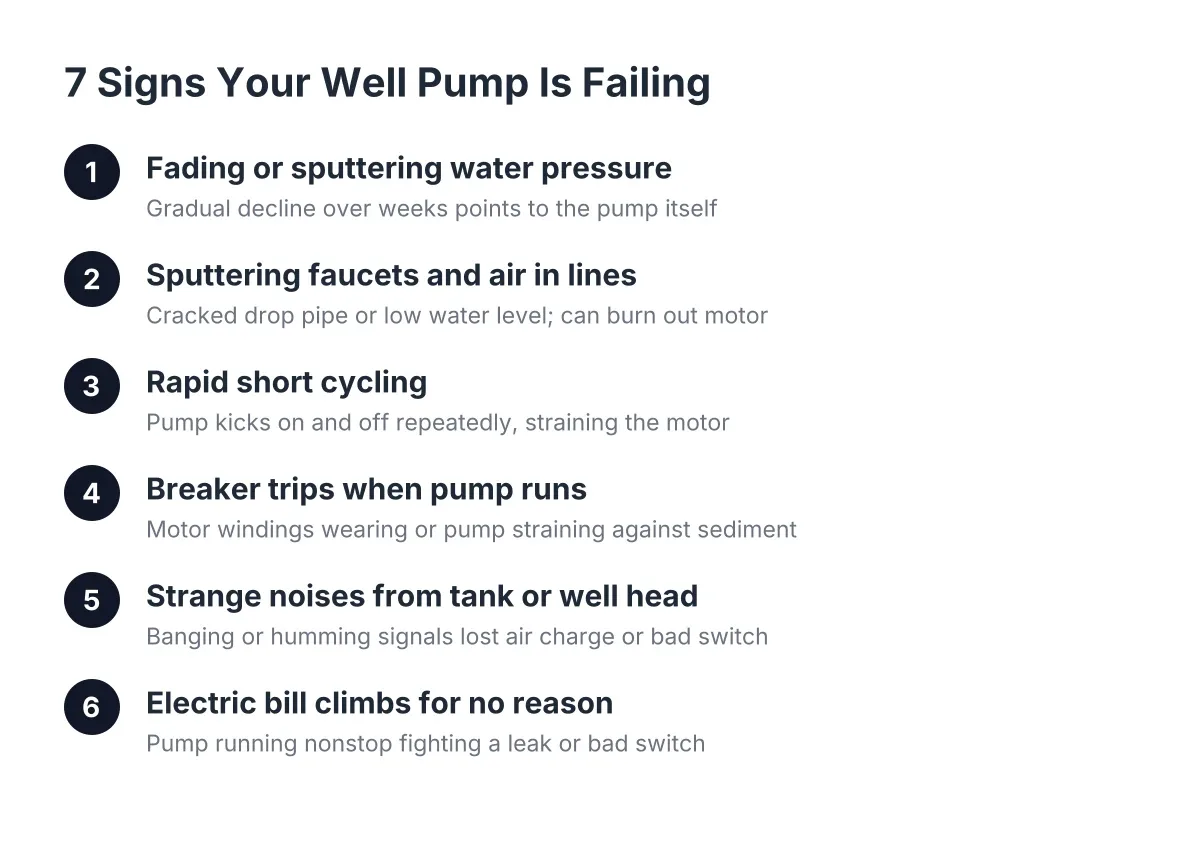
Short cycling means the pump turns on and off in fast bursts instead of running in steady stretches. It is usually a symptom of a waterlogged pressure tank or a bad switch, not the pump itself, but left alone it will burn the pump motor out. Catching short cycling early is the difference between a modest repair and a full replacement.
Dry Well
A dry well is a well where the water level has dropped so far the pump can no longer reach usable water. Sometimes the fix is lowering the pump deeper in the existing well; other times the well itself has run out of reach and drilling deeper or drilling new is the honest answer. A provider should check the static water level before declaring a well dry, because a failed pump can mimic the same symptoms.
Horsepower (HP)
Horsepower is the measure of a pump motor's power, and residential well pumps commonly run in fractional to low single-digit sizes. More horsepower is not automatically better; a pump too strong for your well's yield can pull the water level down and damage itself. The right size depends on your well depth, your yield, and how much water your household uses.
Head (Total Dynamic Head)
Head, or total dynamic head, is the total resistance a pump must overcome to deliver water, combining the vertical lift from the well plus friction in the pipes. It is the main number a technician uses to pick the right pump for your specific well. If your quote mentions head calculations, that is a sign the provider sized the pump for your property instead of installing a one-size-fits-all unit.
Using the Terms in Your Well Pump Replacement Glossary
You do not need to become a driller; you just need enough of the language to hold your ground. This glossary gives you the ability to read a quote line by line, ask why each part is on it, and recognize when someone is diagnosing carefully versus guessing. If a term on your quote is not here, ask the provider to explain it in plain words; a good local well drilling company will.
If you need well drilling, Clackamas Well Drilling can help.
Prefer to talk it through? Call (503) 782-5215 — a quick call is usually the fastest way to get a straight answer for your situation.