Seasonal Well Pump Replacement in Gresham: How to Handle a Winter Install
Well pumps rarely fail on a sunny day in July. More often the pressure drops during a cold snap in January, when the ground is wet, daylight is short, and a tenant is calling about no water. This guide walks through winter well pump installation step by step, with a focus on the winter challenges specific to Gresham and the surrounding rural edge, Sandy, Boring, Damascus, Estacada, Corbett, and Oregon City. If you own rental property on wells, or you bought land out here and inherited a well of unknown condition, the steps below will help you get the job done right in cold weather without overpaying, and without replacing a pump that only needed a repair.
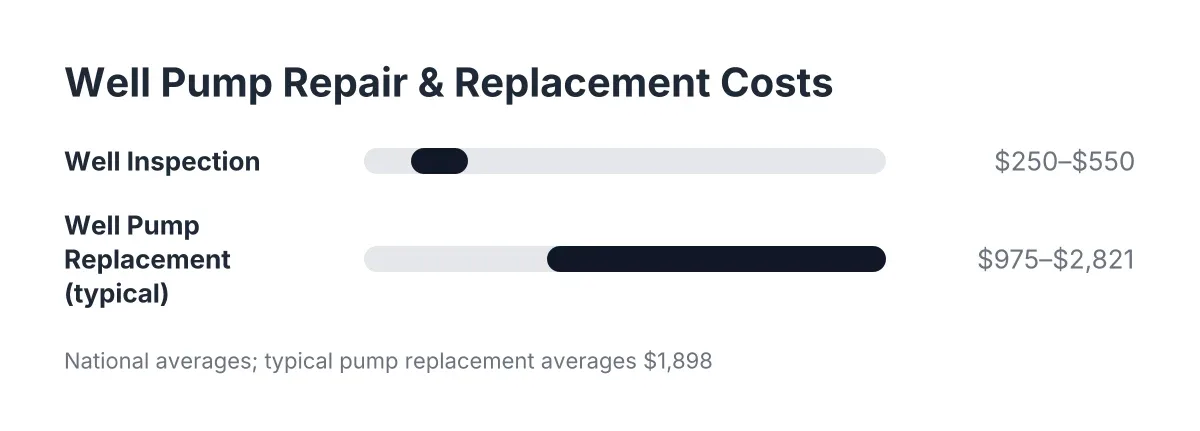
One number for context before we start. According to Angi, the national average well pump replacement cost is $1,898 based on 1,339 verified projects, with most homeowners paying between $975 and $2,821. Winter work in our area can push toward the higher end of a range like that because of access and weather, which is exactly what the steps below help you manage.
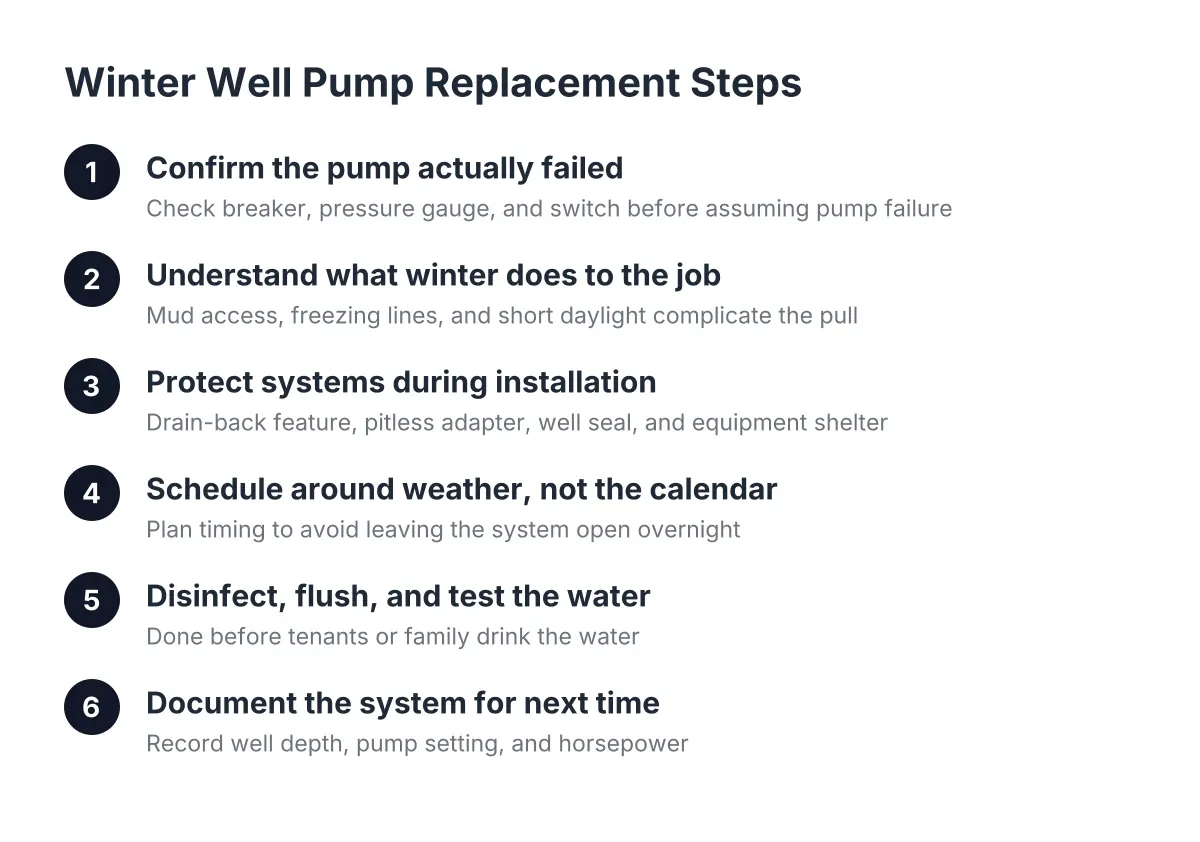
Step 1: Confirm the Pump Actually Failed Before You Replace Anything
Cold weather mimics pump failure. A frozen pipe in a crawl space, a failed pressure switch, or a tripped breaker all produce the same symptom a dead pump does: no water at the tap. Replacing a pump that was never broken is the most expensive mistake in winter well work.
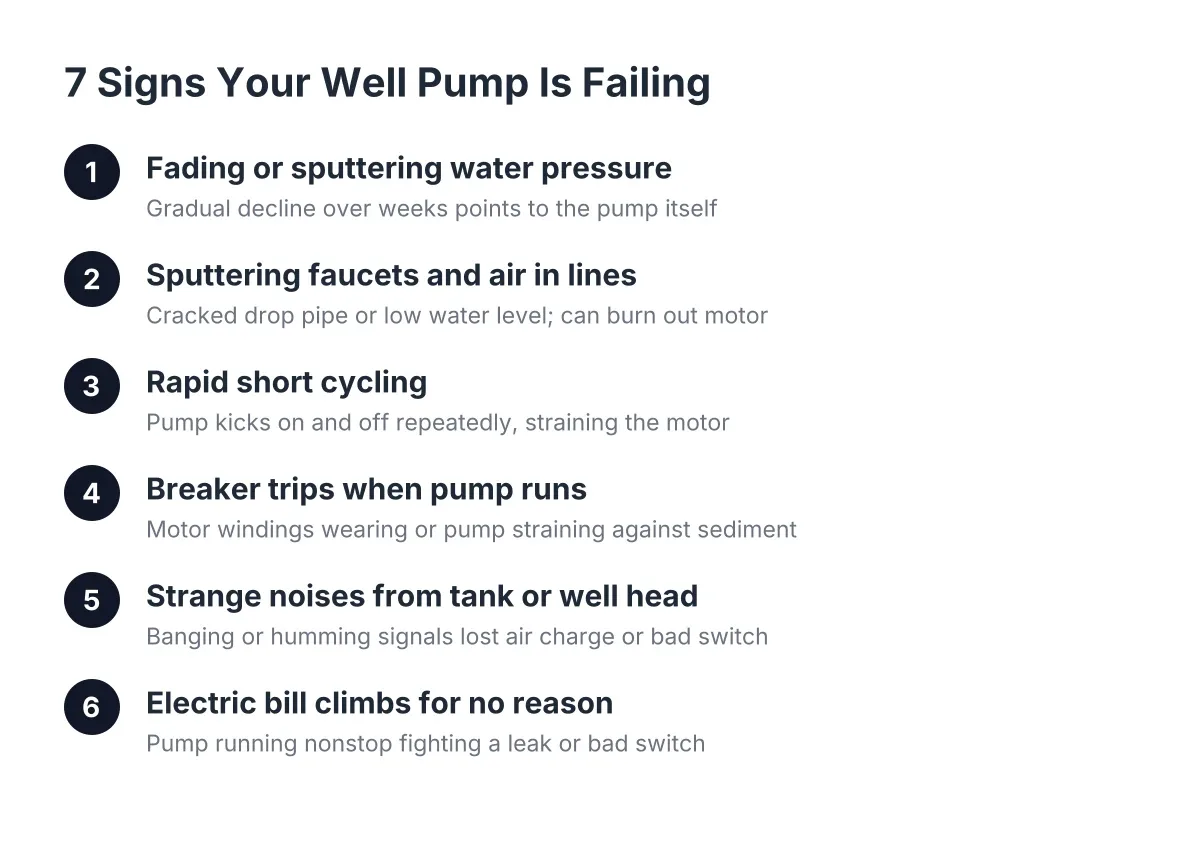
First, check the breaker for the well circuit. If it tripped, reset it once and watch what happens. If it trips again, stop; that points to an electrical fault or a seized pump, and it needs well pump repair diagnosis, not guesswork.
Next, look at the pressure gauge on the tank. Decreased water pressure, an inconsistent supply, or a complete loss of pressure are the classic signs of a failing well pump. However, a gauge that reads normal while no water flows often means a frozen line between the well and the house, not a pump problem at all.
If you want to check the pressure switch, shut off power to the well pump circuit first. That is a hard safety rule, not a suggestion. A voltage meter to confirm the power is actually off costs little and prevents a serious shock.
When Repair Beats Replacement
A pump under ten years old with a single failed component, a pressure switch, a bad wire splice, or a waterlogged pressure tank, is usually a repair candidate. A pump past the ten to fifteen year mark, or one that has failed more than once in two years, is usually worth replacing while a crew is already on site. Pump and well repair pricing almost always favors fixing the cheap part over pulling the whole system, so insist on a diagnosis before anyone quotes a full well pump replacement.
Step 2: Understand What Winter Does to the Job
Pump replacement is outdoor work. The crew pulls the drop pipe and wiring out of the well, often in sections, swaps the pump at the bottom, and lowers everything back down. In a Gresham winter, three things complicate that.
- Ground access. Saturated clay soil around Boring and Damascus turns well yards into mud. A service truck that can park beside the wellhead in August may need boards, a winch, or a longer pull path in January.
- Freezing during the work. Once the system is open, water sitting in exposed lines can freeze while the crew works. Good installers plan the sequence so the system is not left open and wet overnight.
- Short daylight. A deep submersible pull that takes most of a day in summer can run past dark in December. Expect the job to be scheduled earlier in the day, or split if weather turns.
In addition, converting an old jet pump system to a submersible in winter has its own wrinkle. When overhead clearance is limited, inside a pump house or under a low roof, the drop pipe and wiring come up in short sections, cut and repeated many times. That adds hours, and hours matter more when the crew is working in rain at 38 degrees.
None of this makes winter replacement a bad idea. It makes planning the difference between a one day job and a three day ordeal with a vacant rental in between.
Protecting Systems During Winter Well Pump Installation
Most residential well systems use a submersible pump paired with a pressure tank, which may sit in the well, in the house, or in a crawl space depending on the layout, according to the Indiana Department of Health. The pump itself lives underwater far below the frost line, so the pump is never the freeze risk. Everything above it is.
Match the pump to the well, not to a catalog page. A common mismatch is setting a pump far deeper than its rated capacity, oversizing on depth while undersizing on flow and horsepower. For a landlord with several wells, keeping a record of each well's depth, pump setting, and horsepower prevents this; a well inspection report from a water well service gives you those numbers if you do not have them.
For winter resilience specifically, ask about these considerations during the winter well pump installation process:
- A drain-back feature that lets water drain out of the line after each use, so the line cannot freeze even without insulation or heat. This is what keeps seasonal and year-round outdoor hydrants usable in January.
- Pitless adapter condition, the below-frost-line connection where the water line exits the casing. Winter is the right time to replace a corroded one since the system is already open.
- A firmly tightened well seal, especially on shallower installations. A shallow-set pump can jump when it kicks on, and a loose seal lets that movement break plumbing connections.
- Shelter for above-ground equipment. A pump or pressure tank can survive exposed, but a three-sided lean-to that blocks wind and rain without fully enclosing the equipment protects it better than nothing and avoids the moisture problems of a sealed box.
One reassurance while you are choosing: submersible pumps are built for frequent, heavy running. Tenants do not need to ration water to protect the new pump.
Step 4: Schedule Around Weather, Not Around the Calendar
Winter scheduling in the east Portland metro is about windows, not dates. Drilling rigs often sit idle in the worst weather, so many well contractors shift toward service and repair calls in winter. As a result, a pump replacement can sometimes get on the schedule faster in January than in the busy summer season, as long as the yard is passable.
Say a landlord in Estacada has a duplex on one well and the tenants lose pressure the week before Christmas. In that scenario, the smart sequence is: diagnose by phone and a quick site visit the same week, confirm it is the pump and not a frozen line, order the correctly sized replacement, then book the pull for the first dry morning. A typical crew can complete a straightforward submersible swap in a day once parts are on hand. The expensive version of this story is skipping the diagnosis, replacing the pump on a muddy Friday, and discovering the real problem was a frozen pipe under the house.
For multi-property owners, seasonal well pump replacement planning works in the other direction too. If an annual well inspection in the fall flags a pump drawing high amps or cycling oddly, replacing it in October on dry ground beats replacing it in February in the mud. According to Angi, a typical professional well inspection costs $250 to $550, which is cheap insurance against a mid-winter failure and a vacancy.
Step 5: Disinfect, Flush, and Test Before Tenants or Family Drink the Water
Opening a well to swap a pump introduces surface contamination risk, so finish the job the same way a new well gets finished. The installer disinfects the well and pump components with chlorine, and the system should then be run heavily to flush the chemical taste and residue out before regular use, per standard practice described by the San Diego County Department of Environmental Health.
After flushing, test the water. It is standard practice to take a water sample after well work, and the CDC notes the well should be run extensively first so the sample reflects normal water quality rather than lingering disinfectant. For a rental, keep that test result in the property file; it answers tenant questions and documents due diligence before re-renting a unit.
Winter adds one caution here. Flushing means running a lot of water outside, and in freezing weather that discharge can ice over walkways and driveways. Direct it away from paths and parking.
Step 6: Document the System for the Next Failure
Pumps are consumables. HomeAdvisor's data suggests most well owners face major well work on a ten to twenty year cycle, so assume you will do this again. The hour you spend documenting now saves a diagnostic visit later.
Record the pump make, model, horsepower, setting depth, install date, wire gauge, and pressure switch settings. Photograph the wellhead, the pitless adapter area, and the tank setup. If you own multiple well-served rentals, a single sheet per property turns any future call to a well service and repair contractor into a short conversation instead of an exploratory visit.
One honest limitation: if your well itself is marginal, the pump is not the whole story. The U.S. Geological Survey reports about 1,220 Oregon domestic wells went dry or fell below pumping capacity between June 2021 and December 2023, and the true number is likely higher since reporting is not mandatory. If a pump keeps losing prime or the well cannot keep up in late summer, the question becomes well capacity, not pump quality, and that calls for an aquifer and well depth assessment by a professional before you spend more on equipment. Land buyers planning new construction should treat that assessment as step zero; a correctly sized pump cannot fix a weak well.
What a Winter Pump Swap Should Feel Like When It Goes Right
A well-run winter well pump installation in the Gresham area looks uneventful. Diagnosis first, so you only pay for what actually failed. A pump sized to the well's real depth and demand. Freeze protection built in with a drain-back line, a sound pitless adapter, and a tight well seal. Disinfection, a hard flush, a water test, and a file of photos and specs for next time.
As of 2026, every one of those steps is standard practice for any competent water well service working the Clackamas and Multnomah County rural edge. If a contractor skips the diagnosis or cannot tell you the pump's setting depth after the job, keep looking. The right local crew treats a January no-water call as routine work, because out here, it is.
If you need well drilling, Clackamas Well Drilling can help.
Prefer to talk it through? Call (503) 782-5215 — a quick call is usually the fastest way to get a straight answer for your situation.