Well Pump Installation Terms Explained: A Plain-English Glossary
If you own a water well near Gresham, or you're buying a home that has one, the quotes and inspection reports can read like a foreign language. This well pump installation glossary translates the terms you'll actually meet, in plain English, so you can read a quote line by line and ask the right questions. Each entry starts with a short definition you can trust on its own, then tells you why the term matters to your wallet. Nothing here requires a trade background, just a few minutes.
- Submersible pump: a pump that sits down inside the well
- Jet pump: a pump that sits above ground and pulls water up
- Pressure tank: the storage tank that keeps pressure steady
- Pressure switch: the on-off brain of the system
- Pitless adapter: the underground connection at the well casing
- Well casing: the pipe that lines the drilled hole
- Well cap: the sealed lid on top of the well
- Drop pipe: the pipe the pump hangs from
- Check valve: a one-way gate that keeps water from draining back
- Foot valve: a check valve at the bottom of a suction line
- Pump curve: the chart matching pump power to your well
- Static water level: where the water sits when the pump is off
- Drawdown: how far the water level drops while pumping
- Well yield: how much water the well can give per minute
- Pulling the pump: lifting the old pump out of the well
- Well inspection: a checkup of the whole well and pump system
Well Pump Installation Glossary: Equipment Names and Terms
Most of the confusion in a quote comes from hardware names, so this part of the well pump installation glossary starts there. These are the parts a provider will list when pricing well pump replacement or a new system.
Submersible Pump
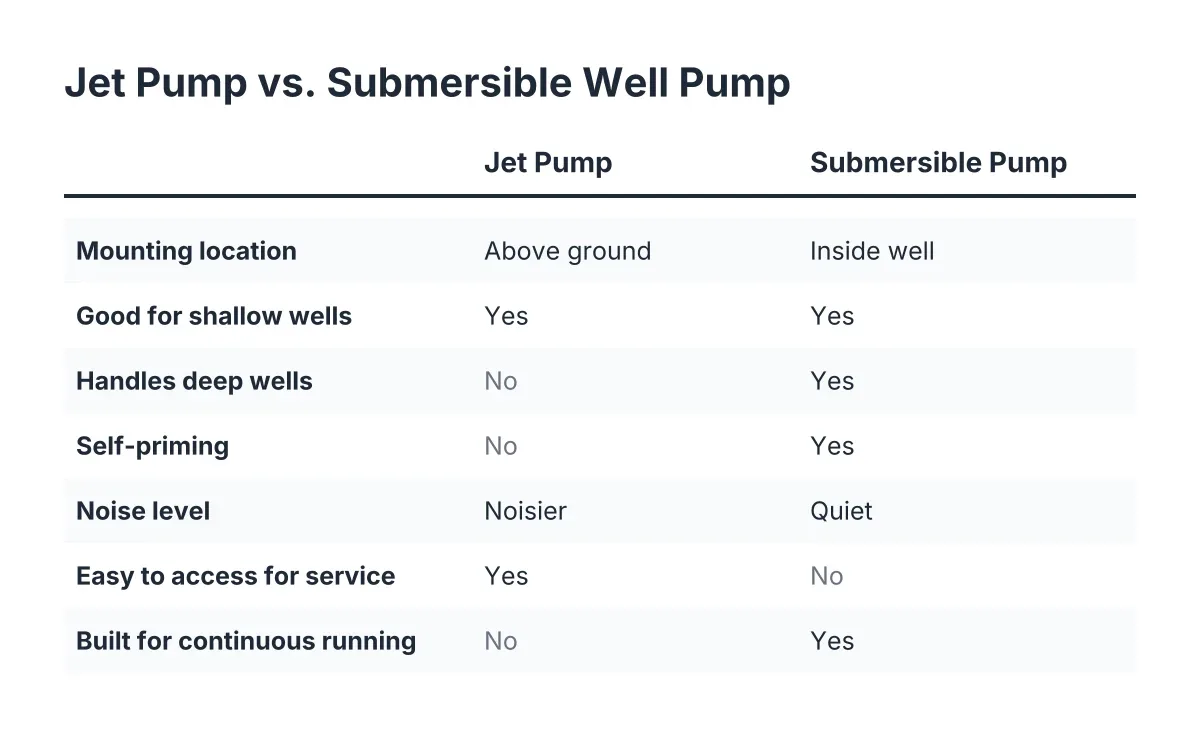
A submersible pump is a sealed electric pump that hangs deep inside the well, underwater, and pushes water up to your house. Most modern homes on private wells use this type because it handles deeper wells and runs quietly, since the motor is underground. If your quote names a submersible pump, expect the job to include pulling equipment and labor to lift it out and lower the new one in. The deeper the pump sits, the more pipe and wire the job needs, which is a real cost factor. Our guide to the cost of well pump installation walks through how depth changes the price.
Jet Pump
A jet pump is a pump that sits above ground, often in a basement or well house, and pulls water up from the well by suction. Jet pumps work best on shallower wells, which is why you see them more on older rural properties. They're easier to reach for repairs, but they can lose their prime (the water inside that makes suction work) and need restarting. If a provider suggests switching from a jet pump to a submersible, they're usually solving a depth or reliability problem, not upselling.
Pressure Tank
A pressure tank is a metal tank, usually with an air bladder inside, that stores pressurized water so your pump doesn't have to run every time you open a tap. It smooths out water pressure and protects the pump from switching on and off constantly, a pattern called short cycling that wears motors out fast. A failing pressure tank is one of the most common reasons a pump dies early. Many well pump replacement quotes include a new tank for exactly that reason, and it's worth asking why if yours doesn't.
Pressure Switch
A pressure switch is the small control that turns the pump on when water pressure drops and off when it climbs back up. It's the on-off brain of the whole system, and it's a cheap part compared to the pump itself. When a well stops delivering water, a bad pressure switch is one of the first things a well pump repair visit checks. If a provider mentions replacing it during a pump job, that's routine, not padding.
Pitless Adapter
A pitless adapter is a fitting on the side of the well casing, below the frost line, that lets the water pipe exit the well underground without freezing. It's the standard way modern wells connect to the house in cold-winter country, including the Gresham and east Portland metro area. During a pump pull, the installer disconnects the drop pipe at this fitting. If an older well doesn't have one, adding it is a scope item worth seeing on the quote.
Well Casing
Well casing is the steel or plastic pipe that lines the drilled hole and keeps the well from collapsing or letting surface water in. Its diameter limits what size pump fits down the well, which matters when you're upgrading. Damaged or shallow casing can let dirty groundwater into your well water, so an installer who checks casing condition before quoting is doing it right.
Well Cap
A well cap is the sealed cover on top of the casing above ground that keeps insects, debris, and surface water out of the well. A cracked or loose cap is a common finding in a well inspection and a cheap fix compared to the contamination it prevents. If you can see your wellhead in the yard, the cap is the part you're looking at.
Drop Pipe
Drop pipe is the pipe a submersible pump hangs from, running from the pump up to the pitless adapter. It carries both the water and the pump's weight, so its material and condition matter. On older wells, corroded steel drop pipe sometimes gets replaced with modern materials during a pump swap. More footage of drop pipe means more material and labor, which is one honest reason two similar-sounding jobs can price differently.
Check Valve
A check valve is a one-way gate in the water line that stops water from draining back down the well when the pump shuts off. Without a working one, the system loses pressure between cycles and the pump runs more than it should. Most submersible pumps have one built in, and installers often add another in the line. It's a small part that protects an expensive one.
Foot Valve
A foot valve is a check valve with a screen on the bottom of a jet pump's suction line, down in the well. It holds water in the line so the jet pump keeps its prime. If a jet pump keeps losing prime, a worn foot valve is a prime suspect, and replacing it means pulling the suction line.
Well Pump Installation Guide: Water Levels, Yield, and Sizing
Pump Curve
A pump curve is the manufacturer's chart showing how much water a pump moves at different depths and pressures. Installers use it to match the pump to your specific well instead of guessing. An oversized pump short cycles and dies young; an undersized one leaves you with weak showers. If your installer talks about sizing from the curve, that's a sign they're matching equipment to your well, not just selling what's on the truck.
Static Water Level
Static water level is how far below ground the water sits in your well when the pump has been off for a while. It tells the installer how deep the water starts, which feeds into pump sizing and drop pipe length. It changes with the seasons and with how the local aquifer, the underground layer of water-bearing rock and gravel, is doing. Providers describe it in general terms for a reason; it's a moving target, not a fixed number.
Drawdown
Drawdown is how far the water level in the well falls while the pump is running. A well with heavy drawdown needs the pump set deeper so it never sucks air, which damages the motor. Drawdown is why two neighbors with similar houses can need different pump setups. It's measured during testing, not guessed from the driveway.
Well Yield
Well yield means how much water your well can produce, usually described in gallons per minute. It sets the ceiling for everything: pump size, irrigation plans, and whether the well can keep up with a full household. A low-yield well isn't a dead well; it just needs equipment sized to match, sometimes with added storage. An aquifer and well depth assessment is how a well drilling company figures this out before recommending anything.
The Work: What Happens on Installation Day
Pulling the Pump
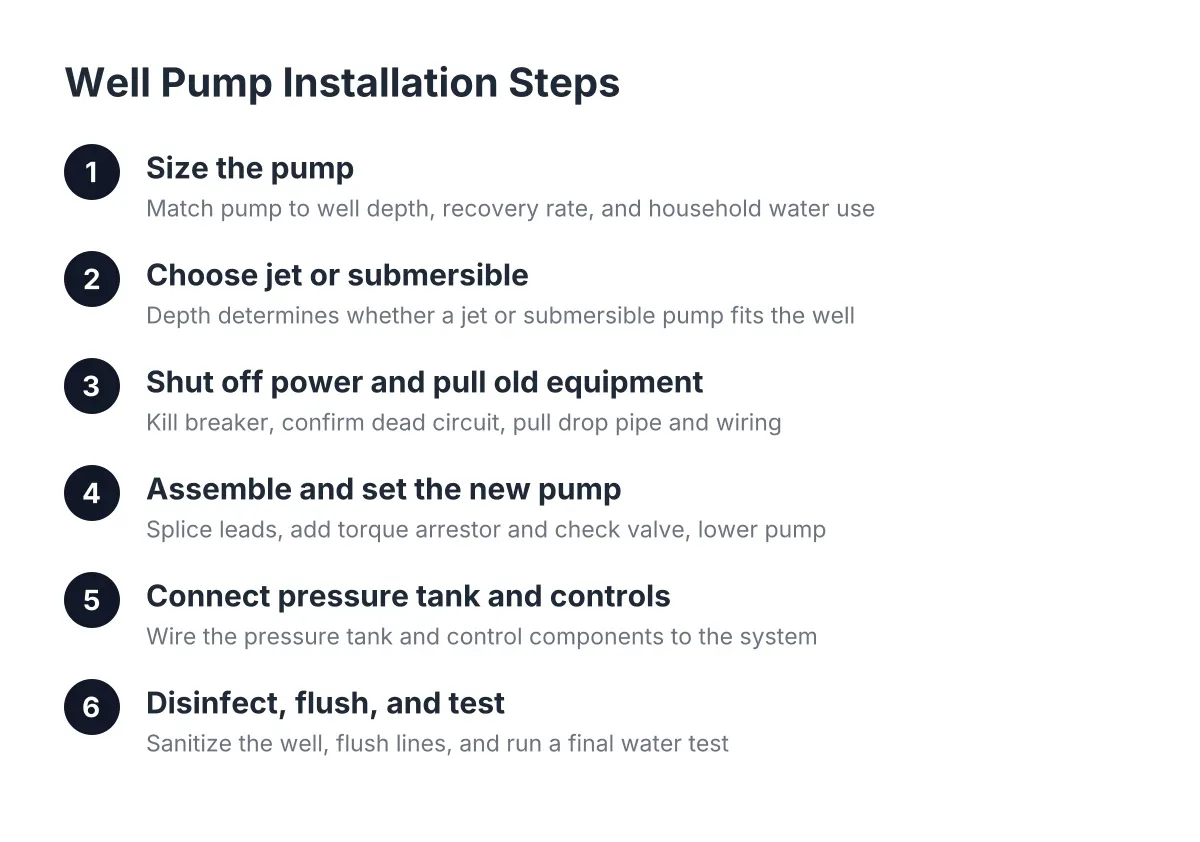
Pulling the pump means lifting the old pump, drop pipe, and wiring out of the well, usually with a hoist or pump truck. It's the physical core of most well pump replacement jobs, and depth drives the effort. A pump a few dozen feet down comes out fast; one set deep in the well takes equipment and time. This single line item explains much of the labor cost in a quote for water well pump installation, so ask how deep yours sits.
Well Inspection
A well inspection is a checkup of the whole system: the wellhead, cap, casing, pump performance, pressure tank, and often a water test. Buyers ordering one before closing on a rural property around Sandy, Boring, or Estacada is standard practice, and smart. An inspection before well pump installation also protects you, because it catches casing or water quality problems a new pump alone won't fix. Pair it with well water testing if the home has sat empty.
Using These Terms
What this well pump installation glossary gives you is a working vocabulary, enough to read a quote line by line and know what each part does. When a provider mentions drawdown, drop pipe footage, or a new pressure tank, you'll understand why it's there instead of wondering if it's padding. Ask about static water level, yield, and pump sizing, and you'll hear fast whether you're talking to a water well specialist or a generalist.
If you need well drilling, Clackamas Well Drilling can help.
Prefer to talk it through? Call (503) 782-5215 — a quick call is usually the fastest way to get a straight answer for your situation.