Well Water Testing Terms Explained: A Plain-English Glossary
If you own a home on a private well around Gresham, Sandy, Boring, or Damascus, sooner or later a lab report or a quote will land on your kitchen table full of words nobody explained. This well water testing glossary translates those terms into plain English so you can read a quote line by line, ask a provider sharper questions, and spot a real problem before it costs you. Each entry starts with a one-sentence definition you can use on its own. Nothing here requires a chemistry degree.
- Water Quality: how safe and usable your water is
- Potability: safe to drink, or not
- Contaminant: anything in the water that should not be there
- Coliform Bacteria: the standard warning-sign bacteria test
- E. coli: the serious cousin of coliform
- Nitrates: fertilizer and septic byproducts in groundwater
- pH: how acidic or basic your water is
- Hardness: minerals that scale up pipes and fixtures
- Total Dissolved Solids (TDS): everything dissolved in the water, added up
- Turbidity: cloudiness in the water
- Chain of Custody: the paper trail for your sample
- Certified Lab: a lab the state trusts to run the tests
- Sampling Point: where the water sample actually comes from
- Shock Chlorination: disinfecting a well with chlorine
- Aquifer: the underground layer your well draws from
- Wellhead: the top of your well above ground
- Well Inspection: a full checkup of the well and pump system
Well Water Testing Glossary: Water Quality Basics
These are the terms that describe what is actually in your water. Most of the confusion in a well water testing glossary starts right here, because the words sound scarier than they usually are.
Water Quality
Water quality is a measure of how clean and safe water is for a specific use, such as drinking, cooking, or bathing. For a well owner, it comes down to two questions: is anything harmful in the water, and is anything in it that damages plumbing or tastes bad? A test report answers both by listing what was found and comparing it to safe drinking water limits. Poor water quality does not always mean a bad well; sometimes it means a treatment system or a repair at the wellhead.
Potability
Potability means water is safe for people to drink. A potability test is the basic package most buyers and lenders ask for, and it usually covers bacteria plus a short list of common contaminants like nitrates. If a provider says your water is "non-potable," that means it failed at least one of those checks, not that the well is ruined. The fix depends on what failed, which is why the full report matters more than the pass-or-fail stamp.
Contaminant
A contaminant is any substance in water that does not belong there, whether it is harmful to health or just a nuisance. Health contaminants include bacteria and nitrates; nuisance contaminants include iron that stains sinks or minerals that make water taste metallic. Lab reports usually separate the two, and it pays to know which column a result sits in. A nuisance result affects comfort and plumbing; a health result affects whether you should drink the water today.
Coliform Bacteria
Coliform bacteria are a family of common bacteria that labs use as a warning sign that surface water or waste may be getting into a well. Most coliforms will not make you sick on their own. Their presence means the well has an opening somewhere it should not, such as a cracked cap or a bad seal. A positive coliform result usually leads to a wellhead check, disinfection, and a retest rather than panic.
E. coli
E. coli is a specific type of coliform bacteria that lives in the guts of people and animals, so finding it in well water points to sewage or animal waste contamination. Unlike general coliforms, E. coli is a stop-drinking-the-water result until the source is found and fixed. Common causes include a failing septic system nearby or surface runoff reaching the well. A provider who finds it will look hard at the well cap, casing, and anything uphill of the wellhead.
Nitrates
Nitrates are compounds from fertilizer, septic systems, and animal waste that dissolve easily into groundwater. They are a standard part of nearly every well test because they are common in rural areas and risky for infants and pregnant women at high levels. Nitrates have no taste or smell, so a lab test is the only way to know they are there. On the rural edge of Clackamas and Multnomah County, where wells and septic systems share property lines, this test earns its place.
pH
pH is a number that tells you how acidic or basic your water is, on a scale where 7 is neutral. Water on the acidic side can slowly eat copper pipes and fixtures, leaving blue-green stains and pinhole leaks over time. Water on the basic side tends toward scale and bitter taste. pH itself rarely makes water unsafe, but it explains a lot of plumbing complaints, and it is cheap to test alongside everything else.
Hardness
Hardness is the amount of dissolved calcium and magnesium in water, the minerals behind white scale on faucets and spotty dishes. Hard water is a nuisance issue, not a health issue. It matters to you because scale shortens the life of water heaters and can build up inside a well pump system over the years. If a quote mentions hardness, the provider is talking about treatment equipment like a softener, not a well repair.
Total Dissolved Solids (TDS)
Total dissolved solids, or TDS, is the combined weight of everything dissolved in a water sample, including minerals, salts, and metals. Think of it as a single summary number for how "loaded" your water is. A high TDS reading does not name a culprit; it tells the lab and your provider to look closer at the individual results. Big changes in TDS over time can signal a change in the aquifer or a problem with the well itself.
Turbidity
Turbidity is a measure of how cloudy water is, caused by tiny suspended particles like silt or sediment. Cloudy well water often shows up after heavy rain, after well drilling nearby, or when a pump starts pulling sand. Turbidity is not automatically dangerous, but it can shield bacteria from disinfection and wear out pump parts. If your water turned cloudy suddenly, mention it when you book a test, because it changes what the provider looks for.
Testing Process and Paperwork: Well Water Testing Terms
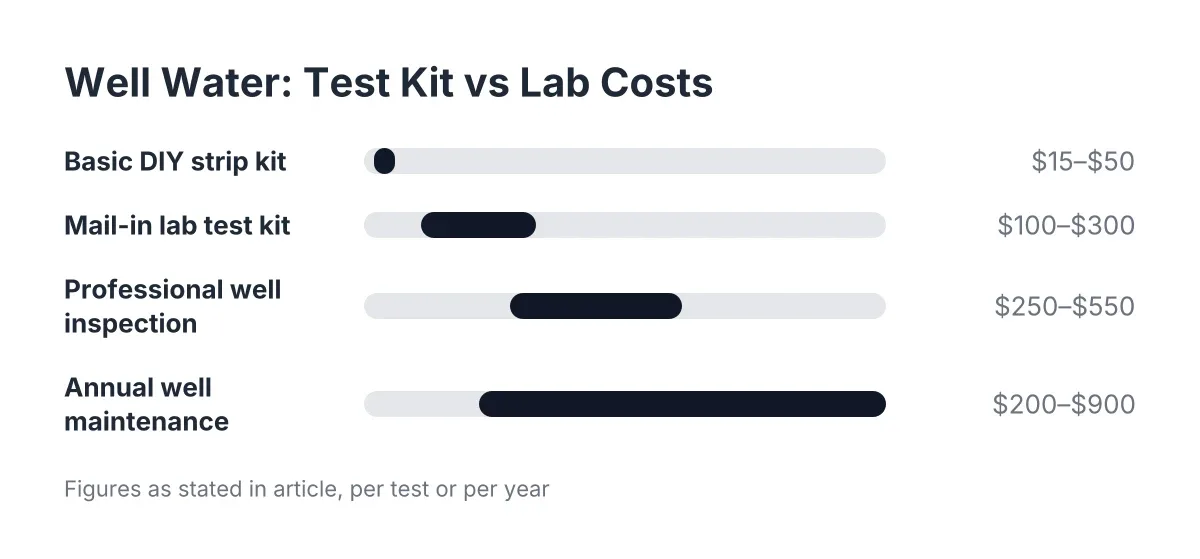
These terms show up on quotes, lab forms, and real estate documents. If you are pricing the work, our plain-language guide to what well water testing costs walks through the same factors a provider weighs.
Chain of Custody
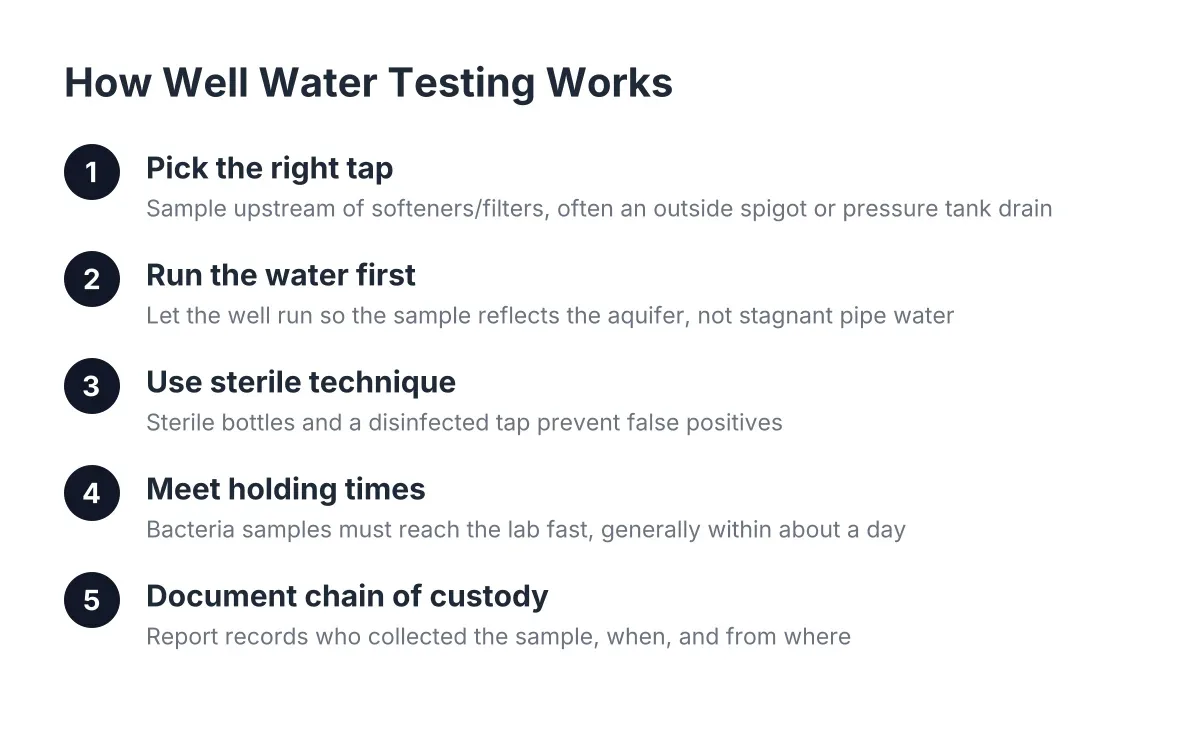
Chain of custody is the signed paper trail that tracks a water sample from the moment it is collected to the moment the lab tests it. It proves nobody swapped, spilled, or mishandled the sample along the way. For a home sale, lenders and buyers often require it, which is one reason a professionally collected sample can matter more than a do-it-yourself kit. If a quote includes chain of custody handling, that line is about paperwork and accountability, not extra chemistry.
Certified Lab
A certified lab is a laboratory approved by the state to run drinking water tests using accepted methods. Certification matters because a lender, a health department, or a buyer will only accept results from one. Hardware store test strips can hint at a problem, but they carry no weight in a transaction. When a provider quotes well water testing, part of what you are paying for is a sample that a certified lab will accept and stand behind.
Sampling Point
A sampling point is the exact spot where a water sample is collected, such as an outside spigot near the wellhead or the kitchen tap. The location changes what the test tells you. A sample near the well shows what the aquifer is delivering; a sample at the tap shows what you actually drink after the pressure tank, pipes, and any filters. A careful provider picks the sampling point to match the question you are asking.
Shock Chlorination
Shock chlorination is the process of disinfecting a well by adding a strong chlorine mix, letting it sit through the whole system, and flushing it out. It is the standard first response to a coliform hit, and it is routine after well pump repair or new well drilling opens the system up. It fixes contamination that got in once; it does not fix an ongoing entry point like a cracked casing. A retest afterward tells you which kind of problem you have.
The Well Itself
A water test only makes sense alongside the hardware it came from. These terms cover the parts of the well that testing conversations keep circling back to.
Aquifer
An aquifer is an underground layer of water-bearing rock, sand, or gravel that a well taps into for its supply. It is the source of everything a test measures, which is why two neighbors on the same road can pull different water. Depth to usable groundwater varies across the Gresham and east Portland area, so providers assess the aquifer before drilling rather than assuming. If your water chemistry shifts over the years, the aquifer is one of the first suspects.
Wellhead
The wellhead is the visible top of your well above ground, including the casing pipe and the cap that seals it. It is the front door contamination uses to get in, so most bacteria problems trace back to a damaged cap, a low wellhead that floods, or fittings that no longer seal. A quick wellhead look is part of any honest testing visit. Keeping it capped, upright, and clear of runoff prevents a lot of failed tests.
Well Inspection
A well inspection is a full checkup of the well and pump system, usually pairing a water test with a look at the wellhead, pump performance, pressure tank, and visible wiring. Buyers order one before closing on a rural property; owners order one when something changes, like pressure drops or cloudy water. It costs more than a test alone because it covers the hardware, not just the water. If a quote bundles inspection with testing, you are buying answers about the whole system.
Using These Terms
That is the whole point of this well water testing glossary: the next time a lab report says "total coliform present" or a quote lists "chain of custody sampling," you know what you are reading and what to ask next. Go through any quote line by line, match each item to the terms above, and ask the provider to explain anything that does not fit. A good one will walk you through it without flinching.
If you need well drilling, Clackamas Well Drilling can help.
Prefer to talk it through? Call (503) 782-5215 — a quick call is usually the fastest way to get a straight answer for your situation.