Well Drilling Site Requirements in Gresham, OR: Water Table, Soil, and Permits
If you own land or rental property on the rural edge of the Gresham and east Portland metro area, the first question before any drilling rig shows up is whether your site can actually support a well. Well drilling site requirements come down to three things: how deep the water table sits under your ground, what kind of soil and rock the drill has to punch through, and what Oregon requires on paper before anyone breaks ground. This guide walks through all three, plus the practical stuff like rig access and setbacks, so you can plan the project and budget it realistically instead of guessing.
This matters double if you manage properties from a distance. You cannot walk the site every week. You need to know up front what the land can support, what it will cost in general terms, and what the timeline looks like, so you can authorize work in writing and keep a tenant or a construction schedule moving without surprises.
What Are the Site Requirements for Drilling a Well in Oregon?
A well drilling site in Oregon needs four things: legal setbacks from septic systems and property lines, a workable path for the drilling rig, geology that a driller can reach water through, and a start card filed with the Oregon Water Resources Department before drilling begins. Most rural parcels around Gresham, Sandy, Boring, Damascus, Estacada, Corbett, and Oregon City can meet all four. The question is rarely whether you can drill; it is where on the parcel, how deep, and at what cost.
Here is the short list a well drilling company works through before staking a location:
- Setbacks. Oregon rules require minimum distances between a new well and contamination sources like septic tanks, drainfields, livestock areas, and property lines. On a small rural lot with an existing septic system, the setbacks often decide the well location for you.
- Access. A drilling rig is a heavy truck. It needs a clear, reasonably firm path to the site and room to set up and raise the mast. Steep driveways, soft ground in winter, low branches, and overhead power lines all shrink your options.
- Geology. The soil and rock under your parcel decide how the well gets drilled, how much casing it needs, and how long the job takes. This is the biggest cost variable in the whole project.
- Paperwork. Only a licensed well constructor can drill a water well in Oregon, and a start card must be filed with the state before work begins. After completion, the driller files a well log documenting depths, materials, and water encountered.
Each of these deserves a closer look, because each one moves the budget.
How Deep Is the Water Table Around Gresham?
There is no single water table depth for the Gresham area, because groundwater around here sits in different aquifers at different depths depending on where your parcel sits between the Columbia River lowlands and the Cascade foothills. A well in Corbett can be a different animal than a well in Damascus or Estacada, even though they are all within a short drive of each other. That is why an honest driller talks in ranges tied to nearby well logs, not a single number.
The good news is that you do not have to guess. Oregon keeps public records of every well drilled in the state, and those well logs show the depth, the materials encountered, and the water produced for parcels near yours. Before committing to a new well installation, a driller or an aquifer and well depth assessment can pull the logs for neighboring properties and give you a realistic depth range for your specific area. The state also watches groundwater actively; Oregon's Groundwater Hydrology Section maintains more than 400 state observation wells and measures more than 1,200 additional observation wells across the state to track aquifer conditions, according to Oregon Water Resources Department.
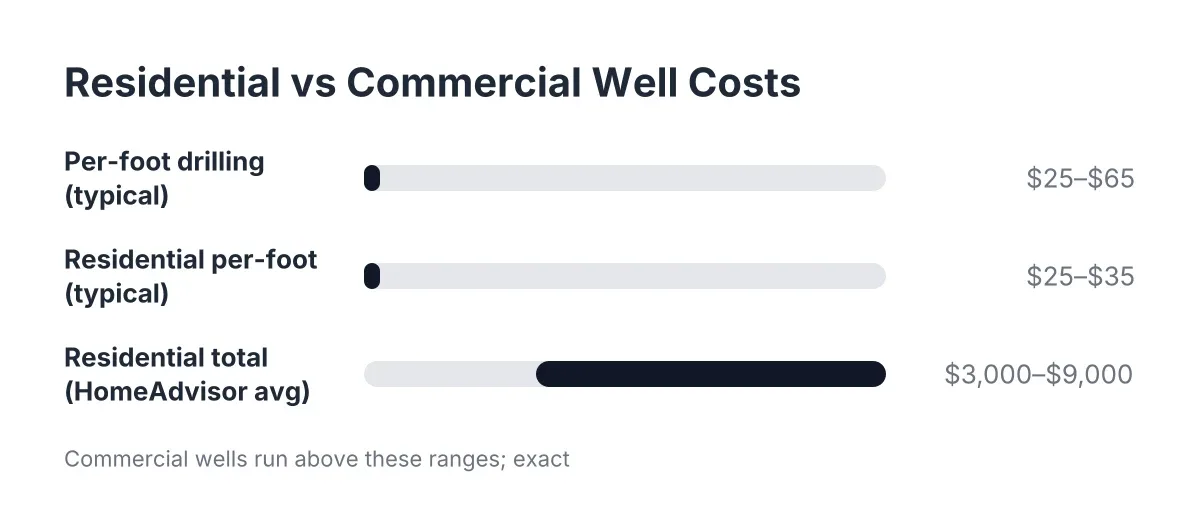
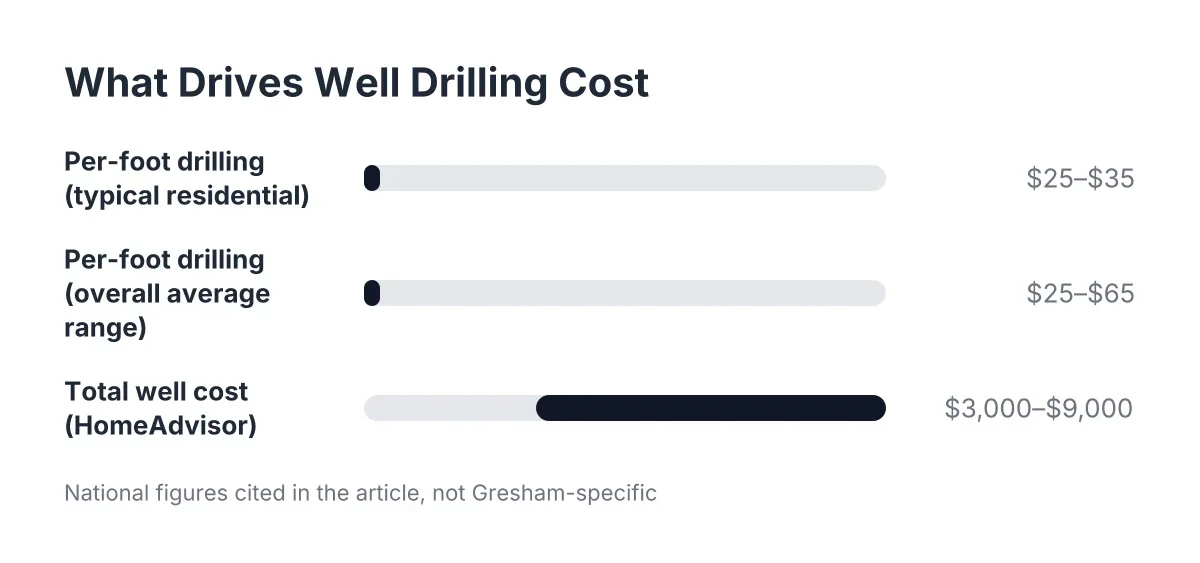
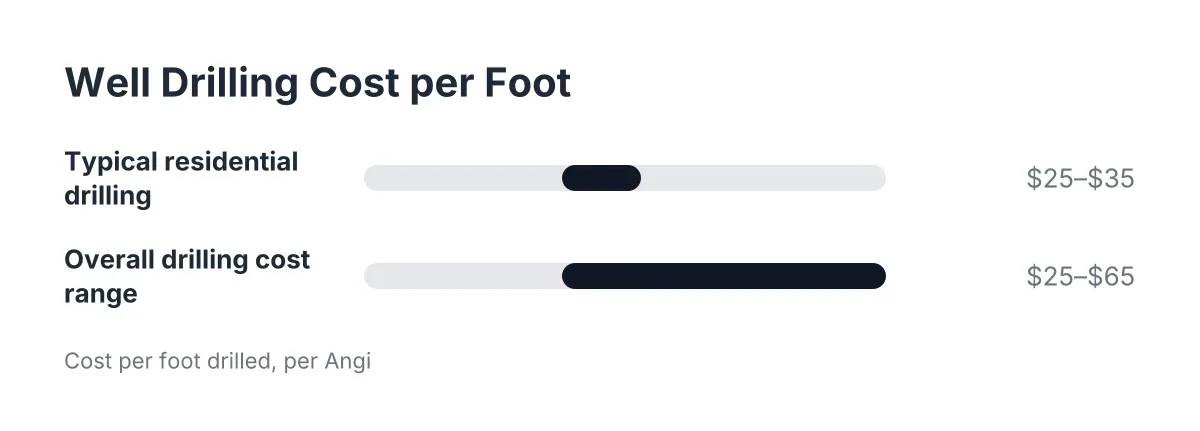
Depth matters for one blunt reason: most drilling is billed by the foot. According to Angi, the average cost to drill a well runs from $25 to $65 per foot, with $25 to $35 per foot as a typical guideline for most residential projects. A site where neighbors hit reliable water at moderate depth is a different budget conversation than a foothill parcel where wells run deep. Neighboring well logs are the closest thing you get to a preview of your own invoice.
One more reason to take depth seriously: aquifers are not static. The U.S. Geological Survey reports that about 1,220 domestic wells in Oregon went dry or fell below pumping capacity between June 2021 and December 2023, and the true figure is likely higher since reporting is not mandatory. A driller who understands the local aquifer will often recommend drilling past the first water encountered. Going deeper confirms whether the flow holds steady, gives sediment room to settle below the pump, and builds in a margin if the water table drops in a dry year. It costs more per foot up front and can save a re-drill later. That is a trade-off worth discussing before the rig arrives, not after.
How Soil and Rock Impact Well Drilling Site Requirements
East of Portland, the ground is a mix of volcanic rock, old flood deposits, clay, gravel, and sand, and the layering changes from one parcel to the next. Soil type is the second big site requirement because it controls three things: drilling speed, casing needs, and the risk that a chosen spot does not produce.
Loose material like sand and gravel drills fast but needs steel casing to keep the hole from collapsing. Hard rock drills slowly, which raises the per-foot cost, but the borehole can stand open below the casing. Clay can be the trickiest; it drills easily but often holds little water, so a driller may have to pass through thick clay layers to reach a productive zone underneath.
When the drill reaches solid rock, standard practice is to keep going. According to New Hampshire Department of Environmental Services, when a drill hits the top of bedrock after passing through sand or overburden, drillers plan to go at least about 10 feet into that rock to seal out dirty surface water and create a proper socket for setting the casing. That casing seal is not optional in Oregon; it is what protects your well water from surface contamination, and it is part of what the state well log documents.
Throughout the job, the driller keeps a log noting depth, the materials passed through, where water showed up, and how clear it ran. For an owner managing from a distance, that log is your record. It tells you what you paid for, foot by foot, and it becomes part of the public well record that helps the next person who drills nearby.
Can You Know for Sure There Is Water Before Drilling?
No one can guarantee water at a specific spot before drilling, but a driller can get close using neighboring well logs, local geology, and the aquifer patterns in your part of the county. On the Gresham rural edge, most parcels sit over usable groundwater; the open questions are depth and flow rate, not whether water exists at all.
For a land buyer or investor, this uncertainty is manageable. Suppose you are considering a bare parcel outside Estacada for a future rental build. Drilling the well before you commit to construction financing tells you exactly what water access costs on that land. If the well comes in deep and expensive, you know that before you pour a foundation, not after. Many buyers treat the well as the first real test of the parcel for exactly this reason.
The dry-hole risk is the honest limitation here. If a hole comes up short, you still pay for the footage drilled. A careful site assessment shrinks that risk substantially, but it never reaches zero, and any well drilling company that promises otherwise is selling you something.
Oregon Permitting and Well Drilling Site Rules
Oregon's permitting for a domestic well is simpler than many owners expect. For an ordinary household well, you generally do not need a water right; exempt domestic use is allowed under state law. What the state does require is that a licensed well constructor drill the well, file a start card with the Oregon Water Resources Department before drilling, follow the state's construction standards for casing and sealing, and file a well log afterward.
The site-specific piece is setbacks. State rules set minimum distances between a new well and potential contamination sources. The ones that most often shape well drilling site requirements on a rural parcel are:
- Distance from septic tanks and drainfields, both yours and your neighbor's.
- Distance from property lines and easements.
- Distance from livestock yards, fuel tanks, and chemical storage.
- Clearance from buildings and overhead power lines so the rig can work safely.
In addition, Multnomah and Clackamas counties handle the septic side of a new build, so on undeveloped land the well and the septic system get planned together. The septic site evaluation often happens first, because the drainfield location then dictates where the well can legally go. If you are budgeting the whole water and waste picture for a new build or a rental turn, the combined well and septic installation cost is the number to plan around, and it is driven by the same parcel: soil, slope, and space.
New tenant turnover is another moment the paperwork matters. Say a landlord with three well-served rentals near Sandy is prepping a unit for a new tenant. Pulling the well log, running well water testing, and scheduling a well inspection before the lease starts creates a written baseline. If the tenant reports low pressure eight months later, you have a documented starting point instead of a mystery, and you can authorize well pump repair or pump and well repair over the phone with confidence.
What a New Well Costs Once the Site Checks Out
Nationally, homeowners spend an average of $3,000 to $9,000 to drill a well, with an average around $5,500, according to HomeAdvisor. Forbes puts the average at $5,625 with a similar range. Treat those as national baselines, not Gresham quotes; your actual number depends on the site factors above. Four variables drive nearly all of the spread:
- Depth to water. The dominant factor, since drilling bills by the foot.
- Geology. Hard rock and unstable formations slow the drill and add casing.
- Site access. A tight, steep, or soft site adds setup time and sometimes site prep cost.
- Dry-hole risk. Rare with good siting, but real, and it is why depth assessment up front is money well spent.
Beyond the borehole, a complete new well installation includes water well pump installation, a pressure tank, wiring, and the pipe run to the house. Residential systems typically pair a submersible pump with a pressure tank, which may sit in the well, the house, or a crawl space depending on layout, according to Indiana Department of Health. Pump sizing follows the finished well, not the other way around; the driller sounds the completed well with a weighted tape to measure static water level and total depth, then matches the pump to what the well actually produces. Skipping that step is how wells end up with oversized pumps that run dry and burn out early, which turns into a well pump replacement bill a few years down the road.
Two finishing steps close out the job. First, the driller disinfects the well and pump components with chlorine and runs the well hard to flush the residue out, per standard practice described by San Diego County Department of Environmental Health. Second, the well gets a water sample after extensive running, so the test reflects normal water quality rather than lingering disinfectant, a practice the CDC describes as standard for new wells. For a rental, keep that first lab report in the property file. It is your proof of potable water at move-in.
Planning the Project From a Distance
For an owner who is not on site, the sequence matters as much as the specs. A workable plan for a 2026 project looks like this:
- Pull the records first. Neighboring well logs and county septic records tell you most of what the site will allow before anyone visits.
- Get the site assessment in writing. A depth range, an access evaluation, and a proposed well location you can approve remotely, with photos.
- Confirm setbacks and the septic plan together. On bare land, the drainfield evaluation usually locks the well location.
- Authorize drilling with a per-foot structure you understand. Know what happens to the price if the well runs deeper than expected, and get it in writing before the rig mobilizes.
- Require the well log, flow test, and water test at completion. These documents are your remote verification that the work matches the invoice.
Timeline-wise, the drilling itself often takes days, not weeks, once the rig is on site. The longer waits tend to be scheduling the rig, the county septic evaluation on new construction, and lab turnaround on water testing. Building those into your plan keeps a construction loan or a lease start date from slipping.
One caution: every parcel is different, and nothing in this guide substitutes for a site visit. Slopes, easements, an old undocumented well, or a neighbor's drainfield you did not know about can all shift the plan. Have a licensed well contractor or hydrogeologist evaluate the specific parcel before you commit money to the build. When you search for well drilling companies near me, favor the one who wants to see your neighbors' well logs before quoting, sends you photos and the drill log without being asked, and puts the per-foot terms in writing. That is the vendor a distant owner can actually work with, on this well and on the next property after it.
If you need well drilling, Clackamas Well Drilling can help.
Prefer to talk it through? Call (503) 782-5215 — a quick call is usually the fastest way to get a straight answer for your situation.