Water Well Filter Maintenance in Gresham, OR: What Clogs Pumps and When to Replace
If you own a well you can't check on every day, water well filter maintenance is the single cheapest habit that keeps you off the emergency call list. A clogged filter starves the house of pressure, hides real water quality problems, and in the worst case lets sediment chew up a pump that costs real money to replace. Understanding a well filter replacement schedule keeps you ahead of emergencies. This guide is a step-by-step routine built for people managing wells in Gresham, OR and the rural edge around it, including buyers who are about to inherit a well they've never laid eyes on. Follow these steps in order, and you'll know what's clogging, what to replace, and what to leave for a pro.
One note before you start: not every well has a filter. A properly constructed well can produce water that needs no additional filtration at all. But in areas with mineral-rich groundwater, many owners around Sandy, Boring, Damascus, and Estacada run sediment filters, iron filters, water softeners, or UV units. This routine covers all of them.
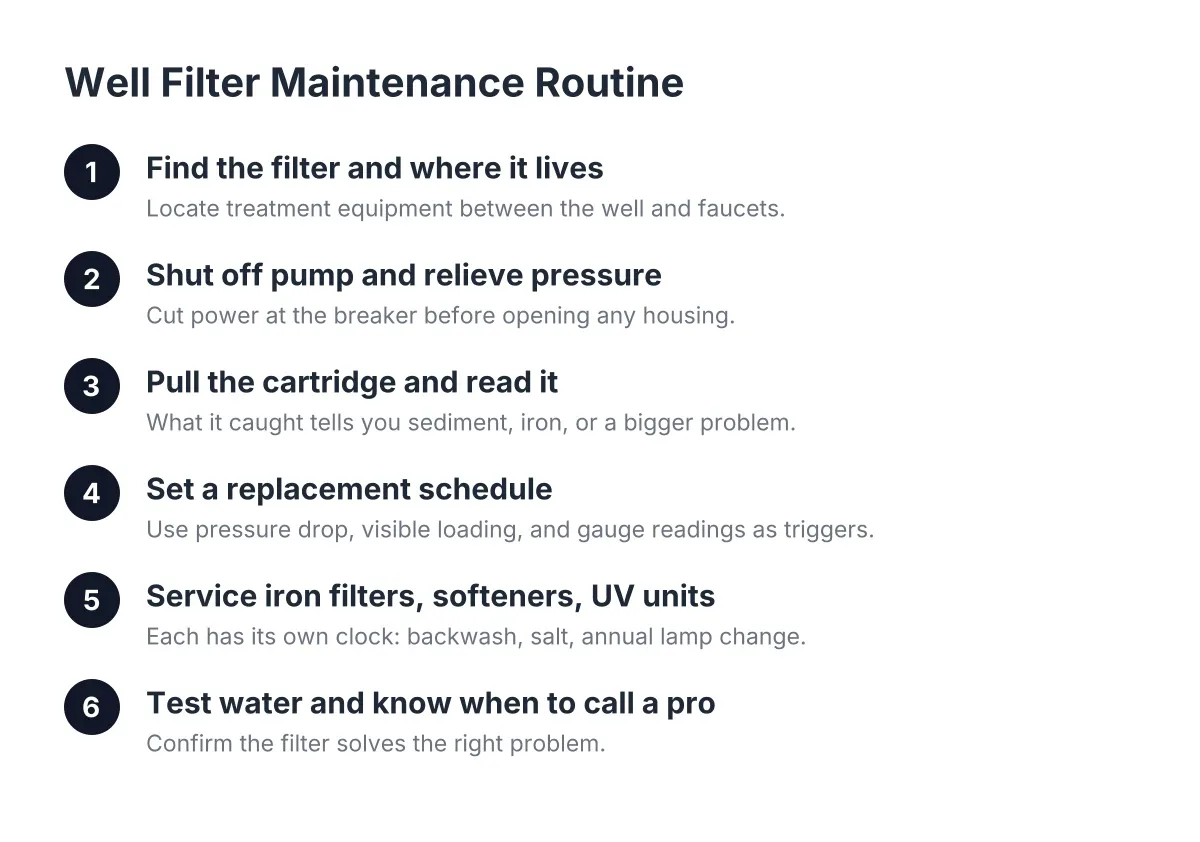
Step 1: Find Out Whether Your Well Has a Filter, and Where It Lives
Start by locating every piece of treatment equipment between the well and your faucets. Residential well systems typically use a submersible pump paired with a pressure tank, and that tank may sit in the well, in the house, or in a crawl space depending on the layout, according to the Indiana Department of Health. Filters usually sit right after the pressure tank.
Look in these places:
- A well house or pump house near the wellhead, which often holds the pressure tank, filtration, and a water conditioner
- The garage or utility room where the water line enters the house
- A crawl space, especially on older homes around Corbett and Oregon City
If you're a buyer under contract on a rural property, this step matters double. Ask the seller directly: does this well have a filter, and when was the cartridge last changed? A seller who can't answer is telling you the system hasn't been touched. Put that question on your inspection list alongside the age of the pump and the last water test.
Step 2: Shut Off the Pump and Relieve Pressure Before Opening Anything
Before you touch a filter housing, cut power to the well pump at the breaker or disconnect switch. Then open a faucet downstream of the filter and let the pressure bleed off until the water stops. Skipping this step is how people crack filter housings and flood a pump house.
There's a second reason this matters. Never let a well pump run with no water moving through it; a pump running dry can burn itself up. Shutting the pump off first protects it while the system is open. Constant pressure systems often have dry-run protection built in, but a standard pressure switch setup does not, so don't count on the equipment to save itself.
Step 3: Pull the Sediment Cartridge and Read What's On It
The used cartridge is a report card on your well. Unscrew the housing, pull the cartridge, and look at what it caught before you throw it away. What you find tells you what to do next:
- Fine tan or gray grit: normal sediment. Replace the cartridge and move on.
- Orange or rust-colored slime: iron. Expect to change filters more often, and consider a dedicated iron filter if you don't have one.
- Black, oily residue: often manganese or iron bacteria. Worth a water test.
- Coarse sand or rock fragments: a warning sign. Sand usually means the well screen or casing has a problem, or the pump is set too low. That's a call to a well servicing company, not a filter swap.
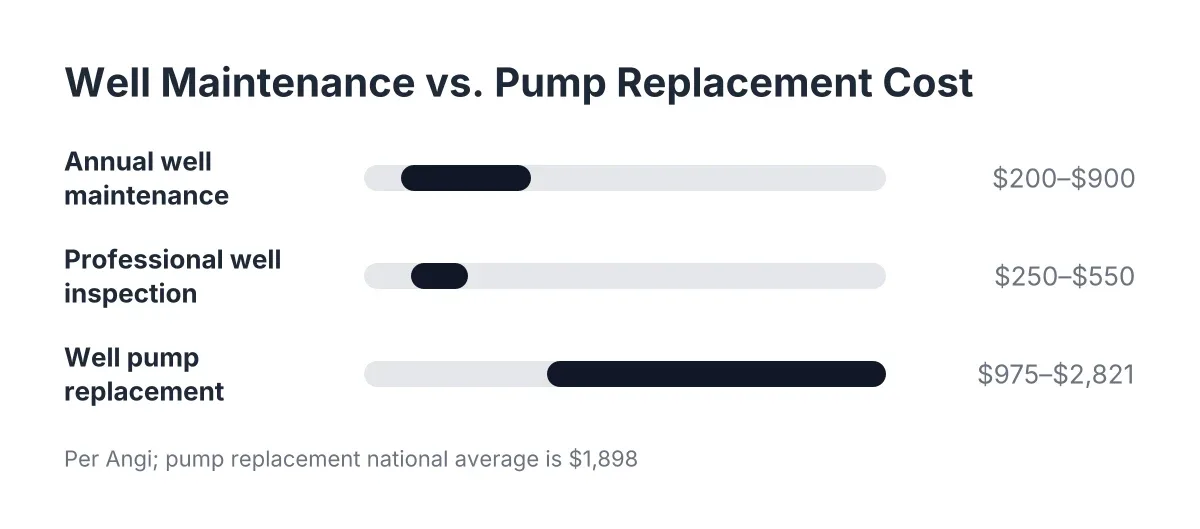
Here's why sand matters so much. Sediment that gets past a clogged or blown-out filter doesn't just cloud the water; it wears pump impellers and fouls pressure switches. According to Angi, the national average well pump replacement cost is $1,898, with most homeowners paying between $975 and $2,821. A few dollars of cartridges per year is cheap insurance against that bill.
Step 4: Set Your Well Filter Replacement Schedule Based on Water Quality
How often should you change a well filter? For most wells around Gresham, OR, a sediment cartridge lasts somewhere between one and six months, and the honest answer depends on your water. Iron-heavy wells can plug a cartridge in weeks. Clean, deep wells on good aquifers might go half a year. The filter itself tells you when it's time.
Use these triggers instead of a fixed date:
- Pressure drop: if pressure at the faucets fades but recovers after a cartridge change, the filter was the bottleneck.
- Visible loading: if the cartridge is fully discolored when you pull it, shorten your interval.
- Pressure gauges: housings with gauges before and after the filter make this easy; a spread of 10 to 15 psi between them means the cartridge is loading up.
For an owner managing a rental in Estacada or a second property in Damascus, the practical move is to change the cartridge on every visit and note the date on the housing with a marker. Tracking your filter maintenance through written dates becomes your maintenance log, and they're exactly the kind of documentation a future buyer's inspector will want to see.
Step 5: Service Iron Filters, Softeners, and UV Units on Their Own Clocks
Cartridge filters are only part of water well filter maintenance on a treated system. Each piece of equipment has its own routine:
- Iron filters: check that the backwash cycle actually runs and that media gets replenished per the manufacturer's schedule. Iron filter maintenance on well water is mostly about confirming the automatic regeneration hasn't silently failed.
- Water softeners: keep salt in the brine tank and break up any hardened salt bridge.
- UV purifiers: replace the lamp annually and clean the quartz sleeve; a dirty sleeve blocks the light even when the lamp glows.
- Pressure tank: periodically drain and flush it to clear sediment that settles at the bottom. Accumulated grit in the tank ends up in your fixtures.
In addition, know one quirk that catches buyers off guard. A well that ran clear for decades on a shallow well pump or jet pump can suddenly show iron staining after a submersible pump goes in. The submersible moves water through the casing with more force, which stirs up iron buildup on the well walls that the old low-velocity pump never disturbed. If you're buying a home where the pump was recently replaced and the water now runs orange, the well didn't fail; the new pump revealed what was always there, and a whole-house filter may be the fix.
Step 6: Test the Water So the Filter Is Solving the Right Problem
A filter can only treat what you know about. The U.S. Environmental Protection Agency reports that in a USGS study of 2,100 private wells, about one in five produced water with at least one contaminant above a human-health benchmark, and more than 23 million U.S. households rely on private wells. Annual well water testing tells you whether your sediment cartridge is enough or whether you need treatment for bacteria, nitrates, or arsenic that no spin-down filter will catch.
Two situations demand a test regardless of the calendar. First, buying a home on a well: get a documented test during your inspection window so you have numbers for negotiation, not the seller's word. Second, after a new well is drilled: the driller disinfects the well and pump with chlorine, and according to the CDC, you should run the well extensively before sampling so the test reflects normal water quality rather than lingering disinfectant.
Step 7: Know When Filter Maintenance Stops Being the Answer
Suppose a homeowner in Boring changes a sediment cartridge, gets two good weeks of pressure, then watches it plug again, three times in a row. In that scenario, the filter isn't the problem; it's the messenger. Repeated rapid clogging usually points to a failing well screen, a pump set too close to the bottom, or a well pulling in surface sediment. Those are jobs for a well drilling and pump repair company, because the fix may involve pulling the pump or rehabilitating the well itself.
Bring in a professional for any of these:
- Cartridges clogging in days instead of months
- Sand or gravel in the housing
- Pressure problems that a fresh cartridge doesn't fix, which can point to the pump or pressure tank instead
- Any bacteria hit on a water test
A professional well inspection typically runs $250 to $550, and overall well maintenance costs homeowners $200 to $900 per year, according to Angi. Compare that to re-drilling: HomeAdvisor puts the average cost to drill a well at $5,500, with most projects between $3,000 and $9,000. Consistent well and pump maintenance, with filter care as the frontline habit, is what keeps you on the cheap end of that spread.
A Simple Maintenance Log for Owners Who Aren't On-Site: Tracking Your Well Filter Replacement Schedule
For landlords, investors, and anyone managing a well from a distance, the whole routine condenses to a one-page log kept in the pump house:
- Date of every cartridge change and what the old cartridge looked like
- Pressure gauge readings before and after the filter
- Softener salt level and iron filter regeneration check
- Annual water test date and results
- Any pressure complaints from tenants or family, with dates
That log does two jobs. It catches a clogging trend before it becomes a no-water call, and it becomes proof of upkeep when you sell. A buyer's inspector in Gresham, OR who finds dated cartridges and a test history treats the well as an asset. One who finds a corroded housing with a five-year-old cartridge treats it as a negotiation point, and not in your favor.
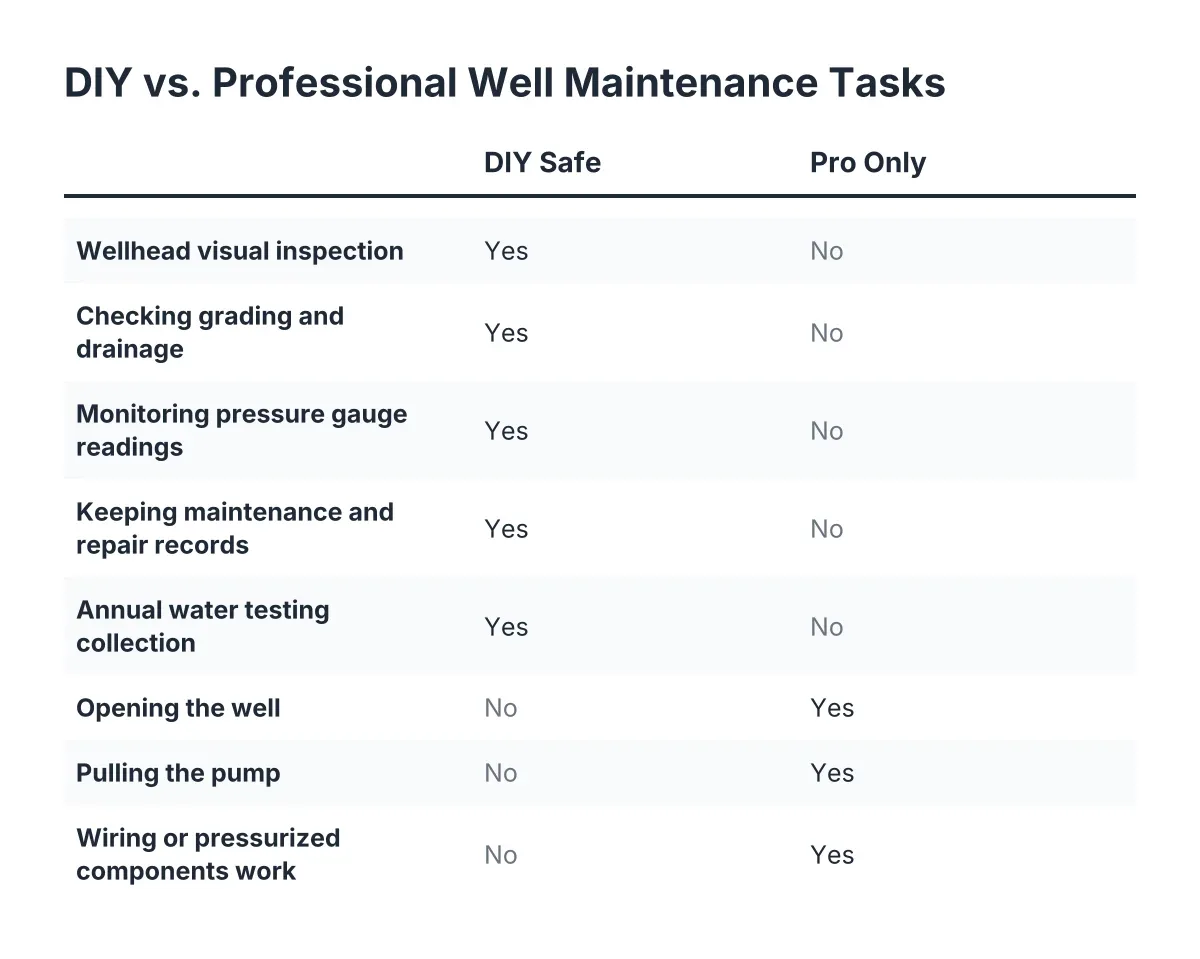
Filter work is the part of well upkeep you can do yourself in twenty minutes. The judgment calls, like whether sand in the housing means a screen failure or whether a pressure drop is the pump dying, are where a local well servicing company earns its fee. Do the twenty-minute part on schedule, and you'll need the expensive part far less often.
If you need well drilling, Clackamas Well Drilling can help.
Prefer to talk it through? Call (503) 782-5215 — a quick call is usually the fastest way to get a straight answer for your situation.