Well and Pump Maintenance Terms Explained: A Plain-English Glossary
If you own a home on a private well around Gresham, Sandy, Boring, or Damascus, you will eventually get a quote full of words nobody explained. This well and pump maintenance glossary translates that jargon into plain English so you can read an estimate line by line, ask sharper questions, and spot a problem before it turns into a dry tap. Every entry starts with a short, standalone definition, then tells you why the term matters to your water and your wallet. Keep it open the next time a driller or pump tech starts talking shop.
- Aquifer: the underground layer your water comes from
- Static water level: how high water sits in the well at rest
- Drawdown: how far the water level drops while pumping
- Well casing: the pipe that lines the well hole
- Well cap: the lid that seals the top of the well
- Well screen: the filter section at the bottom of the casing
- Submersible pump: a pump that works underwater, down in the well
- Jet pump: an above-ground pump for shallower wells
- Pressure tank: the tank that stores water under pressure
- Pressure switch: the control that turns the pump on and off
- Check valve and foot valve: one-way gates that keep water from draining back
- Pitless adapter: the underground fitting that sends water to your house
- Short cycling: a pump turning on and off too often
- Flow rate and yield: how much water the well can deliver
- Well inspection: a checkup of the whole well and pump system
- Water testing: lab checks on what is in your well water
- Shock chlorination: a one-time disinfection of the well
- Pump replacement: swapping out a worn or failed pump
The Well Itself: Ground, Water, and Structure
These are the words that describe the hole in the ground and the water in it. They come up in every well drilling quote and most well inspection reports.
Aquifer: Well and Pump Maintenance Glossary Entry
An aquifer is an underground layer of sand, gravel, or fractured rock that holds groundwater your well can draw from. Around the east Portland metro, wells reach different aquifers at different depths, and that depth drives a big share of drilling cost. If a driller talks about "hitting the aquifer," they mean reaching a layer that produces usable water. A deeper aquifer means more drilling, more casing, and often a stronger pump.
Static Water Level
The static water level is the height water naturally sits in your well when the pump has been off for a while. It matters because it shows how much water is stored above your pump before anything runs. A dropping static level over the years can signal a declining aquifer or a well that needs attention. Providers measure it during a well inspection to size a replacement pump correctly.
Drawdown
Drawdown is how far the water level in your well drops while the pump runs. A small drawdown means the aquifer refills the well about as fast as you pull water out. A large drawdown means the pump is outpacing the well, which can lead to the pump running dry. If a tech mentions heavy drawdown, expect a conversation about pump sizing, pump depth, or the well's yield.
Well Casing
Well casing is the steel or plastic pipe that lines the drilled hole and keeps it from collapsing. It also blocks surface water and dirt from leaking into your drinking water. Cracked or corroded casing is a common cause of sudden sediment or bacteria problems. Casing repairs are structural work, so a quote that mentions casing usually means more than a quick pump fix.
Well Cap
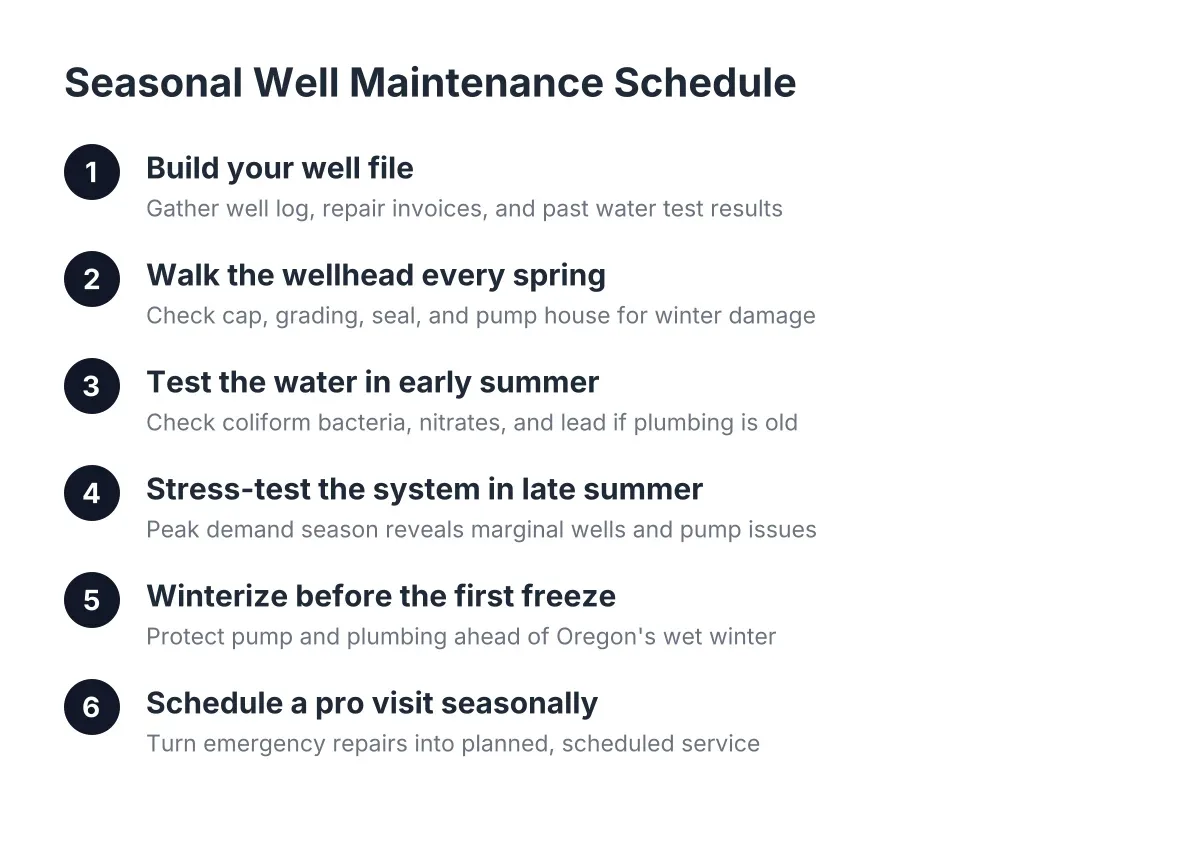
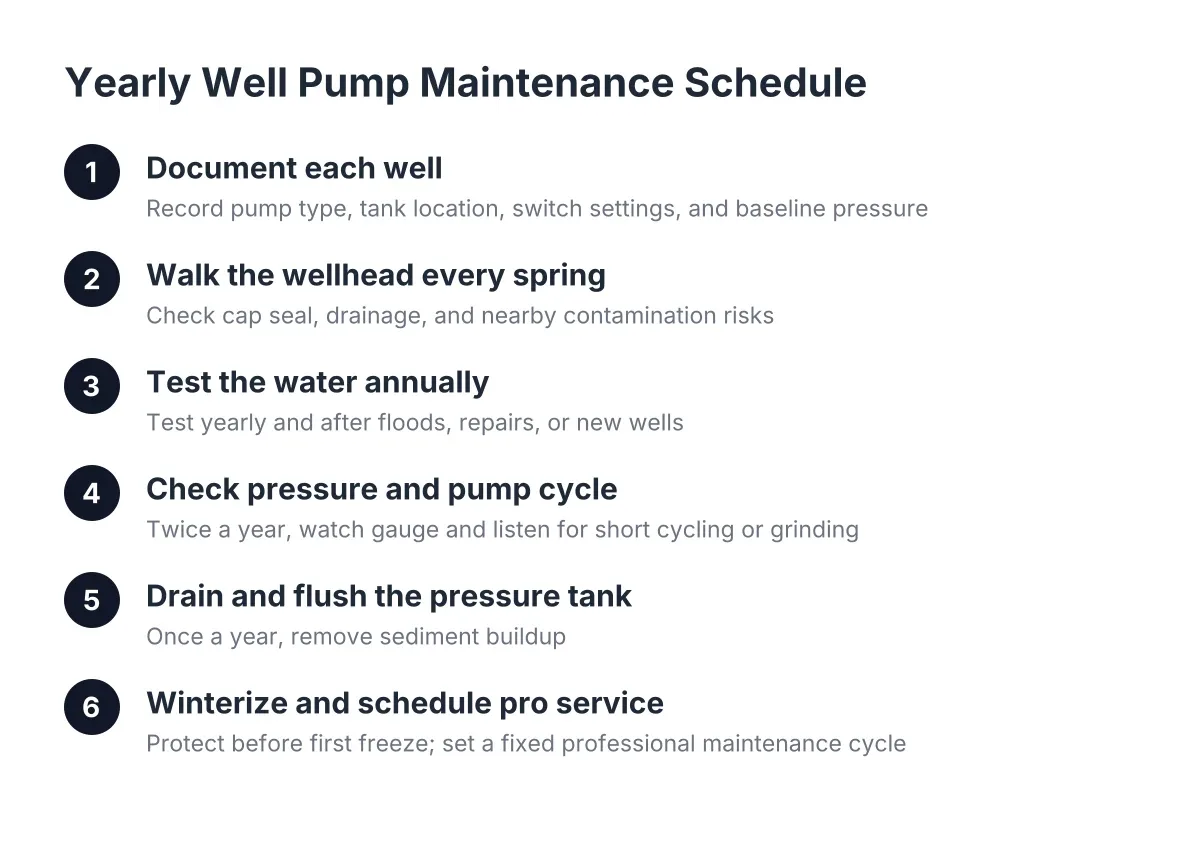
A well cap is the sealed lid on top of the casing that keeps insects, rodents, and surface runoff out of your well. It is one of the cheapest parts of the whole system and one of the most common failure points. A loose or cracked cap can let contamination in, which often shows up first in a water test. Checking the cap is a standard item on any yearly maintenance visit, like the ones in our well pump maintenance schedule.
Well Screen
A well screen is the slotted section at the bottom of the casing that lets water in while keeping sand and gravel out. Over the years, screens can clog with mineral buildup or fine sediment, which chokes off your flow. If your water pressure has faded slowly rather than failed suddenly, a plugged screen is one suspect. Cleaning or rehabilitating a screen is specialized work, so it changes the scope of a repair quote.
Pumps and Pressure: Well and Pump Maintenance Equipment
Most of the calls we hear about well and pump maintenance start with pressure problems, so these are the terms you will meet most often on a repair estimate.
Submersible Pump
A submersible pump is an electric pump that sits underwater near the bottom of the well and pushes water up to your house. It is the standard choice for most drilled wells in this area because it handles depth well and runs quietly. Pulling one out for repair means lifting the whole pipe string, which is why well pump repair labor scales with well depth. If yours is failing, you will usually notice it before it dies, and these warning signs of a failing well pump are worth knowing.
Jet Pump
A jet pump is an above-ground pump that pulls water up from a shallow well instead of pushing it from below. You will find them in a pump house or basement, often on older or shallower wells. They are easier to service than submersibles because nothing has to come out of the well. If a tech recommends switching from a jet pump to a submersible, they are usually solving a depth or pressure problem, not upselling.
Pressure Tank
A pressure tank is a storage tank, usually with an air bladder inside, that holds water under pressure so your pump does not run every time you open a tap. A healthy tank gives you steady pressure and a long pump life. When the bladder fails, the pump starts cycling constantly and wears itself out fast. Tank replacement is a common line on pump and well repair quotes, and it often saves the more expensive pump.
Pressure Switch
A pressure switch is the small control that senses water pressure and turns the pump on when pressure drops and off when it recovers. It is a frequent cause of no-water calls and one of the cheaper fixes in the whole system. Burned contacts, stuck springs, and clogged sensor tubes are typical failures. If a provider says "it might just be the switch," that is usually good news for your bill.
Check Valve and Foot Valve
A check valve is a one-way gate that keeps water in the pipe from draining back down into the well when the pump shuts off. A foot valve is the same idea, mounted at the bottom of the intake on jet pump systems. When either one fails, the pump loses its prime or cycles at odd hours with no water running. Mysterious middle-of-the-night pump noise often traces back to a leaking check valve.
Pitless Adapter
A pitless adapter is the fitting on the side of the casing, below the frost line, that routes water from the well to the buried pipe heading to your house. It lets the connection sit deep enough that it will not freeze in an Oregon cold snap. Leaks at the pitless adapter can look like a failing pump because pressure bleeds away underground. Diagnosing one means digging or pulling the pump, which is why it changes a repair's scope.
Short Cycling
Short cycling means your pump turns on and off in rapid bursts instead of running in steady stretches. It is usually a symptom, not the disease; a waterlogged pressure tank, a bad switch, or a leak is the real cause. Short cycling kills pumps early because every startup is the hardest moment in a motor's life. If you hear the pump clicking on every minute or two, call before it quits entirely.
Service, Testing, and What Shows Up on a Quote
These terms cover the work itself: what gets checked, what gets tested, and what the paperwork means. Understanding the glossary terms for diagnostics and repairs helps you plan your budget and schedule work before emergencies strike.
Flow Rate and Yield
Flow rate, or yield, is how much water your well can deliver, usually described in gallons per minute. It matters when you buy a property, add irrigation, or plan a new well, because a low-yield well limits what the household can do at once. Lenders and buyers often ask for a flow test during a sale. A provider quoting an aquifer and well depth assessment is measuring exactly this kind of thing.
Well Inspection
A well inspection is a full checkup of the well, pump, pressure tank, controls, and wellhead, usually with a written report. It is standard before buying a rural property around Gresham, Estacada, or Corbett, where the well is the only water source. An inspection catches quiet problems, like a failing tank bladder or a compromised cap, before they become emergencies. Think of it as the well version of a home inspection.
Water Testing
Water testing means sending a sample of your well water to a lab to check for bacteria, nitrates, and other contaminants. Private wells are not monitored by anyone but you, so testing is the only way to know what you are drinking. Most guidance calls for testing at least yearly and after any repair that opens the well. A test that comes back with coliform bacteria usually leads to shock chlorination and a retest.
Shock Chlorination
Shock chlorination is a one-time disinfection where a strong chlorine mixture is circulated through the well and plumbing, left to sit, then flushed out. It is the standard response to a failed bacteria test or after work that opened the well to the outside. It fixes contamination events, not ongoing problems; if bacteria keep coming back, something structural like the cap or casing is letting them in. Expect a day or two without normal water use while it works.
Pump Replacement
Pump replacement means pulling the old pump out of the well and installing a new one, along with any worn wire, pipe, or fittings that come up with it. Well pump replacement is the biggest routine expense a well owner faces, and depth is the main cost driver, since deeper pumps mean more pipe, more wire, and more labor. A good quote separates the pump itself from the pulling labor and materials so you can see where the money goes. Regular upkeep, including the kind of seasonal maintenance plan we recommend for local wells, is the cheapest way to push this day back.
Using These Terms
You now know enough to read a pump and well repair estimate line by line and ask what each part covers, why the tech suspects it, and what happens if you wait. That is the point of this well and pump maintenance glossary: not to make you a driller, but to make you a customer nobody can confuse. When the next quote lands, you will recognize every word on it.
If you need well drilling, Clackamas Well Drilling can help.
Prefer to talk it through? Call (503) 782-5215 — a quick call is usually the fastest way to get a straight answer for your situation.