Well Pump Repair Terms Explained: A Plain-English Glossary
If you own a home on a water well around Gresham, OR, you will eventually hear words like "pitless adapter" or "drawdown" and wonder what you just agreed to pay for. This well pump repair glossary puts those terms in plain English, so you can read a quote line by line and ask the right questions. Use it to understand what a provider is describing, spot the difference between a small fix and a full replacement, and feel steady on the phone instead of guessing. Nothing here requires a technical background, just a few minutes of reading.
- Submersible Pump: the pump that sits down in the well
- Jet Pump: a pump mounted above ground
- Pressure Tank: the tank that stores water under pressure
- Pressure Switch: the on/off brain of the system
- Pitless Adapter: the underground connection at the well casing
- Check Valve / Foot Valve: one-way gates that hold water in the line
- Well Casing: the pipe that lines the well hole
- Well Cap: the lid on top of the well
- Drop Pipe: the pipe that hangs the pump in the well
- Drawdown: how far the water level falls while pumping
- Static Water Level: where the water sits when the pump is off
- Recovery Rate: how fast the well refills
- Short Cycling: a pump turning on and off too often
- Pulling the Pump: lifting the pump out of the well for service
- Well Inspection: a full checkup of the well and pump system
- Flow Test: measuring how much water the well actually delivers
- Water Testing: checking well water for safety and quality
- Pump Replacement vs. Repair: fixing a part versus installing a new pump
Equipment: The Parts a Provider Will Name in Your Well Pump Repair Glossary
Most of the confusion in a quote comes from part names, so this half of the well pump repair glossary starts with the hardware. When a provider lists one of these on an estimate, you will know whether they mean something down the well or something in your garage or pump house.
Submersible Pump
A submersible pump is an electric water pump that hangs deep inside the well, fully underwater, and pushes water up to your house. Most modern homes on private wells, including deeper wells common east of Portland, use this type. Because it sits far below ground, servicing it means pulling it up out of the well, which adds labor to any repair. If your provider says "submersible," expect the job to involve lifting equipment, not just a wrench at the surface.
Jet Pump
A jet pump is a water pump mounted above ground, usually in a basement, garage, or pump house, that pulls water up from the well by suction. Jet pumps suit shallower wells and are easier to reach, so repairs tend to involve less labor than pulling a submersible pump. If you can see your pump without opening the well, you likely have a jet pump. Knowing which type you own is the first question any repair company will ask.
Pressure Tank
A pressure tank is the metal tank, often blue, that stores well water under air pressure so your faucets get steady flow without the pump running constantly. It acts like a cushion between the pump and your plumbing. A failed pressure tank is one of the most common causes of pump problems, because it forces the pump to start and stop far too often. If a provider mentions replacing the tank, that is a surface job, not a down-the-well job.
Pressure Switch
A pressure switch is the small device that tells the pump when to turn on and off based on water pressure in the system. When it sticks or wears out, you get no water, pulsing water, or a pump that never shuts off. It is one of the cheapest parts in the whole system, so hearing "pressure switch" on a diagnosis is usually good news for your wallet. A good provider will test it before recommending bigger work.
Pitless Adapter
A pitless adapter is a fitting on the side of the well casing, below the frost line, that lets the water line exit the well underground without freezing. It is the connection point between the pipe in your well and the pipe running to your house. Leaks here can look like a failing pump when the real problem is a bad seal underground. Repairs at the pitless adapter mean digging or pulling the pump, so they carry more labor than surface fixes.
Check Valve / Foot Valve
A check valve is a one-way gate in the water line that keeps water from draining back down into the well when the pump shuts off. A foot valve is the same idea placed at the bottom of the intake pipe on jet pump systems. When one fails, the pump loses its prime or runs constantly to keep pressure. These valves are small parts, but reaching the one down the well can turn a cheap part into a labor-heavy visit.
Well Casing
Well casing is the steel or plastic pipe that lines the drilled hole, keeping soil and surface water out of your well. The part you can see sticking up in the yard is the top of the casing. Cracked or corroded casing can let dirt and bacteria into otherwise clean groundwater. Casing problems are well repair, not pump repair, and they change the scope of a job in a big way.
Well Cap
A well cap is the sealed lid on top of the well casing that keeps insects, debris, and surface water out of your drinking water. A loose or cracked cap is a common finding during a well inspection and a cheap thing to fix. If your cap looks damaged or sits crooked, mention it when you call; it may explain water quality changes.
Drop Pipe
Drop pipe is the pipe that hangs the submersible pump inside the well and carries water up to the pitless adapter. The deeper the well, the more drop pipe there is, and the more labor it takes to pull everything out. When a quote mentions replacing drop pipe, the provider found corrosion, leaks, or worn fittings along that run. Depth drives cost here more than the pipe itself.
How Your Well Behaves: Water and Performance Terms
These terms describe what the water is doing underground. They come up in conversations about weak pressure, wells "running dry," and whether the pump or the aquifer is the real problem.
Drawdown
Drawdown is how far the water level in your well drops while the pump is running. Every well draws down some; trouble starts when the level falls to the pump itself, which makes the pump suck air and overheat. A provider who talks about drawdown is checking whether your well, not your pump, is the weak link. That distinction matters, because the fixes are different.
Static Water Level
Static water level is the depth where water sits in the well when the pump has been off for a while. It is the resting level of the groundwater feeding your well from the aquifer, the underground layer that holds water. Comparing static level to drawdown tells a technician how much water your well can give. Seasonal dry spells can lower it, which is normal, not automatically a failing well.
Recovery Rate
Recovery rate is how fast a well refills after pumping lowers the water level. A well with slow recovery can run a household fine with the right pump settings and storage, but it cannot handle long, heavy use like filling a pool or long irrigation runs. If a provider mentions recovery rate, they are sizing the fix to what your well can actually supply. Ignoring it leads to repeat pump burnout.
Short Cycling
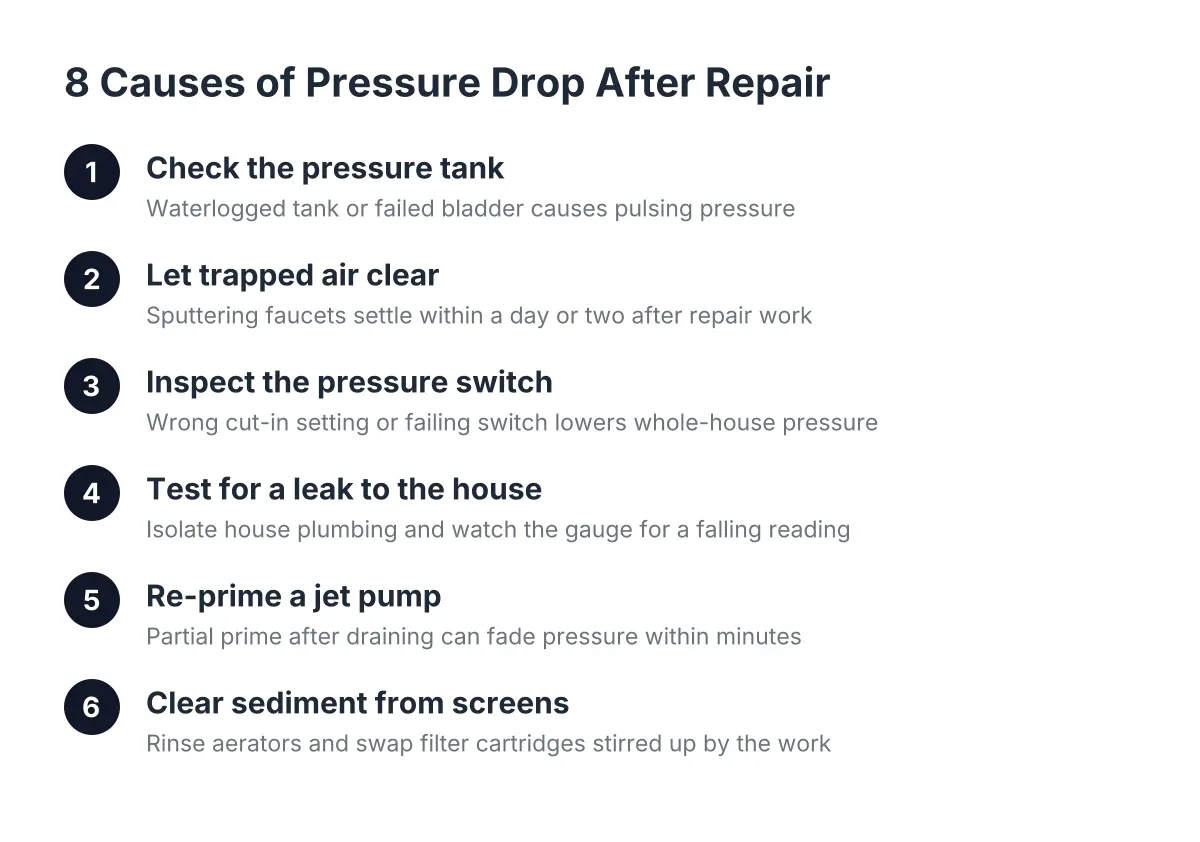
Short cycling means the pump turns on and off in rapid bursts instead of running in steady stretches. It is one of the most common complaints in well pump repair, and it usually points to a waterlogged pressure tank, a leak, or a stuck check valve rather than a dead pump. Short cycling wears a pump out fast, so it is worth fixing early. If your lights flicker in rhythm with your water pressure, describe that on the phone; it helps the diagnosis.
Service, Testing, and the Repair-or-Replace Call
These are the terms that show up on quotes and invoices. They describe the work itself and the decisions behind it.
Pulling the Pump
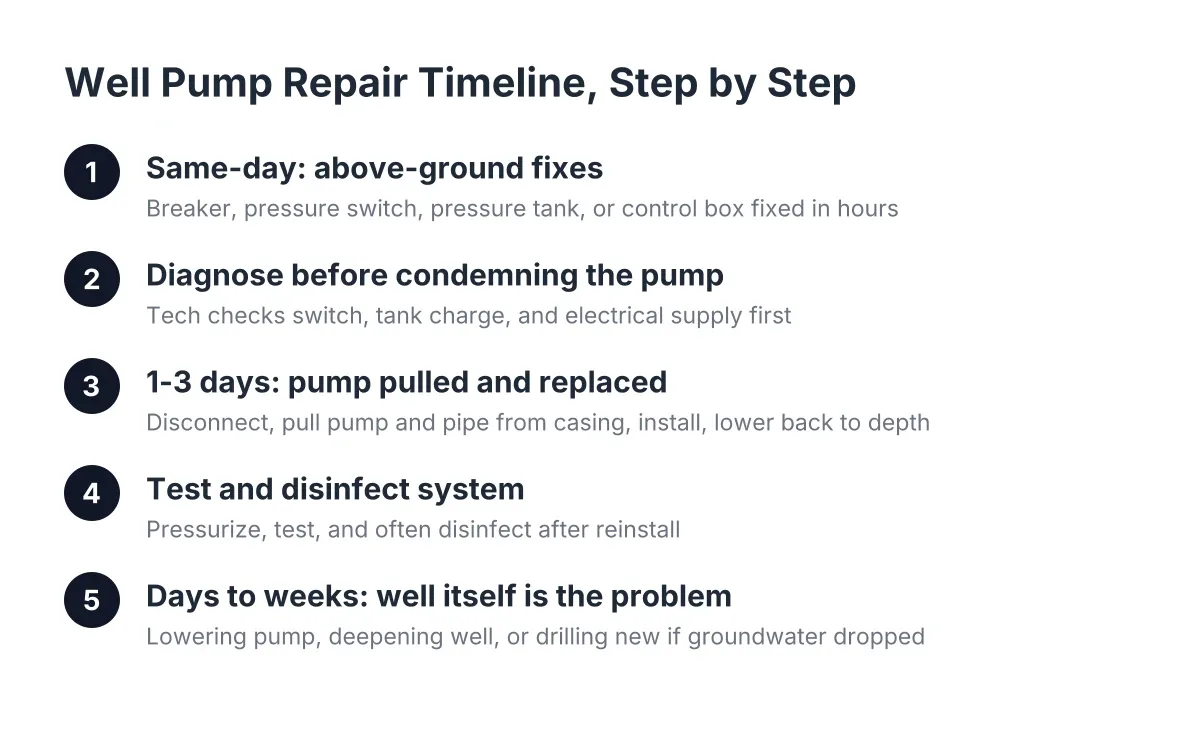
Pulling the pump means lifting the submersible pump and all its drop pipe and wire out of the well so it can be inspected or replaced. It is the single biggest labor item in most well pump jobs, and deeper wells mean more time and equipment. When a quote includes pulling the pump, the price reflects that labor, not just the part. The cost guide for well pump repair walks through how this and other factors shape a final number.
Well Inspection
A well inspection is a full checkup of the well and pump system, covering the cap, casing, pressure tank, electrical parts, and water delivery. Buyers often order one before closing on a rural property, and owners use them to catch small problems before they strand the house without water. An inspection report gives you a written baseline, which makes future quotes easier to judge.
Flow Test
A flow test measures how many gallons per minute your well and pump actually deliver at the tap. It separates "the pump is weak" from "the well is weak," two problems with different fixes and different costs. Lenders sometimes require one for rural home sales. If your pressure has faded slowly over months, a flow test is often the first smart step.
Water Testing
Water testing means sending a sample of your well water to a lab to check for bacteria, nitrates, and other contaminants. Private wells are the owner's responsibility; no city utility is testing that water for you. Testing after any well repair is good practice, because opening a well can introduce bacteria that a simple disinfection clears up. It is also standard in real estate sales on well water.
Glossary Terms in Well Pump Repair and Replacement
Pump replacement means installing a new pump, while repair means fixing or swapping a smaller part like a switch, valve, or tank. The honest call depends on the pump's age, what failed, and how much of the labor, like pulling the pump, you would pay either way. An old pump that already needs pulling is often worth replacing rather than reassembling. A clear provider, like our well pump repair service in Gresham, should explain which situation you are in and why.
Using These Terms
What this glossary gives you is the vocabulary to read a quote line by line instead of nodding along. You can now ask whether a problem is at the surface or down the well, whether the pump or the well itself is the issue, and why labor, not parts, often drives the price. That is usually all it takes to have a straight conversation with any well and pump service.
If you need well drilling, Clackamas Well Drilling can help.
Prefer to talk it through? Call (503) 782-5215 — a quick call is usually the fastest way to get a straight answer for your situation.