Aquifer and Well Depth Assessment Terms Explained: A Plain-English Glossary
If you own or want to buy a home on a private well around Gresham, Sandy, Boring, or Damascus, you will run into words that nobody explains. This aquifer and well depth assessment glossary translates the jargon into plain English so you can read a quote line by line, ask a well drilling company near me the right questions, and spot a vague answer when you hear one. Each entry starts with a one-sentence definition you can use on its own. Skim the index below, then jump to whatever term is tripping you up.
- Aquifer: the underground layer that holds your water
- Water Table: where underground water starts
- Static Water Level: the resting water level in your well
- Drawdown: how far the water drops while pumping
- Recovery Rate: how fast the well refills
- Well Yield: how much water the well can give
- Pump Test: a long, thorough flow test
- Slug Test: a quick, simpler flow check
- Well Log: the driller's record of your well
- Casing: the pipe that lines the well
- Well Screen: the filter section that lets water in
- Grout and Well Seal: the barrier that keeps surface water out
- Dry Hole: a drilled hole that finds no usable water
- Total Well Depth: how deep the well actually goes
- Mobilization: getting the rig and crew to your property
- Per-Foot Pricing: paying by the foot drilled
- Site Assessment: the walk-through before any drilling
The Ground and the Water
These are the terms that describe what is happening under your property, and they come up constantly during an aquifer and well depth assessment because the whole job is figuring out where the water sits and how deep a well has to go to reach it.
Understanding Aquifer, Well Depth, and Assessment in Glossary Form
An aquifer is an underground layer of rock, sand, or gravel that holds enough groundwater to supply a well. Think of it as a water-soaked sponge, not an underground lake. The depth, thickness, and material of the aquifer under your property drive most of what a well will cost, because they decide how far the drill has to go. When a provider talks about "hitting the aquifer," they mean reaching that water-bearing layer.
Water Table
The water table is the depth underground where the soil and rock become fully saturated with water. Above it, the ground is damp at most; below it, every gap is filled with groundwater. The water table rises in wet Oregon winters and drops in dry summers, which is why a well needs to reach well below it, not just touch it. A provider who mentions seasonal water table changes is thinking ahead so your well does not run short in August.
Static Water Level
The static water level is how high water sits in your well when the pump has been off and the water has settled. It is usually higher than the depth where the drill first hit water, because pressure pushes water up the well. This number matters because your pump has to sit below it, and a deeper static level can mean a stronger, more expensive pump. You will see it recorded on your well log.
Drawdown
Drawdown is how far the water level in a well drops while the pump is running. Pump water out faster than the aquifer refills the well, and the level falls; that drop is the drawdown. A small drawdown means a generous aquifer, while a steep one warns that heavy use could pull the level down to the pump. Testers measure drawdown to figure out how hard you can run the well without starving it.
Recovery Rate
Recovery rate is how fast the water level in a well climbs back to normal after pumping stops. A well with a fast recovery can handle laundry, showers, and irrigation back to back. A slow recovery means you may need a storage tank or careful water habits. During an assessment, the recovery rate tells the tester as much about the aquifer as the pumping itself does.
Testing and Measuring: Well Depth Assessment and Glossary Terms
This is the vocabulary of the assessment itself, the tests and records that turn guesswork into numbers.
Well Yield
Well yield is the amount of water a well can reliably produce, usually described in gallons per minute. Yield is the single number lenders and county offices ask about most, because it says whether the well can support a household. A quote that includes a yield test is more complete than one that skips it. If you are buying a home on a well, ask for the yield before you ask about anything else.
Pump Test
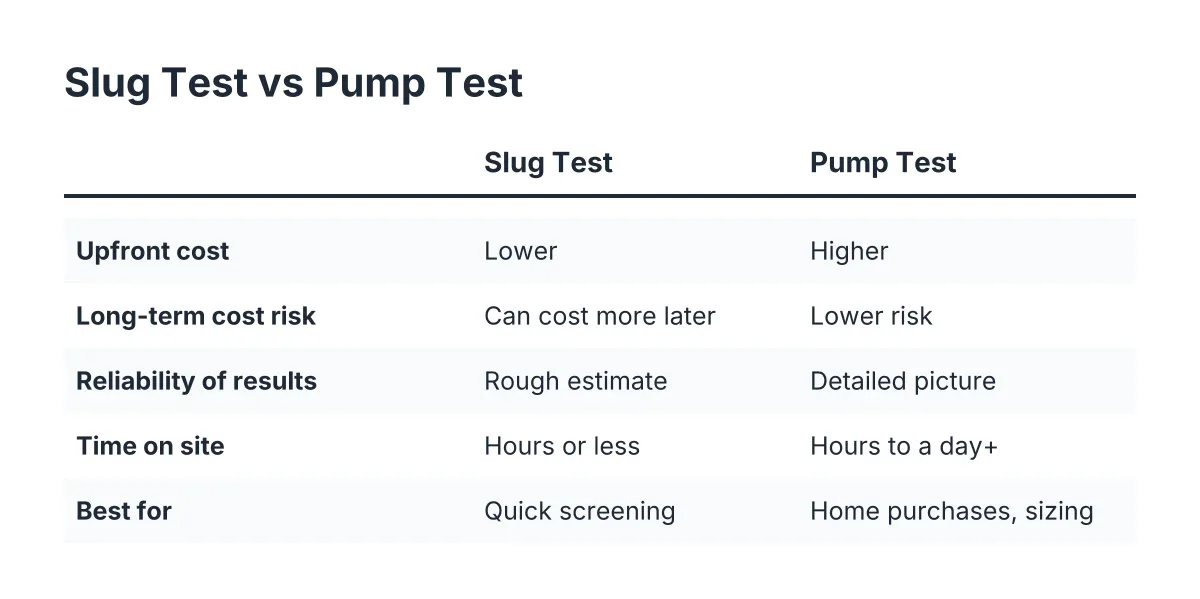
A pump test is a controlled test where water is pumped from the well for an extended period while someone records the water level and flow. It is the thorough option: longer, more involved, and better at showing how the well behaves under real household demand. Lenders and real estate deals often want a pump test specifically. If you are weighing it against a quicker check, our comparison of slug tests and pump tests walks through when each one makes sense.
Slug Test
A slug test is a quick check of how an aquifer responds when the water level in a well is suddenly raised or lowered a known amount. Instead of hours of pumping, the tester adds or removes a "slug" of water or a solid rod, then times how fast the level returns to normal. It is faster and cheaper than a pump test but gives a rougher picture. A provider suggesting a slug test is usually matching the test to a smaller question, not cutting corners.
Well Log
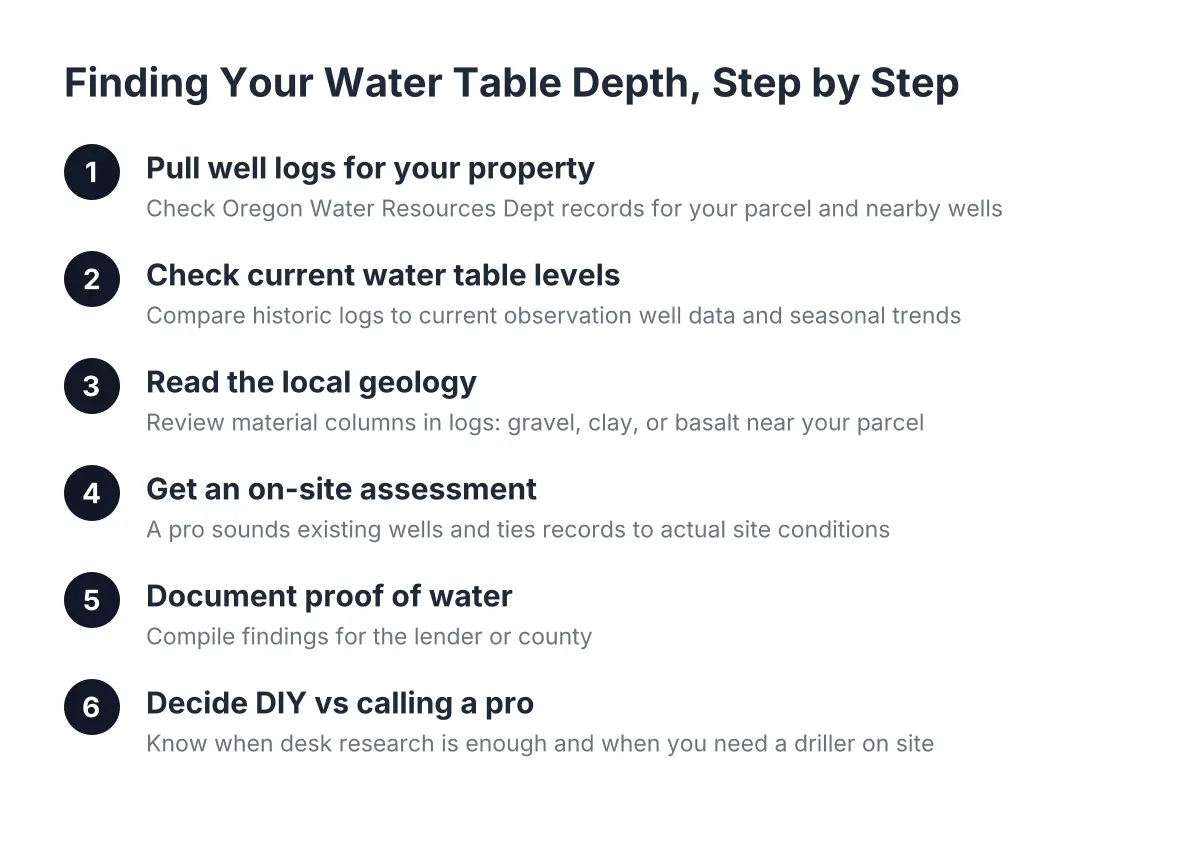
A well log is the written record a driller files when a well is drilled, listing its depth, the layers of soil and rock found, the casing used, and the water levels measured. In Oregon these records are filed with the state, and they are gold when you are assessing an existing well or planning a new one nearby. A provider who pulls the well logs for your area before quoting is doing real homework. Ask to see yours; you are entitled to understand it.
Site Assessment
A site assessment is the on-the-ground review a driller or tester does before any work starts, looking at your property, access for equipment, nearby wells, and likely drilling conditions. It is where the paper research meets your actual backyard. A careful site assessment catches problems early, like a drill rig that cannot reach the planned spot or a septic field too close to the proposed well. If a quote arrives with no site visit behind it, treat the numbers as rough.
The Well Itself
These terms describe the physical parts of a water well, and they show up on quotes as line items.
Casing
Casing is the steel or plastic pipe that lines a well from the surface down, keeping the hole open and keeping dirt and shallow water out. It is priced by the foot, so a deeper well means more casing and a bigger line item. The casing also protects everything inside the well, including the pump and its wiring. When a quote lists casing footage, that number should match the planned depth.
Well Screen
A well screen is the slotted or perforated section near the bottom of a well that lets groundwater in while blocking sand and gravel. Without it, sediment would wear out your pump and cloud your well water. The screen has to match the aquifer material, which is one reason the assessment matters before drilling. A clogged screen on an older well can look like a failing pump, so a good well inspection checks both.
Grout and Well Seal
Grout is the cement or clay material packed around the outside of the well casing to seal the gap between the pipe and the surrounding ground. The seal stops surface water, lawn chemicals, and septic runoff from sliding down the outside of the casing into your drinking water. It is a safety item, not an upsell. States require proper sealing on new wells, so expect it on every honest well drilling quote.
Total Well Depth
Total well depth is the full distance from the ground surface to the bottom of the drilled well. It is not the same as the water table depth; wells are drilled past the water level so they keep producing when the level drops in late summer. Depth is the biggest cost driver in well drilling, since casing, drilling time, and pump size all scale with it. Two neighbors a mile apart can need different depths, which is why assessments beat assumptions.
Dry Hole
A dry hole is a drilled hole that fails to find enough groundwater to make a usable well. It is the outcome everyone wants to avoid, and it is the main reason depth assessment work exists. Ask any driller how dry holes are handled in their pricing before work starts; practices vary. Good research, including nearby well logs and a site assessment, lowers the odds, but no one can see through rock.
Pricing and Paperwork
These are the words that show up on the quote itself.
Mobilization
Mobilization is the cost of getting the drill rig, crew, and equipment to your property and set up. It is usually a flat line item, separate from the per-foot drilling charge. Rural properties with tough access, soft ground, or tight gates can push mobilization up. If you see it on a quote, that is normal; if you do not, ask whether it is baked into another number.
Per-Foot Pricing
Per-foot pricing means the drilling charge is set by each foot of depth drilled, rather than one flat price for the whole well. It is the standard way well drilling is quoted, because nobody knows the exact depth until the drill finds water. The honest version pairs a per-foot rate with an estimated depth range based on local well logs and the assessment. For a fuller breakdown of what drives the final number, see our guide to the cost of aquifer and well depth assessment.
Using These Terms
With this aquifer and well depth assessment glossary in hand, you can read a drilling or testing quote line by line and know what each item buys you. You can ask sharper questions too: what does the well log for my area show, what yield did the test measure, and how is a dry hole handled. If you are around Gresham or the rural edge of Clackamas and Multnomah County and a term here still is not clear, call and ask; a straight answer is a fair test of any well and pump company.
If you need well drilling, Clackamas Well Drilling can help.
Prefer to talk it through? Call (503) 782-5215 — a quick call is usually the fastest way to get a straight answer for your situation.