New Well Installation Terms Explained: A Plain-English Glossary
If you are pricing a water well for a home in Gresham or the rural edge around it, the quotes come loaded with words nobody explains. This new well installation glossary translates the terms you will see on estimates, permits, and well logs into plain English. Use it to read a quote line by line, ask a well drilling company sharper questions, and spot the difference between a fair bid and a vague one. Every definition stands on its own, so you can jump straight to the word that stumped you.
- Aquifer: the underground layer your water comes from
- Water table: where groundwater starts below your feet
- Well log: the driller's written record of your well
- Static water level: how high water sits when the pump is off
- Drawdown: how far the water drops while pumping
- Well yield: how much water the well can give
- Well casing: the pipe that keeps the hole open
- Well screen: the filter section that lets water in
- Grout seal: the barrier that keeps surface water out
- Well cap: the lid on top of the casing
- Pitless adapter: the below-ground connection to your house
- Submersible pump: the pump that sits down in the well
- Pressure tank: the tank that stores water under pressure
- Drilling permit: the state's OK to drill
- Price per foot: how drilling cost is usually quoted
- Well water testing: checking what is actually in the water
- Well inspection: a checkup on the whole well system
Groundwater and How Your Well Finds It
These are the terms that describe what is happening underground. They show up early in any conversation about new well installation, because the ground under your property decides most of the cost before a rig ever shows up.
Understanding the Aquifer in New Well Installation
An aquifer is an underground layer of rock, sand, or gravel that holds water your well can draw from. Think of it as a soaked sponge deep in the ground, not an underground lake. When a driller talks about "hitting the aquifer," they mean drilling deep enough to reach that water-bearing layer. Aquifer depth varies from one property to the next, even between neighbors, which is why an aquifer and well depth assessment matters before anyone quotes you a firm number.
Water Table
The water table is the depth below ground where the soil and rock become fully saturated with groundwater. Above it, the ground is damp at most; below it, water fills every gap. The water table rises in wet Oregon winters and drops in dry summers, so a well needs to reach well below the seasonal low. If a driller mentions your area's water table, they are telling you roughly how much drilling stands between you and reliable water.
Key Terms for New Well Installation Glossary
A well log is the official written record a driller files with the state describing what they found while drilling: soil layers, rock, water depth, and how the well was built. It is your well's birth certificate. If you are buying property with an existing well, ask for the log before anything else. If you are drilling new, the logs from nearby wells give your driller the best clue about what to expect under your land.
Static Water Level
The static water level is the depth at which water naturally sits in a well when no pump is running. It is measured from the ground surface down to the water. This number matters because your pump has to sit below it, and the deeper the water rests, the more pump power you need to lift it. A driller who quotes pump equipment without knowing your static water level is guessing.
Drawdown
Drawdown is how far the water level in a well drops while the pump is running. Every well draws down some; the question is how much and how fast it recovers. Heavy drawdown on a low-yield well can leave the pump sucking air, which shortens its life. This is one reason a proper pump sizing conversation should come up in any well and pump quote.
Well Yield
Well yield is the amount of water a well can produce over time, usually described in gallons per minute. It is the single biggest factor in whether a well meets your household's needs. A low-yield well is not automatically a failed well; storage tanks and careful pump setup can work around it. But yield is something you want measured and written down, not promised verbally.
Parts of the Well Itself
Well Casing
Well casing is the sturdy pipe, usually steel or PVC, that lines the drilled hole from the surface down. It keeps the hole from collapsing and keeps dirt and shallow surface water out of your drinking water. Casing is often the largest material cost on a drilling quote, billed by the foot. When you compare bids from any well drilling company near me search, check that casing type and length are spelled out.
Well Screen
A well screen is a slotted or perforated section of pipe at the bottom of the well that lets groundwater in while keeping sand and gravel out. It works like a fine strainer at the point where water enters. Not every well needs one; wells finished in solid rock often go without. If your quote includes a screen, it usually means the driller expects sandy or loose water-bearing layers.
Grout Seal
A grout seal is a layer of cement or special clay pumped into the space between the casing and the drilled hole to block surface water from seeping down along the pipe. It is what keeps rainwater, lawn chemicals, and septic runoff from riding the outside of your casing into the aquifer. A proper seal is a health safeguard, and most states, Oregon included, require one. It is not an upsell; it is standard construction.
Well Cap
A well cap is the tight-fitting cover on top of the casing where it sticks up above the ground. Its job is to keep out insects, rodents, debris, and surface water. A cracked or loose cap is one of the cheapest problems to fix and one of the most common findings in a well inspection. If your water suddenly tests dirty, the cap is one of the first things to check.
Pitless Adapter
A pitless adapter is a fitting that connects the well to the water line running to your house, below the frost line, without cutting a hole that leaks. It lets the water pipe exit the casing underground where it will not freeze, while still allowing the pump to be pulled up through the top for service. When a pump technician can service your well without digging, thank the pitless adapter.
Pumps and Pressure
Submersible Pump
A submersible pump is an electric pump that hangs down inside the well, underwater, and pushes water up to your house. It is the standard choice for most drilled wells today because it is quiet, efficient, and protected from freezing. Pump depth, motor size, and wiring length all affect the cost of well pump installation. When a pump fails years later, well pump replacement is a normal service call, not a sign the well itself is bad.
Pressure Tank
A pressure tank is a tank, usually in your garage, basement, or well house, that stores water under pressure so the pump does not switch on every time you open a tap. It smooths out water delivery and protects the pump from rapid on-off cycling, which is a common cause of early pump failure. A waterlogged or failed pressure tank is one of the most frequent reasons people call for well pump repair when the pump itself is fine.
Paperwork, Pricing, and Proof
Quotes and closing documents have their own vocabulary, and this section covers the terms that show up on paper rather than in the ground when discussing new well installation and glossary definitions.
Drilling Permit
A drilling permit is the authorization required before a new water well can legally be drilled, filed with the state before work begins. In Oregon, a licensed driller handles this filing as part of the job. If a bid does not mention the permit, ask who is pulling it. A driller who shrugs at that question is telling you something.
Price per Foot
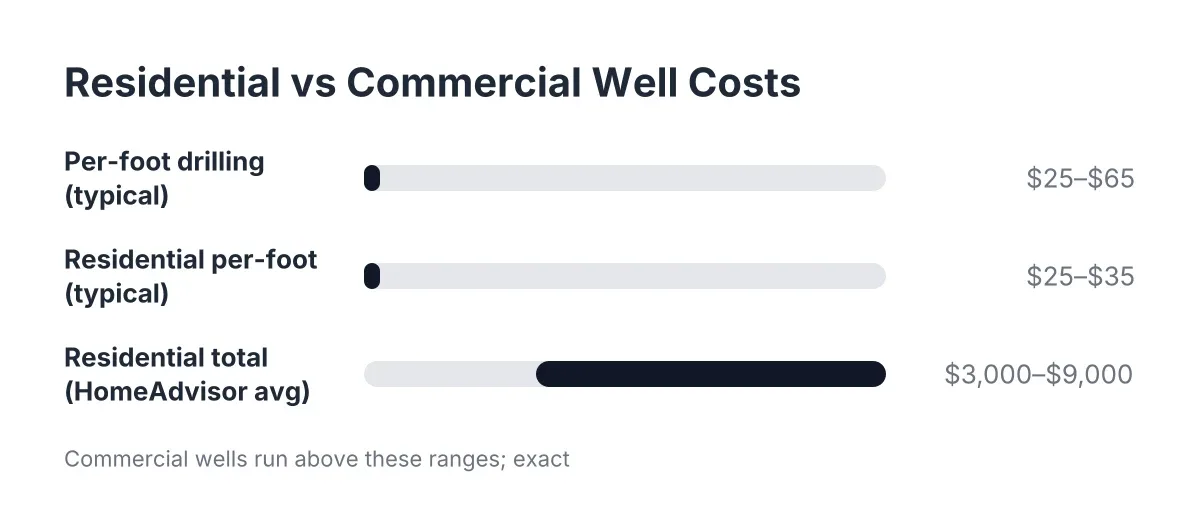
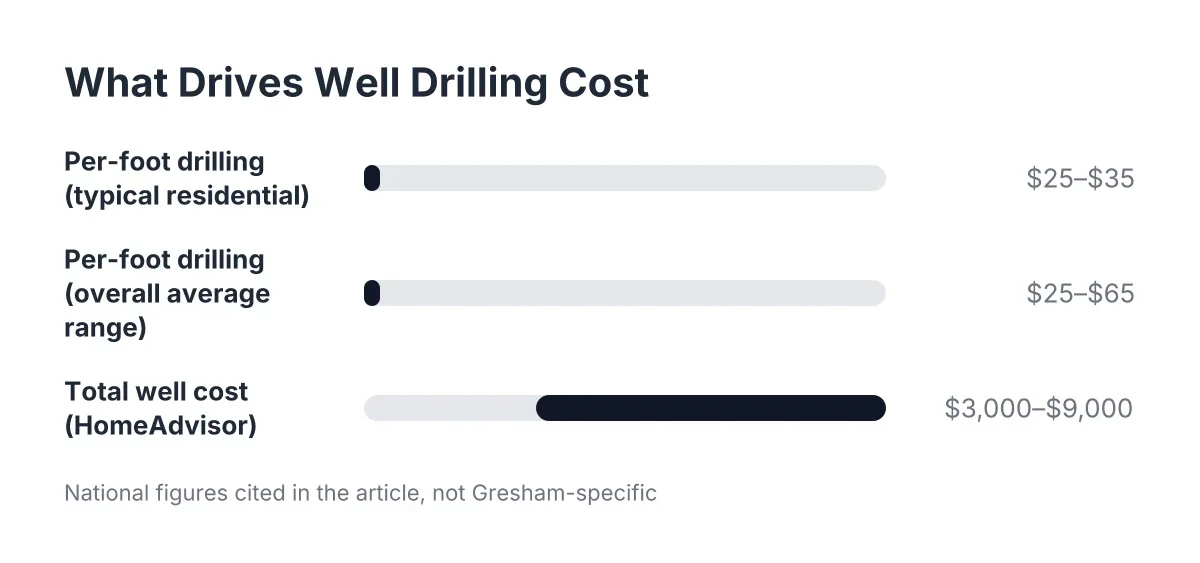
Price per foot is the standard way drilling cost is quoted: a set rate for each foot the rig drills, plus casing and other materials. It is honest pricing for an honest unknown, because nobody can promise exactly how deep your water sits. The catch is that two per-foot bids can hide different assumptions about depth, casing, and seals. Our guide on what new well installation costs walks through how those per-foot numbers add up on a real quote.
Well Water Testing
Well water testing means sending a sample of your well water to a lab to check for bacteria, nitrates, and other contaminants. Private wells are not regulated like city water, so testing is on you, the owner. A test right after drilling confirms the new well is safe, and periodic tests afterward catch problems early. Any provider who treats testing as optional on a brand-new well deserves a second look.
Well Inspection
A well inspection is a professional checkup of the whole system: the casing, cap, pump, pressure tank, wiring, and water quality. Buyers order one before closing on a property with a well, the same way they order a home inspection. For owners, an inspection turns mystery symptoms, like sputtering taps or gritty water, into a specific diagnosis. It is the cheapest way to know whether you need pump and well repair or nothing at all.
Using These Terms
That is the whole vocabulary you need for a first conversation with a driller or pump technician. What this new well installation glossary gives you is the ability to read a bid line by line, ask what the casing length and grout seal cover, and hear the difference between a firm answer and a dodge. When the next quote lands in your inbox, you will know exactly what you are paying for.
If you need well drilling, Clackamas Well Drilling can help.
Prefer to talk it through? Call (503) 782-5215 — a quick call is usually the fastest way to get a straight answer for your situation.