New Well Installation Timeline: From Rig Arrival to Running Water in Gresham
If you own property around Gresham, Sandy, Boring, or Damascus and you have committed to drilling a well, the next question is practical: how long until there is water at the tap? The new well installation timeline runs longer than most owners expect, and the drilling itself is usually the shortest part. This guide walks the whole sequence step by step, from the day the rig shows up to the day the well goes into regular use, so you can plan tenants, construction schedules, or a move-in date around real milestones instead of guesses.
A quick note on the shape of the project. Drilling often takes one to three days. However, permitting before the rig arrives, and pump installation, disinfection, water testing, and inspection after it leaves, can stretch the full new well installation timeline to several weeks. In some cases, when a well needs follow-up work such as hydrofracturing to improve yield, the process can span months. Plan for the long version and be pleasantly surprised by the short one.
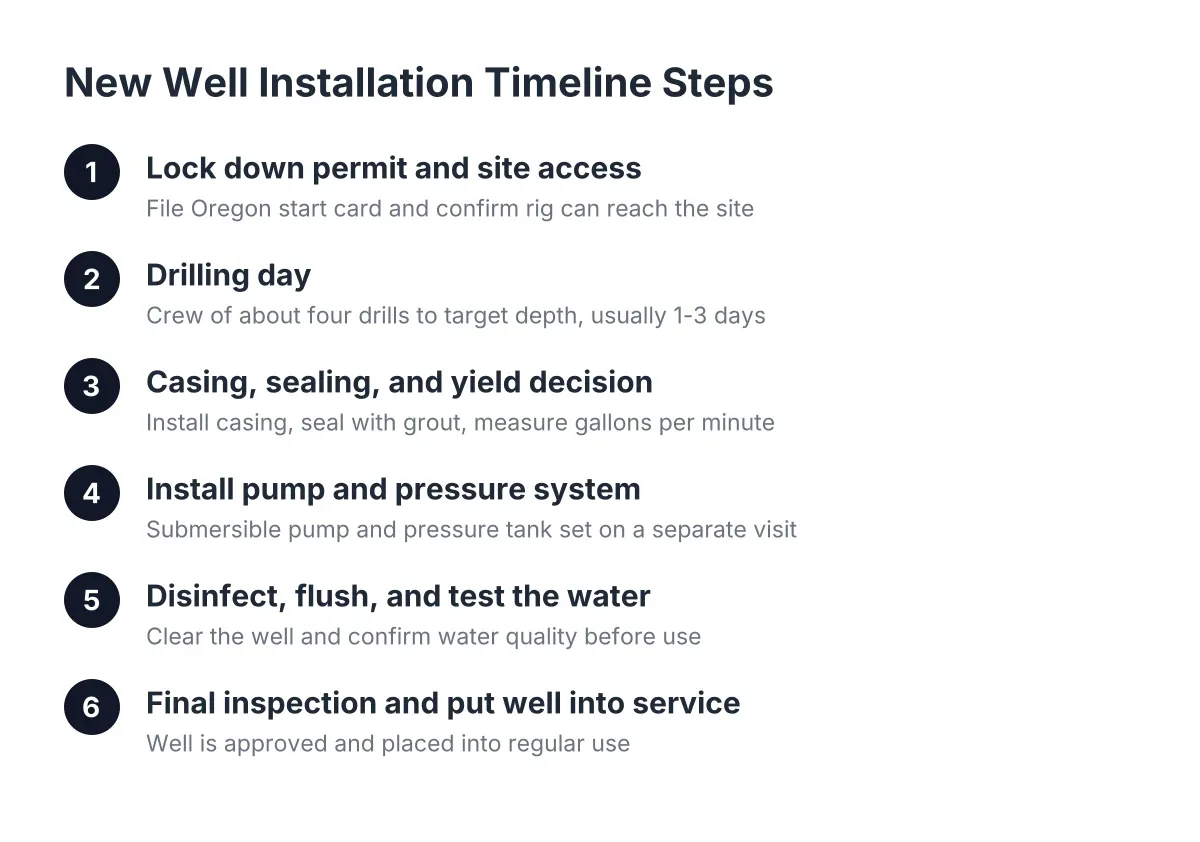
Step 1: Lock Down the Permit and the Site Before Scheduling the Rig
First, handle the paperwork. In Oregon, a new well requires a start card filed with the state before drilling begins, and your well drilling company handles that filing as part of the job. Build a buffer into your schedule for this step; it is administrative, but nothing legal happens on-site until it is done.
Next, confirm the rig can physically reach the spot. A drilling rig is a heavy truck that needs a clear, reasonably firm path and room to set up and maneuver. On rural parcels around Estacada or Corbett, that can mean trimming branches, moving a fence section, or waiting for a muddy access road to firm up.
If you are a landlord managing this from a distance, this is the step to sort out access in writing. Tell your tenant which days the crew will be on-site, where the trucks will park, and that the work is outside. A good driller will communicate directly with the tenant and send you photos, so ask for that arrangement up front and get the cost estimate in writing before you authorize anything.
Step 2: What Happens During a New Well Installation Timeline on Drilling Day
Drilling day is loud, muddy, and faster than people expect. A typical crew of about four workers arrives with the rig, sets up over the marked location, and starts drilling. In favorable ground, a residential well can reach its target depth in a single day; harder rock or a deeper aquifer can push that to two or three days.
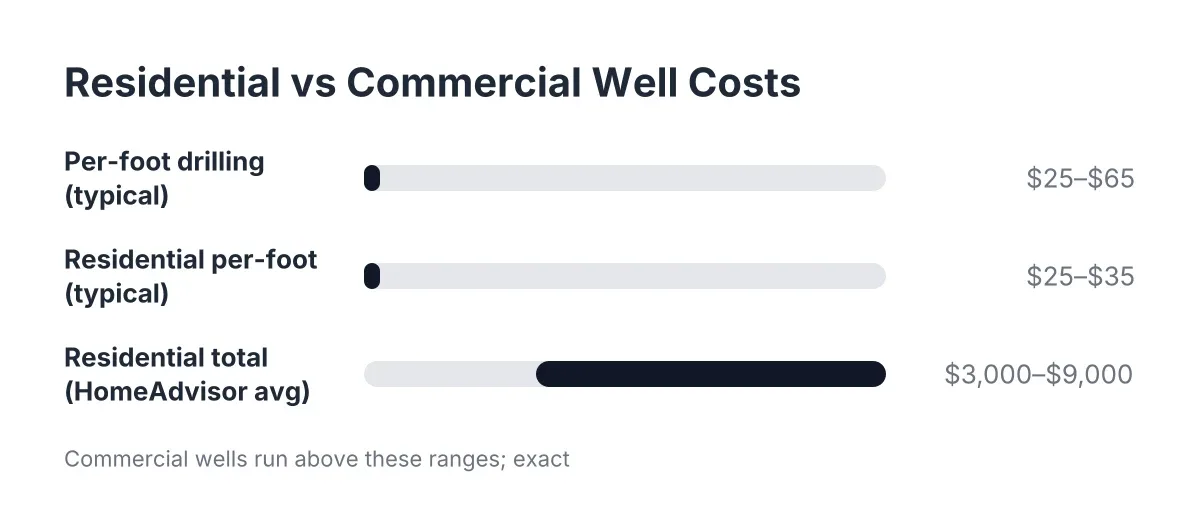
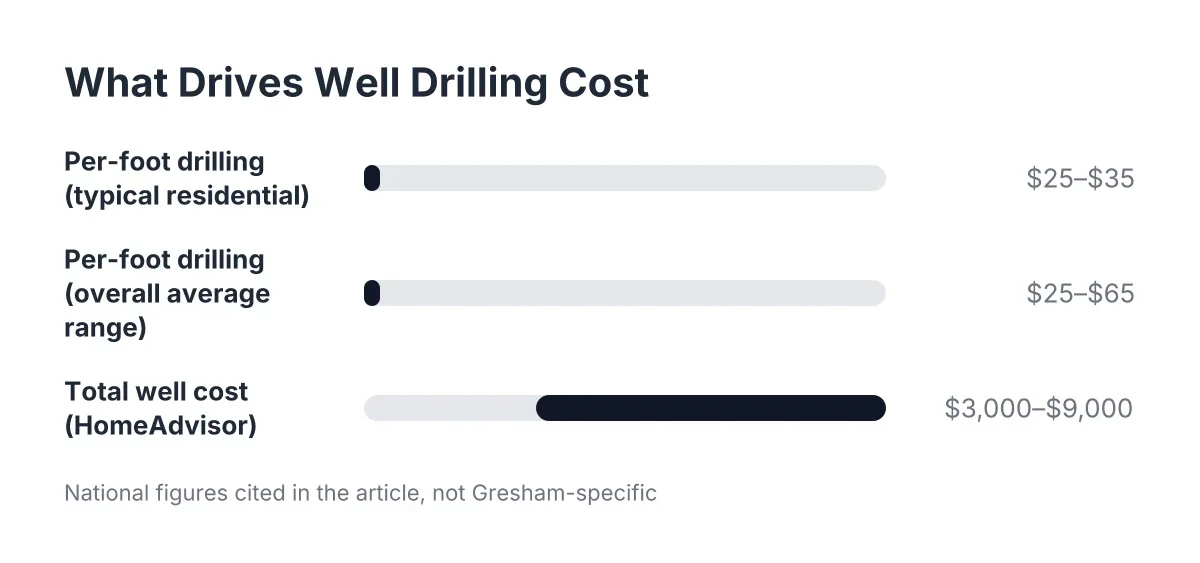
Depth is the biggest variable in the schedule, and it is also the biggest variable in cost. Around the east Portland metro, ground conditions change from one road to the next, so nobody can promise a depth in advance. For context on cost, Angi reports the average cost to drill a well ranges from $25 to $65 per foot, and HomeAdvisor puts the typical total between $3,000 and $9,000 with a $5,500 average. Your final number depends on how far the crew has to go to find reliable groundwater.
One detail worth knowing: when the drill passes through soil and hits bedrock, the driller does not stop at the top of the rock. According to the New Hampshire Department of Environmental Services, drillers plan to go at least about 10 feet into that rock to seal out dirty surface water and create a proper socket for the casing. That extra footage protects your well water quality for decades, so it is time and money well spent.
Step 3: Casing, Sealing, and the Yield Decision
Once the borehole reaches water, the crew installs steel casing and seals the space around it with grout. Sealing keeps surface runoff out of your drinking water, and it can often be completed the same day drilling wraps up rather than waiting for a separate visit, especially when an inspection is expected.
At this point the driller measures how much water the well produces. Recovery rate matters as much as the initial hit; the crew measures how fast the water level rises in the borehole over time and converts that into gallons per minute. If the well produces less than you need, you face a decision: drill deeper, accept the yield with added storage, or schedule hydrofracturing later to open up the rock. A driller who reaches the end of available options will lay out the numbers and let you decide, which is exactly the conversation you want in writing if you are managing the project remotely.
This is also the honest limitation of any new well project. No well drilling company can guarantee a specific yield before drilling, and a low-producing hole sometimes needs follow-up work weeks later. If your parcel sits in an area with known dry wells, talk that risk through with the driller before the rig rolls. The U.S. Geological Survey reports about 1,220 domestic wells in Oregon went dry or fell below pumping capacity between June 2021 and December 2023, and the true number is likely higher since reporting is not mandatory.
Step 4: Install the Pump and Pressure System
With the well drilled and yield confirmed, pump installation is the next visit, usually a separate day from drilling. Most homes get a submersible well pump for the house, set down inside the casing, paired with a pressure tank. According to the Indiana Department of Health, that pressure tank may sit in the well, in the house, or in a crawl space depending on the layout.
Well pump price varies with pump horsepower, well depth, and the wiring run from the house, so ask for the pump installation quote as a separate line item from the drilling. That way, if a pump ever fails years down the road, you already know what well pump replacement involves and roughly what changed.
The crew also trenches a water line and electrical line from the wellhead to the building. On new construction, coordinate this trench with your general contractor so it happens before final grading. One more field note: leave the freshly disturbed ground around the wellhead alone for a few days before raking or landscaping, since it needs time to settle.
Step 5: Disinfect, Flush, and Test the Water
Do not drink from a brand-new well right away. After drilling and pump installation, the driller disinfects the well and pump components with chlorine or bleach, and according to the San Diego County Department of Environmental Health, the well should then be run heavily to flush the chemical taste and residue out before regular use.
After flushing, take a water sample. The CDC notes it is standard practice to test the water from a new well, and to run the well extensively first so the sample reflects normal water quality rather than lingering disinfectant. For a household with young children, this step is not optional; test for bacteria, nitrates, and arsenic at minimum. Lab turnaround usually adds a few days to the schedule, and this is where well water testing shifts from a formality to the whole point of the project.
Step 6: Final Inspection and Putting the Well Into Service
Last, close out the paperwork. Oregon requires a well log documenting depth, casing, and seal, and the driller files it with the state. Keep a copy; if you ever sell the property or a buyer's lender requires a well inspection, that log answers half their questions. Once the water test comes back clean and the pressure system holds steady, the well is in service.
How the Full New Well Installation Timeline Adds Up
Here is a realistic sequence for planning purposes, framed as estimates rather than promises:
- Permitting and scheduling: days to a few weeks, depending on the driller's backlog and season
- Drilling: one to three days on most residential jobs
- Casing, sealing, and yield testing: often same day as drilling, sometimes one more day
- Pump and pressure tank installation, plus trenching: one to two days, often scheduled a week or more after drilling
- Disinfection, flushing, and water testing: several days including lab turnaround
- Final inspection and paperwork: runs alongside the last steps
A Worked Example for a Remote Owner
Suppose you own a rental outside Boring and you are two hours away when the project starts. In that scenario, a workable plan looks like this: the driller files the start card in week one, drills and seals the well over two days in week three, returns the following week for the submersible pump and trench, then flushes and samples the water. Your tenant has full water service about five weeks after you signed the estimate, and you never had to be on-site because the driller sent photos at each milestone and got written approval before each phase.
If you searched for water well drilling near me and landed here mid-planning, the takeaway is simple. New well installation is a multi-visit project with real waiting built in, so the schedule you should protect is not drilling day; it is the two to three weeks after it. Book the pump installation and water test dates before the rig ever arrives, and the whole project stays on rails.
If you need well drilling, Clackamas Well Drilling can help.
Prefer to talk it through? Call (503) 782-5215 — a quick call is usually the fastest way to get a straight answer for your situation.