Well Pump Troubleshooting Terms Explained: A Plain-English Glossary
If you own a home on a private well around Gresham, Sandy, Boring, or Damascus, the first repair quote you read can feel like a foreign language. This well pump troubleshooting glossary translates the terms you will meet, from pressure switches to drawdown, into plain English. Use it to read a quote line by line, describe your symptoms clearly over the phone, and spot when a small fix is being sold as a big one. Nothing here requires a plumbing background, just a few minutes of your time.
- Submersible Pump: the pump that lives down in the well
- Jet Pump: the above-ground pump on shallow wells
- Pressure Tank: the tank that stores water under pressure
- Pressure Switch: the on/off brain of the system
- Check Valve / Foot Valve: one-way gates that hold water in the pipe
- Pitless Adapter: the underground connection at the well casing
- Well Casing: the pipe that lines the well hole
- Losing Prime: when a pump loses the water it needs to work
- Short Cycling: pump turning on and off too fast
- Cavitation: the gravel-rattle noise of a starving pump
- Drawdown: how far the water level drops while pumping
- Static Water Level: where the water sits when nothing is running
- Pulling the Pump: lifting the pump out of the well for service
- Well Yield / Recovery Rate: how fast the well refills itself
- Amp Draw Test: an electrical health check on the pump motor
- Waterlogged Tank: a pressure tank that has lost its air cushion
- Well Inspection: a full checkup of the well and pump system
Equipment: The Parts of Your Well System
Most confusion in a quote starts with the hardware, so this section covers the parts a technician will name first.
Well Pump Troubleshooting Glossary: Submersible Pump and Jet Pump
A submersible pump is an electric pump that sits deep inside the well, underwater, and pushes water up to your house. Most modern water wells in the Gresham and east Portland metro area use one. Because the pump hangs far below ground, diagnosing it often means testing from the top first, then pulling it up if the wiring or motor checks fail. If a quote mentions a submersible pump, expect the labor to depend on how deep it hangs in the well. Our walkthrough on submersible pump troubleshooting shows the checks a technician runs before deciding to pull it.
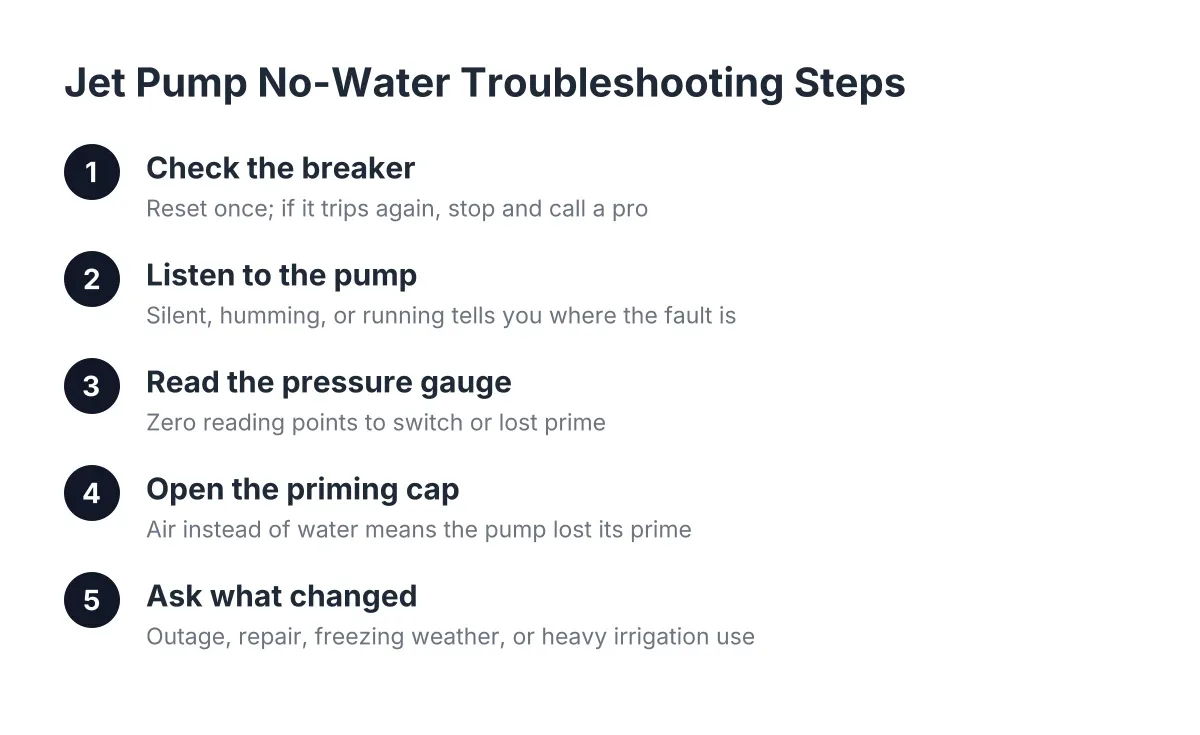
A jet pump is an above-ground pump, usually in a basement, garage, or pump house, that pulls water up out of a shallower well. Because it sits where you can see it, some problems are easier to spot, like leaks, noise, or a motor that hums but does not move water. Jet pumps rely on staying full of water to work, which is why they lose prime more often than submersibles. If your pump rattles or growls, our guide to jet pump noise and weak pressure explains what those sounds mean.
Pressure Tank
A pressure tank is a steel tank, usually near where the water line enters your home, that stores water under air pressure so the pump does not have to run every time you open a tap. Inside, a rubber bladder or diaphragm separates air from water. When the tank fails, the pump starts and stops constantly, which wears it out fast. A failing pressure tank is one of the most common reasons a healthy pump gets blamed for bad water pressure.
Pressure Switch
A pressure switch is the small control that turns the pump on when pressure drops and off when it climbs back up. It is a cheap part with an outsized job. A stuck, corroded, or misadjusted switch can mimic a dead pump, no water at all, or wild pressure swings. Good well pump troubleshooting starts here because it is the easiest and least expensive thing to rule out.
Check Valve / Foot Valve
A check valve is a one-way gate that lets water flow up toward the house but not drain back down into the well; a foot valve is the same idea placed at the bottom of the intake pipe. When one fails, the pipe empties between uses, the pump loses prime, and pressure drops overnight. A technician who mentions a bad check valve is usually describing a modest repair, not a pump replacement.
Pitless Adapter
A pitless adapter is the fitting on the side of the well casing, below the frost line, where the pipe from the pump turns and heads underground toward your house. It lets the water line exit the well without freezing. Leaks at the pitless adapter can look like a failing pump because pressure bleeds away into the ground. Reaching it means digging or lifting the well cap, which adds labor to a repair.
Well Casing
Well casing is the steel or plastic pipe that lines the drilled hole, keeps the walls from collapsing, and seals out surface water. The cap you see sticking up in the yard is the top of the casing. Cracked or corroded casing can let sediment or shallow groundwater into your well water, which shows up as cloudy water or grit in faucet screens. Casing problems are a well repair, not a pump repair, and they change the scope of the job.
Symptoms and Diagnosis: Well Pump Troubleshooting Glossary for Common Problems
When a provider describes what is wrong, these are the words that come up in almost every well pump troubleshooting call.
Losing Prime
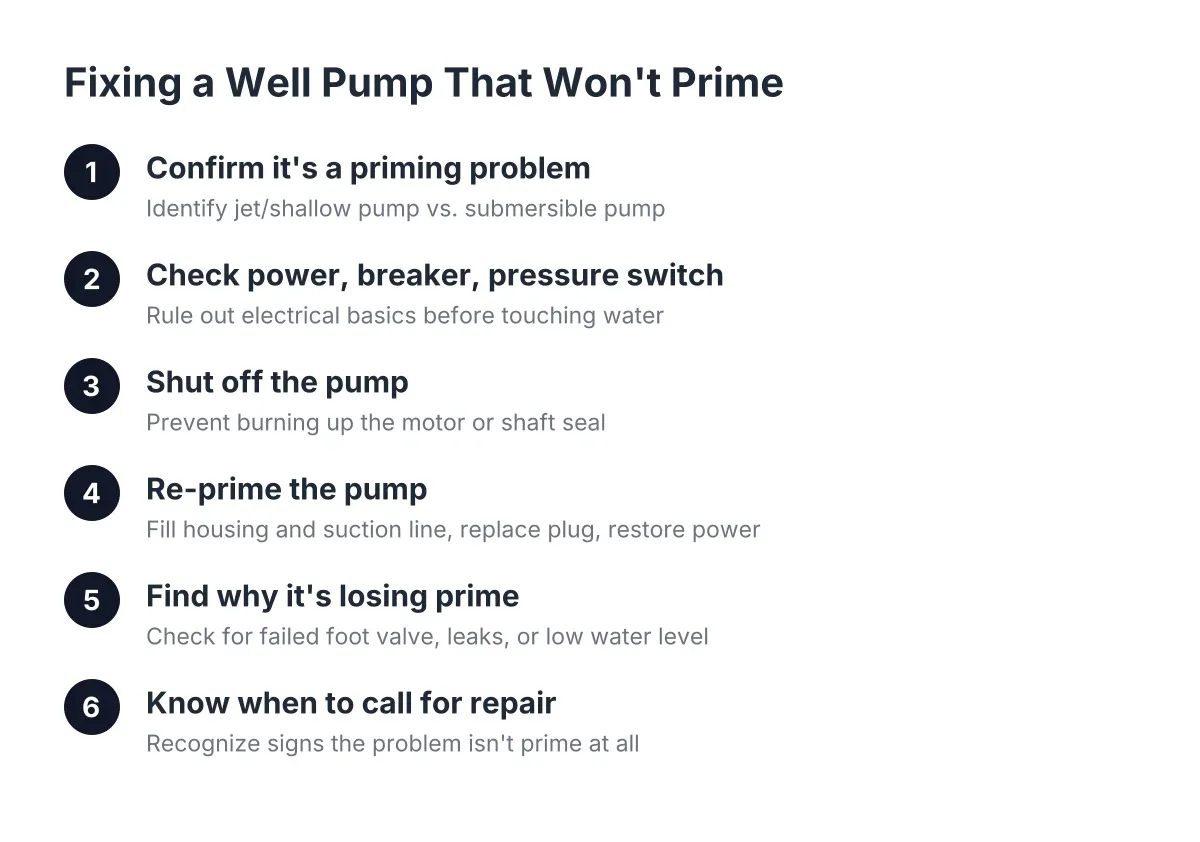
Losing prime means the pump has lost the column of water it needs inside itself and the intake pipe to move water at all. A pump running dry this way can burn itself out, so it matters even if you still have a trickle. Common culprits are a failed foot valve, a small air leak in the suction line, or a water level that dropped below the intake. Our step-by-step guide to restoring a pump that won't prime covers the fixes in order.
Short Cycling
Short cycling means the pump turns on and off in rapid bursts instead of running in steady stretches. You can often hear it: click, hum, click, hum, every few seconds while a faucet runs. It usually points to a waterlogged pressure tank or a pressure switch problem, and it shortens the life of the pump motor. Catching short cycling early can save you a full well pump replacement later.
Cavitation
Cavitation means the pump is starving for water and forming tiny vapor bubbles that collapse inside it, which sounds like gravel rattling through the pump. It happens when the pump tries to pull more water than the well or the pipe can supply. Left alone, cavitation chews up the pump's internal parts. If a technician uses this word, they are telling you the noise is a supply problem, not just a noisy motor.
Drawdown
Drawdown is how far the water level in your well drops while the pump is running. Every well draws down some; the question is whether the level drops below the pump intake before the well can refill. Heavy summer use on the rural edge of Clackamas and Multnomah County can push drawdown lower than usual. A provider measuring drawdown is checking whether your problem is the pump or the well itself.
Static Water Level
The static water level is where the water sits in your well when the pump has been off long enough for the well to rest. It is the baseline a technician compares against drawdown to judge how your well and the aquifer beneath it are behaving. A falling static level over the years can mean the pump needs to hang deeper, or the well needs attention. It is a well health number, not a pump number.
Well Yield / Recovery Rate
Well yield, sometimes called the recovery rate, is how fast groundwater flows back into your well after pumping lowers the level. A strong pump on a low-yield well still runs out of water; the pump gets blamed, but the well is the bottleneck. If a provider talks about yield, they are asking whether the aquifer can keep up with your household. That conversation may lead to pump adjustments, storage, or in some cases a deeper well.
Service, Testing, and What Shows Up on the Quote
Pulling the Pump
Pulling the pump means physically lifting the submersible pump, its pipe, and its wiring up out of the well for inspection or replacement. It is the labor-heavy part of most water well pump repair jobs, and cost scales with how deep the pump hangs and what equipment the job needs. A careful provider tests everything possible from the surface before pulling. If pulling shows up on your quote, ask what surface tests were done first; our cost guide for well pump troubleshooting explains how that labor shapes the bill.
Amp Draw Test
An amp draw test measures how much electrical current the pump motor pulls while running, which tells a technician a lot without pulling the pump. High amps can mean a motor grinding against sand or failing bearings; zero amps can mean broken wiring or a dead motor. It is one of the fastest ways to separate an electrical problem from a water problem. A provider who mentions it is diagnosing before replacing, which is what you want.
Waterlogged Tank
A waterlogged tank is a pressure tank that has lost its air cushion, usually because the internal bladder failed, so the tank fills with water and cannot buffer the pump. The telltale sign is short cycling and pressure that swings hard while a tap runs. Replacing a tank costs less than replacing a pump, but ignoring a waterlogged tank often destroys the pump anyway. It is worth fixing promptly.
Well Inspection
A well inspection is a full checkup of the well, pump, pressure system, and water quality, often paired with well water testing. Buyers of rural properties around Gresham, Estacada, Corbett, and Oregon City order one before closing to learn what the well can deliver and what it might need. An inspection report gives you the static level, yield, and equipment condition in writing. It turns guesswork into a document you can plan and negotiate around.
Using These Terms
What this well pump troubleshooting glossary gives you is footing: when a quote says "pull the pump, replace the check valve, retest drawdown," you now know what each line means and roughly what drives its cost. You can ask sharper questions, like whether the pressure switch and tank were ruled out before the pump got blamed. That is usually the difference between paying for a diagnosis and paying for a guess.
If you need well drilling, Clackamas Well Drilling can help.
Prefer to talk it through? Call (503) 782-5215 — a quick call is usually the fastest way to get a straight answer for your situation.