Well Repair Costs Terms Explained: A Plain-English Glossary
If you own a home on a private well around Gresham, Sandy, Boring, or Damascus, the first repair quote you get can read like another language. This well repair costs glossary translates the terms a well drilling or pump repair company will actually use, in plain English. Use it to read a quote line by line, ask sharper questions on the phone, and spot when a problem is small or serious. Nothing here requires a plumbing background, just a few minutes.
- Submersible pump: the pump that sits down in the well
- Jet pump: an above-ground pump for shallower wells
- Pressure tank: the tank that stores water under pressure
- Pressure switch: the on/off brain of your water system
- Pitless adapter: the below-ground fitting where water exits the well
- Drop pipe: the pipe that carries water up from the pump
- Well casing: the lining that keeps the well hole open and clean
- Well cap: the cover that seals the top of the well
- Aquifer: the underground layer your well draws water from
- Static water level: how high water sits in the well at rest
- Drawdown: how far the water level drops while pumping
- Well yield: how much water the well can supply
- Pump pull: lifting the pump out of the well for service
- Well inspection: a checkup of the whole well and pump system
- Water testing: lab checks on what is in your well water
- Short cycling: a pump turning on and off too often
- Flat-rate vs. time-and-materials: two ways companies price the work
- Service call fee: the charge just to come diagnose the problem
Equipment: The Parts That Show Up on Your Quote
Most of the line items on a pump and well repair quote are parts. Here is what each one does and why replacing it costs what it does.
Submersible Pump
A submersible pump is an electric water pump that sits underwater near the bottom of your well and pushes water up to the house. Most modern residential wells use one because it is quiet, efficient, and handles deeper wells better than above-ground pumps. If your quote includes replacing a submersible pump, expect the labor to include pulling it up out of the well, which is a real part of the cost. Depth matters: the deeper the pump sits, the more pipe, wire, and labor are involved.
Jet Pump
A jet pump is a water pump mounted above ground, usually in a basement, garage, or well house, that pulls water up from the well by suction. Jet pumps work best on shallower wells and are common on older properties. They are easier to reach than a submersible pump, which changes the labor side of a repair. If you are weighing one type against the other, this comparison of submersible vs jet pump replacement costs walks through the tradeoffs.
Pressure Tank
A pressure tank is the tank, usually in your basement or well house, that stores water under air pressure so the pump does not have to run every time you open a faucet. A failing tank makes the pump start and stop constantly, which wears the pump out early. Replacing a tired pressure tank now often protects a much more expensive pump later. If a technician mentions your tank is "waterlogged," that means the air charge inside has failed and the tank can no longer do its job.
Pressure Switch
A pressure switch is the small electrical control that tells your pump when to turn on and off based on water pressure. It is one of the cheapest parts in the whole system and a frequent cause of "no water" calls. A good technician checks the switch before assuming the pump itself has died. If your quote lists only a pressure switch, that is usually good news for your wallet.
Pitless Adapter
A pitless adapter is the fitting, buried below the frost line on the side of the well casing, where the water line turns and heads toward your house. It lets the water pipe exit the well underground so it cannot freeze. A leaking pitless adapter can look like a failing pump because pressure drops, but it is a different repair. Fixing one usually means pulling the pump and drop pipe first, so the labor overlaps with pump work.
Drop Pipe
Drop pipe is the pipe that hangs inside the well and carries water from the pump up to the pitless adapter. It comes in steel or plastic, and every foot of it has to come up when the pump does. Corroded or cracked drop pipe often gets replaced during a pump job because the well is already open. If a quote includes new drop pipe, ask how many feet and what material, since that line scales with well depth.
Well Casing
Well casing is the steel or plastic pipe that lines the drilled hole, keeps the walls from caving in, and blocks surface water from contaminating your well water. Cracked or corroded casing is a serious problem because it lets dirty groundwater in near the surface. Casing repairs cost more than pump work because they involve the structure of the well itself. In bad cases, a well drilling company may recommend drilling a new well instead of repairing the old casing.
Well Cap
A well cap is the cover on top of the well casing that keeps insects, animals, and debris out. It is a small part with a big job, since a cracked or loose cap is a common source of bacteria in well water tests. Replacing one is inexpensive, and any well inspection should check it. If yours is damaged, fix it before spending money on repeated water treatment.
Water and Ground: Terms About the Well and Repair Costs Glossary
These terms describe what is happening underground, and they drive well repair costs more than any single part does. A pump for a deep, low-yield well is a different job than a pump for a shallow, strong one.
Aquifer
An aquifer is the underground layer of water-bearing rock, sand, or gravel that your well draws from. Your well is just the straw; the aquifer is the glass. Aquifer conditions vary from property to property, even between neighbors, which is why an aquifer and well depth assessment is part of planning any new well. When a driller talks about the aquifer, they are talking about how deep they need to go and how much water they expect to find.
Static Water Level
Static water level means how high the water naturally sits inside your well when the pump has been off for a while. It tells a technician how far the pump has to lift water before any comes out of your tap. A dropping static level over the years can explain weaker pressure or a pump that runs longer than it used to. It is measured during a well inspection, not guessed.
Drawdown
Drawdown is how far the water level in your well falls while the pump is running. A well with heavy drawdown can run the pump dry if the pump is set too shallow or sized too large. Understanding drawdown helps a technician pick the right pump and set it at the right depth. If a provider mentions drawdown, they are sizing the fix to your well instead of installing a generic part.
Well Yield
Well yield is the amount of water your well can reliably supply over time. Yield determines whether your well can keep up with your household, your irrigation, or a future addition. A low-yield well may need a smaller pump, a storage tank, or in some cases deepening. Buyers should always ask about yield during a well inspection before closing on a rural property.
Service and Pricing: What the Quote Language Means
Pump Pull
A pump pull is the job of lifting the pump, drop pipe, and wiring up and out of the well so a technician can inspect or replace them. It takes equipment and time, and the deeper the pump, the bigger the job. Many quotes list the pump pull as its own line because it happens whether the fix turns out to be the pump, the pipe, or the wire. Understanding well repair costs and what drives them—like whether a labor-heavy pull is included—helps you understand your quote better. Asking "does that price include the pull?" is one of the smartest questions you can ask, and this list of questions to ask before hiring a well drilling company covers the rest.
Well Inspection
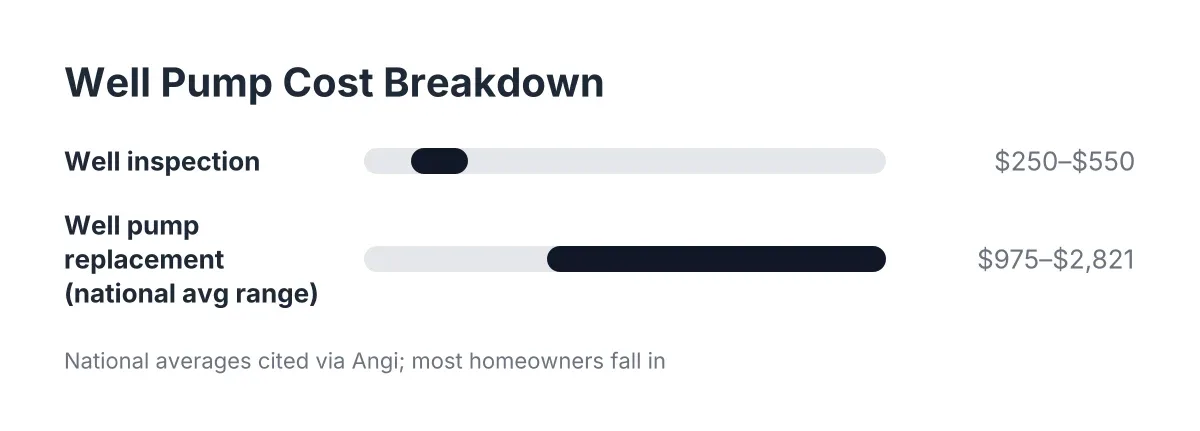
A well inspection is a full checkup of the well, pump, pressure tank, controls, and water quality, usually done before buying a home or when trouble starts. It gives you a baseline: water level, yield, pressure, and the condition of visible parts. Inspections cost far less than repairs, and they catch problems like a bad well cap or a waterlogged tank before they take out the pump. If you are buying a home on well water near Gresham, get one before you sign.
Water Testing
Water testing means sending a sample of your well water to a lab to check for bacteria, nitrates, and other contaminants. Unlike city water, nobody tests your well water for you, so this is your responsibility as the owner. Testing matters for repairs too, because contamination can point to a casing or cap problem rather than a treatment problem. A provider who suggests testing before selling you equipment is looking out for you.
Short Cycling
Short cycling means your pump turns on and off in rapid bursts instead of running in steady stretches. It is usually a symptom of a failed pressure tank or a leak, not a bad pump, but it will destroy a pump if you ignore it. If you hear the pump clicking on every few seconds, call for well pump repair sooner rather than later. Catching short cycling early is the difference between a tank replacement and a full pump replacement.
Pricing Models and Well Repair Costs Glossary Details
Flat-rate pricing means the company quotes one fixed price for the whole job, while time-and-materials means you pay for the hours worked plus the parts used. Neither is wrong, but they shift risk differently: flat-rate protects you from a job running long, and time-and-materials can cost less when the fix is simple. Ask which model a quote uses before you compare two numbers. Two quotes that look far apart may just be pricing the unknown differently, as this well repair cost guide explains.
Service Call Fee
A service call fee is the charge for a technician to come to your property and diagnose the problem, separate from the repair itself. Some companies waive it if you go ahead with the work; others do not, so ask up front. It exists because diagnosis takes real time, tools, and a truck. Knowing whether the fee rolls into the repair price keeps two quotes comparable.
Using These Terms
You now know what this well repair costs glossary was built for: reading a quote line by line instead of trusting the bottom number. When a technician says your tank is short cycling or your drop pipe needs replacing, you can follow the logic and ask what it means for the price. That alone puts you ahead of most homeowners calling about well repair near me for the first time.
If you need well drilling, Clackamas Well Drilling can help.
Prefer to talk it through? Call (503) 782-5215 — a quick call is usually the fastest way to get a straight answer for your situation.